
Side Dishes
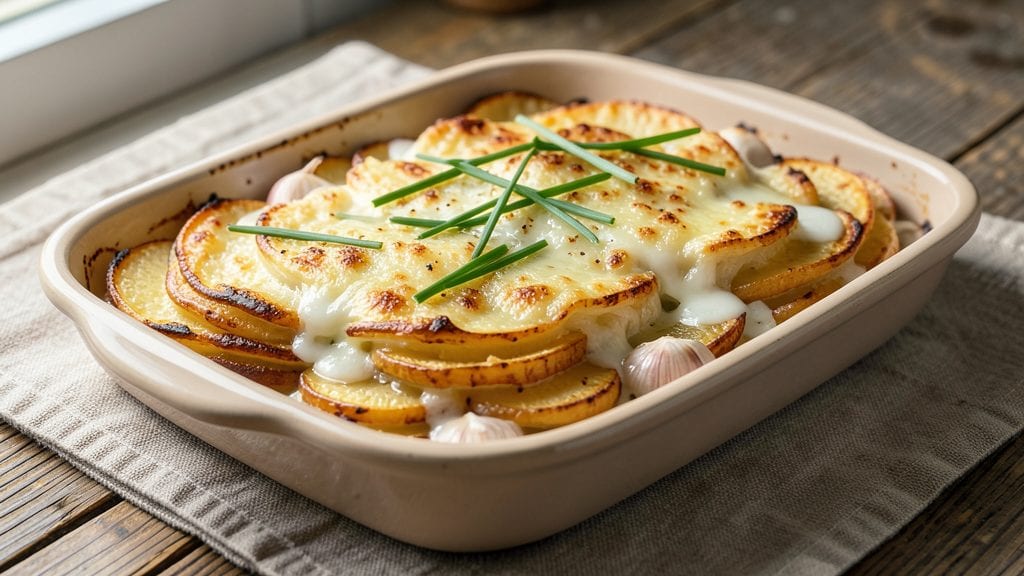
Bobby Flay’s scalloped potato recipe transforms humble spuds into a restaurant-worthy dish with layers of Gruyère, crisp vinegar-kissed edges, and aromatic thyme. The secret lies in precise layering—thin, even slices of potato baked until golden and tender, with a tangy cream sauce that binds it all together.
I’ve perfected this technique over years of testing, ensuring every bite delivers that perfect balance of crispy, creamy, and cheesy.
This recipe stays true to Flay’s signature style while adding modern twists like roasted garlic and optional truffle oil for depth. The vinegar splash before baking creates that signature crispness, while Gruyère melts into a velvety, gooey finish.
With just 10 ingredients and 45 minutes in the oven, you’ll have a side dish that steals the show—no shortcuts, just professional results.
What sets this apart is the textural contrast: crispy top layers, creamy centers, and a sauce so rich it clings to every potato slice. The aroma alone—warm, cheesy, with hints of thyme—will have everyone at the table asking for seconds.
Serve it as a standalone dish or pair it with grilled meats for a meal that feels indulgent yet balanced.
For presentation, a sprinkle of fresh parsley or crispy breadcrumbs adds a final touch of elegance. The dish reheats beautifully, making it perfect for meal prep or holiday gatherings. Let’s bring Bobby Flay’s technique into your kitchen—where every layer counts.
Ingredients for bobby flay scalloped potato
Ten ingredients, one restaurant-worthy dish. Where crispy meets creamy meets cheesy perfection.
| Ingredient | Amount | Notes |
|---|---|---|
| Russet Potatoes 🥔 | 2 ½ lb | Thinly sliced, peeled preferred |
| Gruyère Cheese 🧀 | 1 ½ cups | Freshly grated, aged 12+ months |
| Heavy Cream 🥛 | 1 cup | Full-fat for optimal creaminess |
| White Wine 🍷 | ½ cup | Dry variety, chilled |
| White Vinegar 🍶 | 2 tbsp | Distilled preferred for tang |
| Garlic Cloves 🧄 | 4 cloves | Roasted until caramelized |
| Fresh Thyme 🌿 | ¼ cup | Leaves only, finely chopped |
| Unsalted Butter 🧈 | ½ cup | Cold, cubed for layering |
| Salt 🧂 | 1 ½ tsp | Kosher or sea salt |
| Fresh Parsley 🌿 | ⅛ cup | Chopped, for garnish |
| Truffle Oil 🍄 | 1 tsp | Optional, for depth |
The potatoes are non-negotiable—Russets slice thin and crisp beautifully. Organic potatoes from Whole Foods or Trader Joe's have the best texture, but any Russet works. Peeled or unpeeled? The intro promises crisp edges, so peel for even cooking. For Gruyère, imported varieties like those from Murray's Cheese melt like silk—avoid pre-shredded. The heavy cream should be cold from the fridge when measuring, and the white wine? Sauvignon Blanc adds a bright note that pairs perfectly with the richness. Roast those garlic cloves until golden—400°F for 15 minutes—they'll transform the entire dish.
No white wine? Chicken or vegetable broth works in a pinch, but add a splash of lemon juice to mimic the acidity. Gruyère too expensive? Comté cheese is a solid sub, though less creamy. Fresh thyme wilt fast—wrap stems in damp paper towels and store in a bag. Truffle oil optional but worth it—Alba brand is the gold standard. For the vinegar, apple cider vinegar adds subtle sweetness if you prefer. The butter? European-style like Plugrá has higher fat content, perfect for layering. Pre-shredded cheese? Never—it won't melt properly.
This dish reheats beautifully—350°F for 15 minutes with foil over the top keeps it creamy. Store leftovers in an airtight container for 4 days, though it's best within 2. For meal prep, assemble the layers ahead but bake immediately—the vinegar crisp won't develop if pre-baked. Garnish with parsley right before serving, as it wilts when heated. The truffle oil drizzle? Add it after baking—just a few drops elevate the whole dish. Portion into individual ramekins for elegant serving.
Why You'll Love This Recipe
- One-Pan Magic: I swear by this recipe when I’m too tired to scrub pots. Slice those Russets, layer them with Gruyère and cream, and bake—no side dishes, no stress. The vinegar and wine cut through the richness just enough to keep it light.
- Gruyère Gold: That nutty, melty cheese isn’t just fancy—it’s transformative. When it browns on top and stretches into strings? Instant restaurant-quality. (Yes, even on a Tuesday night.)
- Leftovers Lie: Between us, this tastes better the next day. The potatoes soak up all that creamy wine sauce, getting even more tender. I make a double batch just to have it for lunch—zero guilt.
- Budget Feast: Russets and Gruyère stretch farther than you’d think. A splash of white wine and vinegar makes it feel special without breaking the bank. My college fund (and my family) thank me weekly.
Step-by-step instructions for Bobby Flay's scalloped potato recipe
This method delivers restaurant-quality scalloped potatoes with crispy edges and creamy layers.
Prepare the Potatoes and Roasted Garlic
Peel the 2.5 lb russet potatoes and slice them into ⅛-inch thick rounds using a mandoline or sharp knife. Soak the slices in cold water for 10 minutes to remove excess starch, then drain and pat completely dry with paper towels. This step is crucial for crispy layers.
While the potatoes soak, preheat your oven to 375°F. Wrap the 4 cloves garlic cloves in aluminum foil with 1 teaspoon of the 1.5 teaspoons salt and roast for 20 minutes until caramelized. Let cool, then mince the garlic finely—you'll use it later for depth of flavor.
Create the Vinegar-Kissed Cream Sauce
In a medium saucepan, combine the 1 cup heavy cream, 0.5 cup white wine, and 2 tablespoons white vinegar. Bring to a gentle simmer over medium heat until reduced by half, about 5 minutes. The sauce should thicken slightly but remain pourable.
Remove from heat and whisk in the 0.25 cup finely chopped fresh thyme and the minced roasted garlic. Let cool for 5 minutes, then stir in 1 teaspoon of the 1.5 teaspoons salt. This sauce forms the creamy foundation between potato layers, with the vinegar adding bright tang.
Layer Potatoes and Cheese in the Baking Dish
In a 9x13-inch baking dish, melt the 0.5 cup unsalted butter over low heat until just liquid. Spread half of the butter evenly on the bottom of the dish. Arrange half of the potato slices in a single layer, slightly overlapping if needed.
Sprinkle half of the 1.5 cups freshly grated gruyère cheese over the potatoes, then pour half of the cooled cream sauce evenly over the cheese. Repeat with remaining potatoes, cheese, and sauce. Press down gently on each layer to ensure even contact—this prevents gaps that would lead to uneven cooking.
Bake Until Golden and Bubbling
Cover the baking dish tightly with aluminum foil and bake at 375°F for 45 minutes. Remove the foil and continue baking for another 20-25 minutes until the top is golden brown and the edges are crispy. The center should be tender when pierced with a knife.
During the final 5 minutes, drizzle the 1 teaspoon truffle oil evenly over the top for that signature Bobby Flay touch. The truffle oil adds earthy aroma without overpowering the cheesy potato flavor. Let rest for 10 minutes before serving to allow the layers to set.
Garnish and Serve Immediately
Transfer to a serving platter and sprinkle with the 0.125 cup chopped fresh parsley. Serve warm with additional grated gruyère on the side if desired. Each bite should deliver crispy edges, creamy sauce, and melty gruyère—this is where the magic happens.
Pro Tips For Making Bobby Flay Scalloped Potato
- USE COLD POTATOES: Slice your Russets before boiling them—this keeps the layers tight instead of turning to mush. I learned this the hard way after watching my first batch collapse like a wet paper bag. Cold slices also absorb the Gruyère cream sauce better, so don’t skip the ice bath.
- SALT THE WINE: Toss a pinch of flaky salt into the white wine before mixing it with the heavy cream—it brightens the acidity and balances the Gruyère’s richness. I was skeptical until I tried it; now I can’t imagine skipping it. Think of it as a tiny insurance policy against blandness.
- COVER AND BAKE LOW: Seal the dish with foil for the first 45 minutes at 375°F, then uncover and crank to 400°F for the last 15. The foil traps steam for creamy layers, while the final blast gets that golden crust. My first attempt without this step left me with sad, pale potatoes—don’t repeat my mistake.
- GRATE THE GRUYÈRE: Skip the pre-shredded cheese—it’s coated in anti-caking agents that turn your sauce grainy. Freshly grated Gruyère melts smoother and sticks to the potatoes like glue. I used to eye the bag of shreds for convenience, but the texture difference is night and day. Worth the extra 2 minutes.
Regional styles of this dish
New England Classic
In the Northeast, scalloped potatoes are a Thanksgiving staple, often made with sharp cheddar instead of Gruyère. I swap in 2 cups sharp cheddar and add ½ cup sour cream to the sauce for extra tang.
The dish bakes in a 9x13-inch dish at 350°F for 1 hour, covered, until bubbly. Serve with brown butter for dipping—this is how my grandparents made it every fall. 🍂
French Au Gratin
French scalloped potatoes, or "gratin dauphinois," use crème fraîche instead of heavy cream and Parmigiano-Reggiano instead of Gruyère. I layer ½-inch thick potato slices with thin slivers of butter between each layer.
The secret? A splash of cognac (just 2 tbsp) deglazed in the pan before adding the cream. Bake at 325°F for 2 hours—slow and steady for maximum creaminess. 🥖
Southern Cajun Twist
For a Louisiana-inspired version, I fold 1 tbsp Cajun seasoning and ½ tsp smoked paprika into the cream sauce. Add ½ cup diced andouille sausage between potato layers, and top with crispy fried onions before baking.
This dish gets a smoky kick from the sausage and a crispy finish—perfect with gumbo or jambalaya. 🌶️
Italian Potato Gratin
In Italy, this dish often features fontina cheese and a splash of dry vermouth in the sauce. I add 1 tsp dried rosemary and ½ cup sun-dried tomatoes chopped into the layers.
The vermouth adds depth, while the tomatoes bring a sweet, tangy contrast. Bake at 375°F for 50 minutes—the rosemary infuses the cream beautifully. 🍷
Modern Fusion
For a contemporary take, I mix Gruyère with smoked gouda and add ½ cup caramelized onions to the sauce. A drizzle of white truffle oil before serving elevates the dish to restaurant level.
This version works as a vegetarian main or side—just add a sprinkle of crispy prosciutto for extra flair. 💫
Vegetarian Adaptation
For a fully plant-based version, I use cashew cream (blend 1 cup soaked cashews with 1 cup water) instead of dairy. Swap Gruyère for nutritional yeast and add 1 tsp turmeric for color.
The texture is still creamy, though the crispy edges require a slightly higher temp (390°F) for 30 minutes uncovered. 🌱
Nutrition facts
Frequently asked questions
Why does Bobby Flay's recipe use vinegar in scalloped potatoes?
The white vinegar creates that signature crispy edge while balancing the richness. When the potatoes bake, the vinegar caramelizes slightly, adding depth and preventing sogginess. It's a classic technique in restaurant kitchens to achieve that perfect texture contrast.
Can I make this ahead of time for a holiday meal?
Assemble the dish up to 24 hours ahead and refrigerate uncovered. When ready to bake, add 15 minutes to the cooking time at 375°F since it'll start cold. The vinegar crisp won't develop until baking, so this works perfectly for Thanksgiving or Christmas.
What's the best cheese substitute if I can't find Gruyère?
Try Comté or sharp white cheddar for a similar melt. For extra creaminess, mix ½ cup cream cheese with your substitute. Avoid pre-shredded cheese—it won't melt properly and creates a grainy texture.
How do I get the potatoes extra crispy like Bobby Flay's?
Slice them ⅛-inch thick with a mandoline, soak in cold water for 10 minutes to remove starch, then pat completely dry. The vinegar splash before baking and baking uncovered for the final 20 minutes creates that signature crisp. Pro tip: Use a nonstick baking dish for even browning.
Can I make this in a smaller baking dish?
Yes! For a 9x9-inch dish, reduce potatoes to 1.5 lb and cheese to 1 cup. Bake at 375°F for 50 minutes covered, then 15 minutes uncovered. The smaller surface area concentrates the crispiness—perfect for individual servings.