
Side Dishes
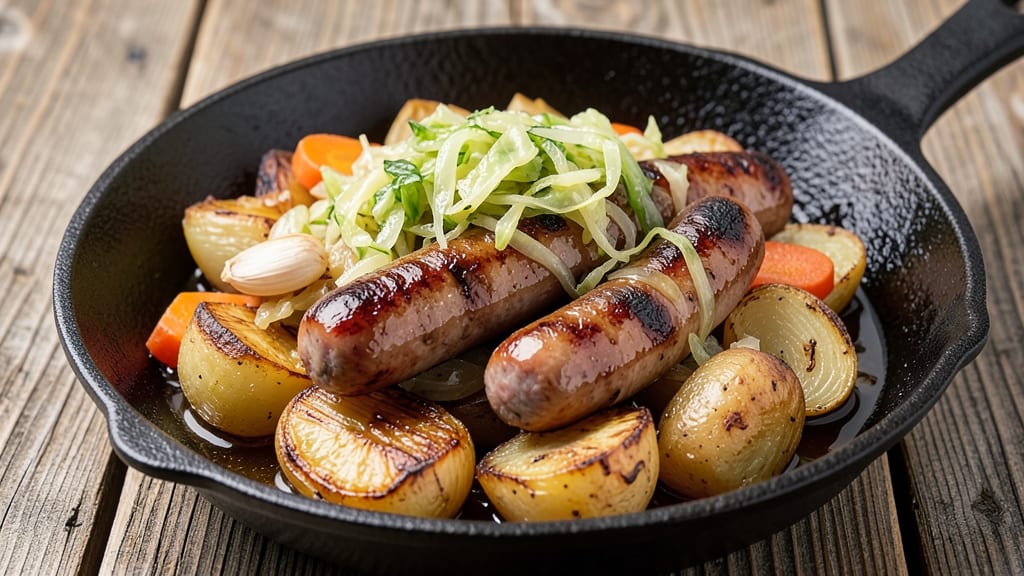
This brat sauerkraut potato recipe delivers a complete German-style feast that brings the flavors of Oktoberfest to your dinner table with minimal effort. The secret lies in balancing smoky bratwurst, tangy sauerkraut, and crispy potatoes all cooked together in one pan for maximum flavor and convenience.
I've perfected this method over years of hosting family gatherings, where it always disappears first.
The magic happens when you grill the bratwurst until deeply caramelized, then finish cooking everything together in the same skillet. This creates a symphony of textures—juicy sausage, tender potatoes, and crispy sauerkraut—all infused with the same savory aromas.
The recipe uses simple pantry staples but delivers restaurant-quality results that feel special enough for company.
By the time you serve this dish, your kitchen will smell like a German beer hall, and your guests will be reaching for seconds.
The potatoes develop a crispy exterior while staying fluffy inside, the sauerkraut softens just enough to absorb all the smoky flavors, and the bratwurst maintains its juicy perfection. This is comfort food at its finest—warm, satisfying, and impossible to resist.
Perfect for game day, family dinners, or when you want to impress without slaving in the kitchen. The one-pan method means less cleanup, and the flavors only get better as they sit. Let's create this hearty German feast together—your taste buds will thank you.
Ingredients for brat sauerkraut potato
Pantry staples meet German flavors in this one-pan wonder—where bratwurst, sauerkraut, and crispy potatoes become a hearty feast.
| Ingredient | Amount | Notes |
|---|---|---|
| Bratwurst Sausages 🌭 | 1 lb | Fresh or high-quality pre-cooked |
| Russet Potatoes 🥔 | 2 lbs | Cut into 1-inch chunks |
| Sauerkraut 🥬 | 1 jar | Drained and rinsed |
| Yellow Onion 🧅 | 1 whole | Sliced into half-moons |
| Carrots 🥕 | 3 medium | Cut into 1-inch pieces |
| Garlic Cloves 🧄 | 4 cloves | Minced for depth |
| Beer 🍺 | 1 cup | Dark lager preferred |
| Apple Cider Vinegar 🍏 | 1 tbsp | For tangy balance |
| Dijon Mustard 🧂 | 1 tbsp | Adds richness |
| Fresh Thyme 🌿 | 1 tbsp | Chopped, or dried |
| Olive Oil 🫒 | 2 tbsp | For crispy potatoes |
| Salt 🧂 | 1 tsp | Kosher or sea salt |
| Black Pepper 🌶️ | ½ tsp | Freshly cracked |
| Bay Leaf 🌿 | 1 whole | For subtle aroma |
| Fresh Parsley 🌿 | ¼ cup | Chopped for garnish |
The bratwurst is the star, so pick quality sausages—look for ones with a good snap when fresh. Costco or local butchers often carry the best, but any good-quality brand works. If using pre-cooked bratwurst, pat them dry before cooking for that perfect caramelized crust. The potatoes? Russets are your best bet—they hold up to the one-pan method without falling apart. For the sauerkraut, drain and rinse it well to remove excess saltiness, but don't skip this step entirely—some brine is key for that authentic tang.
No dark lager? Substitute with apple juice or even more beer if that's what you've got. Fresh thyme is ideal, but dried works at half the amount. Want extra crispy potatoes? Toss them with a little extra olive oil and salt before adding to the pan. The carrots can be swapped for celery or bell peppers if you're feeling adventurous. For the mustard, Dijon is best, but whole-grain mustard adds texture if you prefer. If you're short on time, pre-cut the potatoes and store them in water in the fridge until ready to use—they'll stay fresh for up to 2 days.
This dish tastes even better the next day—flavors meld beautifully when reheated gently. Store leftovers in an airtight container for 3-4 days in the fridge. For a quick meal prep, portion into individual containers so you can grab and reheat portions easily. If you're serving a crowd, double the recipe—it scales perfectly, and the one-pan method means minimal extra cleanup. The bay leaf can be removed before serving, but I like to leave it in for the full experience.
Why You'll Love This Recipe
- One-Pan Magic: I swear by this when I’m too tired to scrub pots—just toss everything on a sheet pan, roast, and walk away. The potatoes crisp up while the sausages brown, and the sauerkraut softens into that perfect tangy bite without a single extra dish.
- Tangy Crunch Combo: That first bite? The smoky bratwurst, the buttery potatoes, and the just-right bite of sauerkraut—it’s like a flavor hug. Honestly, the onions caramelize into sweetness, and the carrots add this unexpected crunch that keeps it interesting.
- Tailgate or Tuesday: Between us, this feeds a crowd or fills my lunchbox for three days. Grill it for a backyard spread or make a double batch for leftovers that taste just as good reheated. My college roommates still ask for the recipe—10 years later.
- Budget Win: Russets and sauerkraut last forever, brats are cheap in bulk, and you’re using every bit of the veggies. I’ll be real: I’ve turned half a bag of day-old sauerkraut into this, and it’s still ridiculous good. Minimal waste, maximum flavor.
Step-by-step instructions for brat sauerkraut potato recipe
Here's how to create a satisfying German-style feast with minimal cleanup.
Roast the Potatoes and Vegetables
Preheat your oven to 375°F. In a large oven-safe skillet, toss the 2 lbs of cut russet potatoes, 1 whole yellow onion sliced into half-moons, and 3 medium carrots cut into 1-inch pieces with 2 tablespoons olive oil, 1 teaspoon salt, and 0.5 teaspoon black pepper. Spread them in a single layer for even browning.
Roast for 30-35 minutes, stirring halfway through, until the potatoes are golden brown and tender when pierced with a fork. The onions should be caramelized, and the carrots should soften slightly. Remove the skillet from the oven and set aside for now - we'll return to these later.
Brown the Bratwurst and Cook the Sauerkraut
In the same skillet (no need to clean it - those browned bits add flavor), heat over medium heat. Add the 1 lb bratwurst sausages and cook for 5-7 minutes, turning occasionally, until they develop golden brown sear marks all over. Remove them and set aside on a plate.
In the same skillet, add the 1 jar drained and rinsed sauerkraut, 4 cloves minced garlic, and the whole bay leaf. Cook for 5 minutes, stirring occasionally, until the sauerkraut begins to soften and release its tangy juices. This step builds the flavor foundation for your dish.
Create the Sauce
Pour in the 1 cup beer, 1 tablespoon apple cider vinegar, and 1 tablespoon Dijon mustard. Add the 1 tablespoon chopped fresh thyme and bring to a gentle simmer. Let it cook for 5 minutes, allowing the flavors to meld together and the sauce to slightly thicken.
Return the roasted potatoes and vegetables to the skillet, along with the browned bratwurst sausages. Spoon the sauce over everything, making sure each component is coated. Cover and let it simmer on low heat for 10 minutes, allowing all the flavors to combine beautifully.
Finish and Serve
After the 10-minute simmer, give everything a good stir. The potatoes should be fully coated in the sauce, and the bratwurst sausages should be heated through. Taste and adjust seasoning if needed - you might want to add a pinch more salt or a crack of black pepper.
Transfer to serving plates, garnishing each portion with 0.25 cup chopped fresh parsley. Serve immediately while everything is hot and the flavors are at their peak. This hearty dish tastes even better the next day, so consider making extra for leftovers!
Pro Tips For Making Brat Sauerkraut Potato
- Parboil Potatoes First: Cut the Russets into ½-inch chunks, then boil them for 5 minutes before roasting—this guarantees they’ll finish tender without turning to mush. I learned this the hard way after serving rubbery potatoes at a picnic; the extra step makes all the difference when pairing with bratwurst.
- Sauté Onions Low and Slow: Caramelize the yellow onion in butter over medium-low heat until deep golden, not brown—this adds sweetness that cuts through the sauerkraut’s tang. High heat burns them fast, and you’ll just end up with bitter bits instead of flavor.
- Drain, Rinse, Repeat: Dump the sauerkraut into a colander, rinse it under cold water, then drain again before cooking—this removes excess brine and keeps the dish from tasting like a pickle jar. Skipping this step means a soggy, watery mess instead of crispy kraut.
- Rest Bratwurst Before Slicing: Let the sausages sit for 5–10 minutes under foil after grilling or pan-frying—this keeps them from falling apart when you slice them. I used to cut them hot and watched them crumble into the potatoes every time.
Make-ahead tips for brat sauerkraut potato
Prep Ahead Strategy
Start by cutting all the potatoes, onions, and carrots the night before and storing them in a sealed container in the refrigerator. This saves 30 minutes of prep time on cooking day. I like to keep them submerged in cold water to maintain freshness—just drain and pat dry before roasting.
The sauerkraut can also be drained and rinsed ahead of time, then stored in its jar in the fridge for up to 2 days. This prep work ensures you only need to focus on cooking when it counts. 📅
Sauerkraut Prep
Drain and rinse the sauerkraut thoroughly—this removes excess brine but preserves that essential tang. For extra flavor, I like to squeeze out any remaining liquid with my hands before adding it to the skillet.
If you're short on time, store the drained sauerkraut in a sealed container with a paper towel to absorb moisture. This step is crucial because the texture should be slightly crisp when it hits the pan, not soggy. 🥬
Bratwurst Prep
Pat the bratwurst dry with paper towels before cooking—this creates a better sear and prevents them from steaming instead of browning. If you're using fresh sausages, consider pre-cooking them on the grill or stovetop the day before, then reheating them gently in the skillet.
This shortcut works especially well for busy weeknights. Store pre-cooked bratwurst in an airtight container in the fridge for up to 3 days. 🌭
One-Pan Assembly
The beauty of this recipe is that everything comes together in the same pan. After roasting the potatoes and veggies, let them cool slightly before adding the sauerkraut and sauce. This prevents the potatoes from absorbing too much liquid and becoming mushy.
I like to assemble the dish 30 minutes before serving so the flavors have time to meld together. The result is a cohesive, restaurant-quality meal with minimal effort. ⏰
Make-Ahead Sauce
For an even easier meal, prepare the beer-mustard sauce in advance and store it in a sealed container in the fridge. When ready to cook, simply heat the sauce on the stovetop and pour it over the roasted potatoes and bratwurst.
This works especially well if you're using pre-cooked sausages. The sauce can be made up to 2 days ahead and reheated gently before serving. 🍺
Leftovers Magic
This dish tastes even better the next day as the flavors deepen and meld together. Store leftovers in an airtight container in the fridge for up to 4 days.
To reheat, cover the dish with a lid and warm it on the stovetop over low heat for 10-15 minutes, stirring occasionally. Avoid microwaving, as it can make the potatoes rubbery. For a quick lunch, portion leftovers into individual containers and reheat just the amount you need. 💫
Nutrition facts
Frequently asked questions
Can I use frozen sauerkraut instead of fresh?
Frozen sauerkraut works perfectly—just thaw it completely first and drain it well. The texture will be slightly softer than fresh, but it still adds that signature tang. For extra crispiness, squeeze out any excess moisture with your hands before cooking.
What's the best way to make the potatoes extra crispy?
For maximum crispiness, cut the potatoes into even 1-inch chunks and toss them with an extra 1 tablespoon olive oil before roasting. Spread them in a single layer on a baking sheet for 15 minutes before adding other ingredients to the pan. This pre-roasting step creates a golden crust.
Can I make this recipe without beer?
Yes! Substitute the beer with 1 cup apple juice or broth (chicken or vegetable) for a non-alcoholic version. The acidity from apple cider vinegar will still balance the flavors. For a richer taste, add 1 tablespoon Worcestershire sauce to compensate for the beer's depth.
How do I keep the bratwurst from drying out?
Never overcook the bratwurst—they're done when they reach 160°F internally. Use a meat thermometer to check! For extra juiciness, brush them with 1 tablespoon melted butter during the last 2 minutes of cooking. Also, avoid cutting into them until ready to serve.
Can I make this a vegetarian dish?
Swap the bratwurst for smoked tofu or vegan sausages (like Beyond Meat or Field Roast). For a meatier texture, try portobello mushrooms marinated in soy sauce and smoked paprika. The rest of the recipe stays the same—just adjust cooking times for your substitute.