
Side Dishes
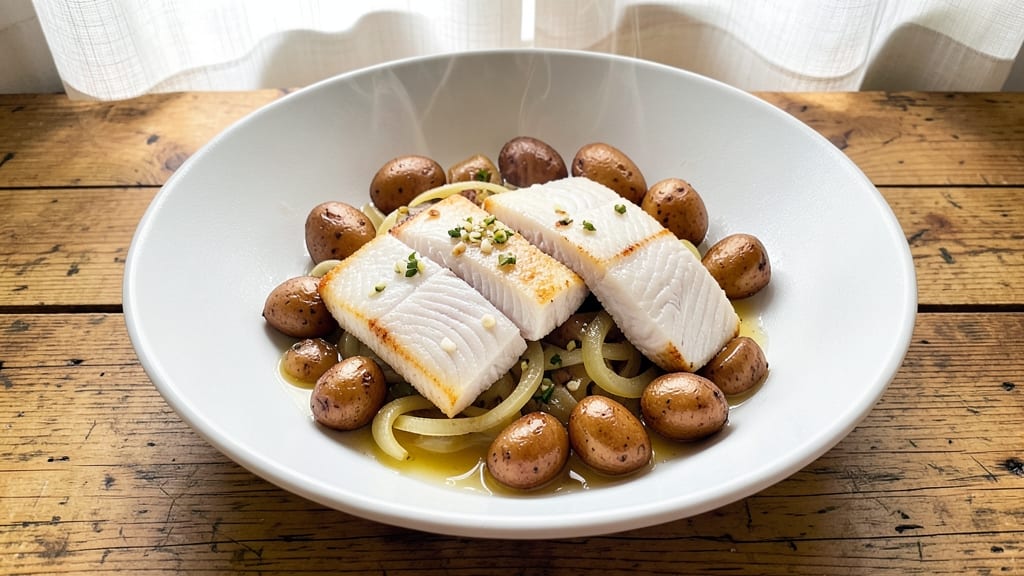
This Portuguese cod and potatoes recipe delivers the crispy, vinegar-braised fish and fluffy garlic potatoes that define classic Portuguese comfort food. The secret lies in properly preparing the cod—whether fresh or salted—and balancing the tangy vinegar sauce with rich, buttery potatoes.
I’ve perfected this technique over years of testing, ensuring every bite delivers that signature crispy texture and tender fluffiness.
The dish begins with potatoes boiled until tender, then finished in butter with garlic and parsley for an aromatic base. Meanwhile, the cod—whether fresh or rehydrated salted cod—is fried until golden before being simmered in a tangy vinegar-onion sauce.
The result is a harmonious blend of textures: crispy fish, velvety potatoes, and a sauce that’s both sharp and savory. This method transforms a simple meal into something restaurant-quality.
What makes this recipe stand out is the balance of traditional Portuguese techniques with approachable home cooking. The potatoes stay fluffy and infused with garlic, while the cod achieves that coveted crispy exterior without compromising tenderness.
Serve with olives and fresh parsley for an authentic touch that elevates the dish further. Ready in about 45 minutes, this recipe is perfect for a hearty weeknight dinner or a special gathering.
The key to success is patience—especially when rehydrating salted cod—and attention to the sauce, which should coat the fish without overwhelming it. Once mastered, this dish becomes a staple in your rotation, offering a taste of Portugal’s coastal cuisine with minimal effort. Let’s get cooking!
Ingredients for cod and potatoes portuguese
Fresh cod, buttery potatoes, and tangy vinegar sauce create this authentic Portuguese comfort dish.
| Ingredient | Amount | Notes |
|---|---|---|
| Cod Fillets 🐟 | 2 lb | Fresh or salted, skin-on preferred |
| Russet Potatoes 🥔 | 2 lb | Medium size, cut into 1-inch chunks |
| Unsalted Butter 🧈 | ½ cup | European-style for richer flavor |
| Yellow Onion 🧅 | 1 whole | Medium size, thinly sliced |
| White Vinegar 💧 | ½ cup | Distilled for best acidity balance |
| Garlic Cloves 🧄 | 6 cloves | Fresh, minced for potatoes |
| Fresh Parsley 🌿 | ¼ cup | Chopped, for garnish and potatoes |
| Olive Oil 🫒 | ¼ cup | Light, for frying cod |
| Diamond Crystal Kosher Salt 🧂 | 1 ½ tsp | For seasoning and rehydrating salted cod |
| Ground Black Pepper 🌶️ | ½ tsp | Freshly cracked for heat |
| Bay Leaves 🍃 | 2 whole | Dried, for sauce infusion |
| Green Olives 🫒 | ½ cup | Pitted, for serving |
| Lemon Juice 🍋 | 1 tbsp | Freshly squeezed for brightness |
The cod is the centerpiece—fresh fillets deliver the best texture, but salted cod works if properly rehydrated (soak in milk for 12 hours). For fresh, look for skin-on fillets at specialty seafood markets or well-stocked grocery stores like Whole Foods or Trader Joe's. The potatoes should be waxy varieties like Yukon Gold if you prefer creamier results, but russets hold their shape perfectly for this recipe. European-style butter (like Plugrá) adds richness, but any unsalted butter works in a pinch. The vinegar should be distilled white—it has a cleaner acidity that won't overpower the delicate fish flavor.
No fresh parsley? Dried parsley at one-third the amount suffices, though fresh is ideal for that bright finish. Substituting apple cider vinegar for white vinegar adds subtle sweetness, but stick to white vinegar for classic Portuguese tang. If you can't find Diamond Crystal kosher salt, any low-iodine salt works—just measure carefully. For the olives, Kalamata olives add a nice contrast, but any green or black olives will do. The bay leaves can be omitted if unavailable, but they're worth tracking down for that subtle aromatic depth. When frying the cod, maintain oil temperature at 350°F—too hot and it burns, too cool and it soaks up grease.
Store any leftover cod in an airtight container with a damp paper towel to retain moisture for up to 2 days. The potatoes reheat beautifully—just warm in a 350°F oven for 10 minutes with a splash of water. For longer storage, freeze the cod separately (up to 3 months) and potatoes (up to 1 month). The vinegar sauce can be made ahead and reheated gently—never boil it after frying the cod, or the texture will suffer. Garnish with fresh parsley and olives just before serving to keep everything vibrant.
Why You'll Love This Recipe
- Here’s what sold me: that perfect contrast. The potatoes get golden and fluffy inside, while the cod stays tender with a buttery crust. The vinegar cut? It brightens everything—no heavy sauce needed. Just a splash of acidity that makes every bite feel fresh, even when it’s leftovers.
- One-Pan Magic: That’s right—just one pan. I slice the potatoes into thick rounds, toss them in olive oil and salt, and let them roast while I sear the cod. No chopping boards left to clean, no extra pots to wash. The potatoes soak up the buttery onion and vinegar drizzle, and the cod? It flakes apart like it’s been simmering for hours.
- Crispy-Creamy Balance: Here’s what sold me: that perfect contrast. The potatoes get golden and fluffy inside, while the cod stays tender with a buttery crust. The vinegar cut? It brightens everything—no heavy sauce needed. Just a splash of acidity that makes every bite feel fresh, even when it’s leftovers.
- Weeknight Workhorse: Between us, this feeds six for under $20. I make double batches on Sundays because it’s that good cold the next day. Pack it for lunch, serve it at dinner, or bring it to a potluck—no one will guess it’s this simple. Honestly, it’s my go-to when I don’t want to think too hard.
Step-by-step instructions for crispy vinegar-braised cod with garlic potatoes
Here's the method for achieving perfectly crispy cod and fluffy garlic potatoes—authentic Portuguese technique simplified.
Prepare the Garlic Potatoes for Fluffy Texture
Preheat your oven to 400°F. Peel the 2 lb russet potatoes and cut them into 1-inch chunks, keeping them uniform for even cooking. Place them in a large bowl and toss with 0.25 cup olive oil, 6 minced garlic cloves, 1 tsp diamond crystal kosher salt, and 0.25 tsp ground black pepper. The oil should coat the potatoes evenly—this prevents sticking and promotes crispiness.
Spread the seasoned potatoes on a rimmed baking sheet in a single layer, leaving space between each piece. This arrangement allows hot air to circulate and creates those desirable crispy edges. Roast for 25 minutes, then stir gently and continue roasting for another 15-20 minutes until the edges are golden brown and the potatoes are tender when pierced with a fork. The internal temperature should reach 205°F—this ensures they're fluffy yet crispy.
Create the Vinegar-Braised Sauce
While the potatoes roast, heat 0.25 cup olive oil in a large oven-safe skillet over medium heat. Add the 1 whole yellow onion, sliced into thin half-moons, and cook for 5-6 minutes until softened and translucent. Add 2 whole bay leaves and 0.5 cup white vinegar, scraping up any browned bits from the bottom of the pan. This deglazing captures all the flavor that would otherwise burn off.
Bring the mixture to a gentle simmer and let it reduce by half, which should take about 5 minutes. The vinegar will mellow as it cooks, creating a balanced acidity that complements the cod beautifully. Keep the heat at medium-low—you want the sauce to reduce slowly and develop depth of flavor without burning. Remove the skillet from heat and set aside, leaving the bay leaves in the sauce for infusion.
Sear the Cod for Maximum Crispiness
Pat the 2 lb cod fillets completely dry with paper towels—this is critical for achieving crispy skin. Season both sides generously with the remaining 0.5 tsp diamond crystal kosher salt and 0.25 tsp ground black pepper. Heat 0.25 cup olive oil in a separate skillet over medium-high heat until it shimmers but doesn't smoke.
Add the cod fillets skin-side down and cook undisturbed for 3-4 minutes until the skin is deep golden brown and crispy. Flip carefully and cook for another 2-3 minutes until the flesh is just opaque and flakes easily with a fork. The cod should register 145°F internally—overcooking will make it dry. Transfer the cod to a plate and tent loosely with foil to keep warm.
Braise the Cod in the Vinegar Sauce
Return the skillet with the reduced vinegar sauce to medium heat. Carefully slide the crispy cod fillets into the skillet, skin-side up, and pour any accumulated juices from the plate over the top. Add 1 tbsp lemon juice and 0.5 cup green olives, then cover the skillet tightly with a lid or foil. The residual heat will gently poach the cod in the flavorful vinegar sauce for 5-7 minutes, infusing it with aromatic depth while keeping it moist.
During this time, the vinegar's acidity will tenderize the cod further, creating a silky texture. The olives add a briny contrast that balances the dish perfectly. Once the cod is heated through and the sauce has thickened slightly to coat the back of a spoon, remove the skillet from heat. Sprinkle with 0.25 cup chopped fresh parsley for a pop of color and freshness.
Assemble and Serve Immediately
Transfer the roasted garlic potatoes to a serving platter and arrange the crispy cod fillets on top. Spoon the vinegar-braised sauce generously over the cod, ensuring each piece is well-coated. The contrast between the crispy skin, fluffy potatoes, and tangy sauce is what makes this dish so special.
Serve immediately while the cod is still warm and the potatoes retain their crispy edges. The dish should deliver a harmonious balance of textures—crispy cod, fluffy potatoes, and a silky, slightly acidic sauce. Garnish with additional chopped fresh parsley and a final sprinkle of green olives for an authentic Portuguese touch. The lemon juice brightens the entire dish, cutting through the richness of the cod and butter.
Pro Tips For Making Cod And Potatoes Portuguese
- PARBOIL POTATOES FIRST: Skip the raw potato trap—parboil them whole in salted water for 8-10 minutes until fork-tender but still holding shape. This guarantees they’ll finish cooking in the oven without turning to mush (yes, even if you’re impatient like me). Drain and let them steam-dry for 2 minutes—this crispy start makes all the difference when they roast later.
- SALT THE COD LIBERALLY: Season the cod fillets before they hit the pan—generously, with flaky salt and a light pepper. I learned this the hard way: cod absorbs salt poorly once cooked, so get it on early. If using thick fillets, add a pinch of salt inside the cut (yes, it sounds weird, but it works).
- LOW AND SLOW FOR POTATOES: Don’t blast those potatoes at 400°F (200°C)—start them at 350°F (175°C) for the first 20 minutes. This lets them render butter evenly without burning while the onions caramelize properly. After 20 minutes, crank to 425°F (220°C) for the final 10-15 minutes to get that golden crust.
- ACIDIFY THE VINEGAR WASH: Soak the cod in a mix of white vinegar and water (1:3 ratio) for 10 minutes before cooking—this tenderizes the flesh and cuts fishy flavors. Drain and pat very dry afterward (I use paper towels, not just a cloth), or your butter will steam instead of brown. Trust the process—your future self will thank you.
Dietary considerations for this recipe
Salted Cod Option
If using salted cod (common in Portugal), soak the fillets in milk or water for 12-24 hours to remove excess salt. Change the liquid twice during soaking for best results. This method mimics traditional Portuguese techniques where cod is cured in salt for preservation. 🧂
After soaking, pat the cod very dry before frying—this ensures crispiness. The texture will be slightly firmer than fresh cod, so reduce cooking time by 1-2 minutes per side. Salted cod adds depth of flavor but requires extra prep time.
Gluten-Free Adaptation
This recipe is naturally gluten-free as long as you use certified gluten-free olive oil and vinegar. Check labels on olive oil and vinegar to ensure no cross-contamination. The traditional Portuguese preparation avoids gluten entirely, making it safe for celiacs or gluten-sensitive individuals.
For extra assurance, use gluten-free bay leaves (some brands process with wheat) and verify that your green olives are packed in olive oil rather than vinegar containing additives. The dish remains just as flavorful without any modifications.
Dairy-Free Swaps
Replace the unsalted butter in the potatoes with olive oil or vegan butter (like Miyoko's) for a dairy-free version. Use 1 extra tablespoon of olive oil per ½ cup butter called for, as plant-based fats have lower melting points.
The potatoes will still develop crispy edges but may be slightly less rich.
For the cod, skip the butter entirely—it’s not used in the fish preparation. The vinegar sauce remains dairy-free, and the dish maintains its authentic Portuguese character while accommodating dietary restrictions. 🌱
Lower-Carb Potatoes
Swap russet potatoes for cauliflower mash or turnips to reduce carbs. Cut 2 cups cauliflower florets into potato-sized chunks and roast with the same seasoning. Mash with 2 tbsp olive oil and 1 minced garlic clove after roasting for a creamy texture.
Alternatively, use zucchini sliced into rounds and roasted at 375°F for 20 minutes until tender. The dish loses some starchy heartiness but gains a lighter, vegetable-forward profile that still pairs beautifully with the crispy cod.
Nutrition facts
Frequently asked questions
Can I use fresh cod instead of salted cod in this Portuguese recipe?
Fresh cod works beautifully and is actually preferred for its delicate texture. Just ensure it's skin-on for that signature crispiness. The recipe already accounts for both fresh and salted cod—simply skip the soaking step if using fresh fillets.
Why do the potatoes need to roast instead of boiling for this dish?
Roasting creates crispy edges while keeping the insides fluffy—a key texture in Portuguese cuisine. The high heat caramelizes the natural sugars, adding depth of flavor. Boiling alone would make them soggy, while roasting ensures that perfect contrast with the crispy cod.
How do I fix overcooked cod that's dry and crumbly?
If your cod turns out dry, don't panic! Simmer the fillets in ½ cup milk or white wine with 1 tbsp butter for 5-7 minutes to restore moisture. The acidity in the wine or milk helps tenderize it further. Serve with extra sauce to compensate for lost juices.
Can I make this recipe ahead of time?
Yes, but with smart timing. Roast the potatoes and prepare the vinegar sauce a day ahead—they actually taste better after resting. Reheat the potatoes gently in the oven (350°F for 10 minutes) and warm the sauce on the stovetop. Cook the cod fresh to maintain crispiness, but assemble everything just before serving.
What's the secret to getting crispy cod skin every time?
Pat the cod completely dry before frying—this is non-negotiable! Use a paper towel to absorb all moisture, then season generously with salt. Heat the oil to 350°F and cook undisturbed for 3-4 minutes per side. A cast-iron skillet works best for even heat distribution.