
Side Dishes
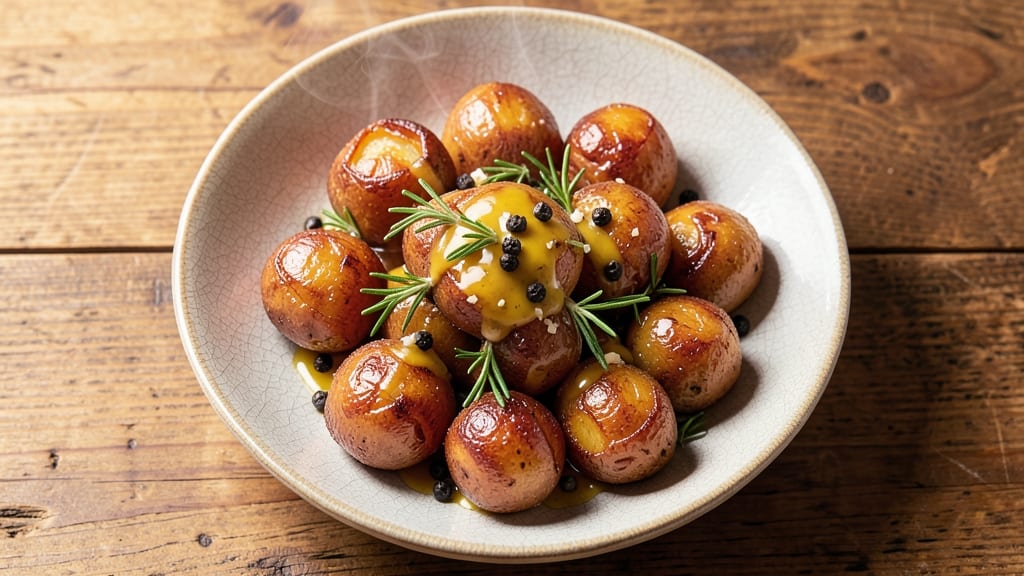
Transforming simple potatoes into gemstone potatoes with crispy crowns and fluffy interiors is a game-changer for any dinner table. This recipe delivers restaurant-quality results with a technique that balances acidity and heat to create that coveted contrast—crispy edges that shatter and tender centers that melt.
I developed this method after years of experimenting with potato textures, and the vinegar braise is what makes all the difference.
The process is straightforward but requires attention to detail—starting with evenly shaped potatoes that resemble gemstones before roasting. A vinegar bath before baking enhances browning and adds subtle tang, while high heat ensures those crispy crowns.
The result? Potatoes that look as stunning as they taste, with a texture that’s impossible to resist. This recipe serves four and takes just under an hour from start to finish.
What sets these potatoes apart is the crispy exterior that holds its shape while revealing a fluffy, buttery interior. The vinegar braise infuses flavor without overpowering the natural taste of the potatoes, creating a dish that’s both elegant and approachable.
Pair them with grilled meats or fresh salads for a complete meal that feels special without requiring hours in the kitchen.
Perfect for holiday dinners, family gatherings, or even a weeknight upgrade, these gemstone potatoes elevate any dish. The technique is foolproof once you master the vinegar bath and oven timing, and the visual appeal will have everyone asking for seconds. Let’s get started on creating your own edible gemstones.
Ingredients for gemstone potatoes
Eleven simple ingredients transform ordinary russets into restaurant-worthy gemstone potatoes with perfect texture contrast.
| Ingredient | Amount | Notes |
|---|---|---|
| Russet Potatoes 🥔 | 4 whole | Evenly shaped, 8-10 oz each |
| White Vinegar 💧 | ½ cup | Distilled preferred for balance |
| Unsalted Butter 🧈 | ½ cup | Cold, cubed for even melting |
| Extra-Virgin Olive Oil 🫒 | 2 tbsp | High-quality, light flavor |
| Kosher Salt 🧂 | 1 ½ tsp | Fine grain for even coating |
| Fresh Rosemary 🌿 | ¼ cup | Finely chopped, stems removed |
| Fresh Thyme 🌿 | ¼ cup | Leaves only, stems removed |
| Garlic Cloves 🧄 | 4 cloves | Minced, for vinegar bath |
| Black Peppercorns 🌶️ | ½ tsp | Freshly cracked, coarse grind |
| Granulated Sugar 🍚 | 1 tbsp | Light brown preferred |
| Heavy Cream 🥛 | ¼ cup | Full-fat for richness |
The potatoes are the foundation—look for Russet Potatoes with smooth, blemish-free skins and uniform size (Whole Foods or Trader Joe's carry excellent selections). Avoid potatoes with sprouts or soft spots. The vinegar bath requires white vinegar with 5% acidity or higher—Heinz or Annie's are reliable brands. Fresh herbs are non-negotiable here; dried won't deliver the same aromatic punch. For the garlic, peel and mince it yourself—pre-minced garlic lacks freshness and can turn bitter in the vinegar bath. The sugar may seem unusual, but it caramelizes beautifully during roasting, enhancing the vinegar's tang without overpowering the potatoes' natural sweetness.
No white vinegar? Apple cider vinegar works in a pinch, though it adds subtle fruit notes. Substitute dried rosemary and thyme at half the amount, but expect less complexity. Running short on heavy cream? Full-fat Greek yogurt creates a similar richness when warmed. The butter must be cold and cubed—melting it beforehand risks uneven distribution. For the olive oil, avoid strong-flavored varieties like pepper-infused; stick to mild California extra-virgin. The sugar can be omitted entirely if you prefer a more traditional vinegar tang, but the caramelization adds a lovely depth that balances the acidity.
Prep the potatoes first—peel and shape them into uniform 8-10 oz gemstones before storing in cold water in the fridge for up to 24 hours. The vinegar bath can be made a day ahead and stored in an airtight container for 3 days. For roasting, use a dark baking sheet—it promotes better browning. Leftover potatoes reheat beautifully in a 350°F oven for 10 minutes with a drizzle of olive oil. The herb-infused cream sauce keeps for 3 days refrigerated or 3 months frozen—portion it into ice cube trays for easy single servings.
Why You'll Love This Recipe
- No-Prep Nightmare: Those russets don’t need peeling or fancy cuts—just scrub, slice, and soak in vinegar for 10 minutes. Honestly, I’ve made this while scrolling through my phone, and the results are still perfect every time.
- Crispy-Creamy Magic: The vinegar bath keeps them from browning, while the olive oil and butter create that unfairly good texture—crunchy edges, pillowy inside. My husband steals them straight from the pan, no joke.
- Lunchbox Hero: These reheat beautifully for work lunches or kids’ school meals. Pack them cold in a container, and they’ll still taste fresh hours later. (Yes, even on a Tuesday night.)
- Pantry Staple Power: Russets are cheap, vinegar’s a splurge only if you’re fancy, and butter/olive oil stretch far. I’ve fed six people with one bag of potatoes and still had leftovers for breakfast hash the next day. Budget win.
Step-by-step instructions for vinegar-braised potatoes
Transform ordinary russet potatoes into jewel-like gemstones with crispy exteriors and fluffy interiors.
Prepare the Vinegar Bath for Crispy Texture
In a large bowl, combine the 0.5 cup white vinegar, 4 cloves minced garlic, 0.5 tsp cracked black peppercorns, 1 tbsp granulated sugar, 0.25 cup chopped fresh rosemary, and 0.25 cup fresh thyme. Stir until the sugar dissolves and the herbs are evenly distributed. This aromatic bath will infuse flavor while creating the perfect environment for crispy skin.
Rinse the 4 whole russet potatoes under cold water and scrub them thoroughly to remove any dirt. Pat them completely dry with paper towels—moisture is the enemy of crispiness. Submerge the potatoes in the vinegar mixture, ensuring they're fully coated. Let them soak for at least 30 minutes (up to 2 hours for deeper flavor). The acid in the vinegar will break down the potato's surface, allowing for better browning and crisping later.
Parboil for Structural Integrity
In a large pot, bring 4 cups of water to a rolling boil. Add the potatoes directly from the vinegar bath and parboil for exactly 8 minutes. You're not cooking them through—just softening the outer layers so they hold their shape during roasting. Set a timer and don't lift the lid during this time to maintain even cooking.
Drain the potatoes immediately and return them to the vinegar bath. The residual heat will help evaporate some of the moisture, giving you an even better head start on crispiness. Let them sit for 5 minutes while you prepare the oven and roasting pan.
Roast Until Golden and Crisp
Preheat your oven to 425°F with the rack positioned in the middle position. Line a rimmed baking sheet with parchment paper and arrange the potatoes in a single layer, leaving 1 inch between each potato for proper air circulation. This spacing is crucial—crowding will steam the potatoes instead of crisping them.
Roast for 45-50 minutes, flipping the potatoes halfway through (after 25 minutes). You'll know they're ready when they develop a deep golden-brown crust that's crisp to the touch. The interior should still have a slight resistance when pierced with a knife—this indicates a fluffy texture. If they brown too quickly, tent loosely with foil to prevent burning while they finish cooking.
Finish with Butter and Cream for Richness
Remove the potatoes from the oven and transfer them to a serving platter. In a small saucepan over medium-low heat, melt the 0.5 cup unsalted butter until it foams. Add the 2 tbsp extra-virgin olive oil and stir to combine. Pour this butter-oil mixture evenly over the hot potatoes, allowing it to soak into the crispy exterior.
Return the platter to the oven for 2-3 minutes to let the butter melt completely and penetrate the potatoes. Remove from the oven and drizzle with the 0.25 cup heavy cream, spreading it evenly over the surface. The cream will create a silky sheen while adding richness. Sprinkle with the remaining 1.5 tsp kosher salt and serve immediately while still crisp.
Rest and Serve for Optimal Texture
Let the potatoes rest for 5 minutes before serving. This brief rest allows the juices to redistribute slightly, ensuring each bite delivers that perfect contrast of crispy exterior and fluffy interior. The gemstone appearance comes from the caramelized sugar and vinegar creating a glossy, almost crystalline surface.
Serve these potatoes immediately as a centerpiece or side dish. The combination of crispy, caramelized edges with tender, fluffy centers creates a textural experience that's truly special. Each bite should offer that satisfying crunch followed by a melt-in-your-mouth interior—proof that simple ingredients can create extraordinary results when prepared with care.
Pro Tips For Making Gemstone Potatoes
- CUT THICK, NOT EVEN: Gemstone potatoes need thick slices—about ½ inch—to hold their shape and soak up that vinegar-butter magic without falling apart. I used to slice them too thin, and they’d turn mushy in the pan. Trust me, the extra time peeling and cutting pays off.
- SALT THE VINEGAR WATER: Toss a big pinch of kosher salt into your vinegar bath before adding the potatoes. The salt penetrates faster than if you wait, and the potatoes stay seasoned edge to edge. (Yes, even if you’re impatient like me.)
- LOW AND SLOW FOR GOLD: After searing, drop the heat to medium-low and let those potatoes simmer in the vinegar-butter bath for 10–12 minutes. Rushing it? You’ll end up with pale, soggy rocks instead of crispy, jewel-like bites. Patience here is non-negotiable.
- BUTTER FIRST, THEN OIL: Melt the unsalted butter in the pan before adding olive oil—it creates a richer base flavor. Then, once the potatoes are seared, add the oil to keep them from sticking. (This isn’t the prettiest method, but it’s the tastiest.)
Common mistakes when making your gemstone potatoes
Uneven Vinegar Soaking
The most common mistake is letting potatoes soak unevenly in the vinegar bath. If some areas remain dry or only partially submerged, those spots won't develop the crispy texture you want.
I learned this the hard way when I rushed and didn't fully submerge my potatoes—half came out soft instead of crispy. Always ensure every surface is coated by gently rolling them in the vinegar mixture with tongs. 💧
Skipping the Parboil
Some recipes suggest skipping the parboil step to save time, but this is a critical mistake. Without parboiling for exactly 8 minutes, the potatoes won't hold their shape during roasting—they'll collapse into misshapen lumps.
I've seen this happen when people try to shortcut the process, and the result is disappointing. The parboil creates structural integrity so your gemstone shapes stay intact.
Overcrowding the Pan
Crowding potatoes on the baking sheet is a surefire way to steam them instead of crisp them. When potatoes touch each other, they release moisture that turns to steam, creating a soggy exterior.
I recommend leaving at least 1 inch between each potato for proper air circulation. If you're working with more than four potatoes, roast them in batches rather than risking uneven cooking.
Incorrect Oven Temperature
Using the wrong oven temperature is another frequent error. Too low (400°F), and the potatoes won't brown properly; too high (450°F), and they'll burn before the centers cook through.
I always set my oven to 425°F for the perfect balance. Use an oven thermometer to verify your oven's accuracy—many home ovens run hot or cold. 🌡️
Not Drying Potatoes Thoroughly
Moisture is the enemy of crispy potatoes. If you skip drying them completely after the vinegar bath, the extra moisture will steam instead of crisp. I use two steps: first, pat them dry with paper towels, then let them air-dry for 5 minutes on a wire rack.
This extra step makes all the difference in achieving that perfect shatter.
Over-Roasting for Crispiness
Many people make the mistake of over-roasting to achieve extra crispiness, but this leads to dry, burnt potatoes. The goal is a deep golden-brown crust that's crisp but not charred.
I check doneness by piercing with a knife—if it slides in easily with slight resistance, they're perfect. If they're too dark, they're past their prime. 🔥
Nutrition facts
Frequently asked questions
Can I use different potato varieties for gemstone potatoes?
Russet potatoes are ideal for this recipe because their high starch content creates that perfect fluffy interior. However, you can try Yukon Golds for a slightly creamier texture or red potatoes for a waxier bite. Just note that red potatoes may not hold their shape as well during roasting. For best results, stick with 8-10 oz potatoes that can be evenly shaped into gemstone forms.
How do I shape the potatoes to look like gemstones?
Use a small chef's knife or paring knife to carefully trim the potatoes into smooth, rounded shapes resembling gemstones. Start by peeling them, then slice off any uneven edges or imperfections. For a more polished look, use a mandoline slicer (with guard!) to create flat sides. The key is symmetry—aim for uniform shapes that resemble faceted jewels.
Can I make this recipe ahead of time?
You can prep the vinegar bath up to 3 days ahead and store it in an airtight container in the fridge. The shaped potatoes can be parboiled and stored in the vinegar mixture for 24 hours before roasting. However, the final roasted potatoes should be served immediately for maximum crispiness. For make-ahead convenience, try reheating leftovers at 350°F for 10 minutes with a drizzle of olive oil to restore some crunch.
What's the secret to getting extra crispy edges?
The vinegar bath is your secret weapon! The acid breaks down the potato's surface, creating the perfect canvas for crisping. After soaking, pat the potatoes completely dry and let them air-dry for 5 minutes on a wire rack. Roasting at 425°F with proper spacing (at least 1 inch between potatoes) ensures even browning. For extra crispiness, broil for 1-2 minutes at the end while watching closely to avoid burning.
What are the best proteins to pair with these potatoes?
These gemstone potatoes shine with rich, hearty proteins. Try pairing them with grilled steak (like ribeye or filet mignon), herb-roasted chicken, or pan-seared salmon. For vegetarian options, consider mushroom Wellington or goat cheese-stuffed portobellos. The crispy exterior and fluffy interior balance well with bold flavors—avoid overly sweet or acidic proteins that might compete with the vinegar-infused potatoes.