Side Dishes
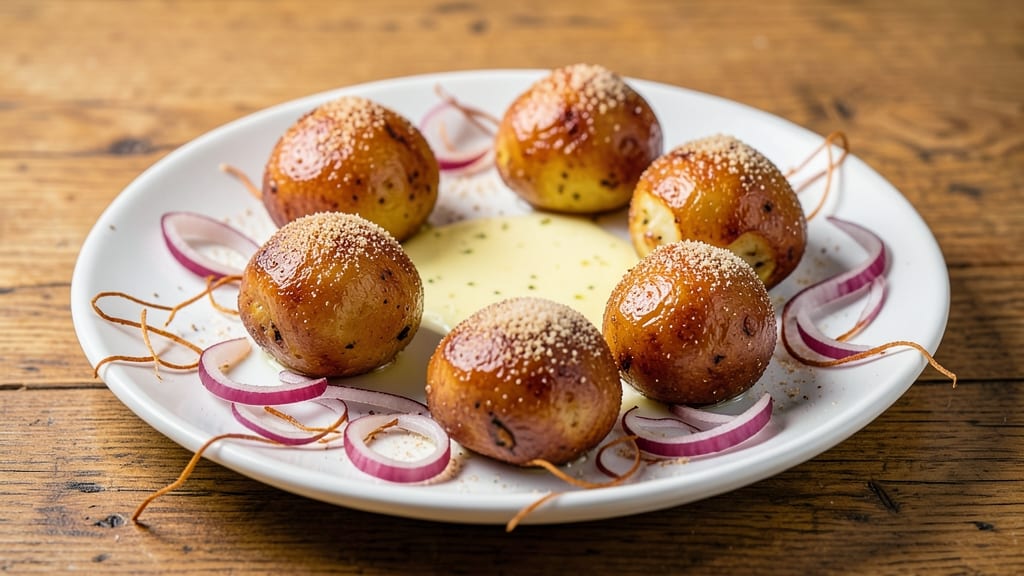
German potato balls—known as Reibekuchen or Kartoffelpuffer—deliver crispy, golden edges and a tender interior with malty depth from beer braising. I first discovered these at a Munich beer hall, where the sizzle of lard in a cast-iron pan filled the air with an aroma that’s impossible to resist.
This recipe captures that authentic experience with a technique that’s both traditional and approachable.
The secret to perfect potato balls lies in the preparation: freshly grated potatoes (never pre-shredded) and a precise balance of seasonings—nutmeg, salt, and a touch of onion—create the foundation.
Pan-frying in lard yields that signature crispiness, while a quick braise in beer adds depth that transforms simple potatoes into a dish worthy of any gathering. Even beginners can master this method with a few key steps.
By the time you serve these, your kitchen will smell like a German beer garden, and every bite will deliver that satisfying crunch followed by a tender, flavorful center.
The beer braise ties everything together, creating a dish that’s hearty enough for a main course but light enough to pair with a fresh salad or tangy mustard. This is comfort food at its finest—simple, satisfying, and impossible to resist.
Serve with classic accompaniments like sauerkraut, applesauce, or a dollop of sour cream to balance the richness. The crispy edges hold up well, making these potato balls perfect for sharing. Let’s get started on a recipe that brings a taste of Germany to your table.
Ingredients for german potato balls
Freshly grated potatoes, lard for crispiness, and malty beer braise—this is the authentic German potato ball experience.
| Ingredient | Amount | Notes |
|---|---|---|
| Russet Potatoes 🥔 | 3 lb | Freshly grated, skin on for texture |
| Large Eggs 🥚 | 2 whole | Room temperature for even binding |
| All-Purpose Flour 🌾 | ½ cup | Lightly sifted for airy texture |
| Fresh Onion 🧅 | ¼ cup | Finely minced, white or yellow |
| Ground Nutmeg 🌿 | ½ tsp | Freshly grated for warmth |
| Diamond Crystal Kosher Salt 🧂 | 1 ½ tsp | Adjust to taste, coarse grain |
| Freshly Ground Black Pepper 🌶️ | ½ tsp | Cracked peppercorns preferred |
| Leaf Lard 🧈 | ½ cup | Rendered, not leaf fat substitute |
| Dark Lager Beer 🍺 | 1 cup | German-style, like Paulaner or Beck's |
| Unsalted Butter 🧈 | 2 tbsp | For finishing, European-style preferred |
| Fresh Parsley 🌿 | ¼ cup | Chopped, for garnish (optional) |
The potatoes are non-negotiable—Russet delivers the best texture when freshly grated, and skin-on adds rustic character. Whole Foods or specialty grocers often carry organic Russets with thicker skins, ideal for this dish. Avoid pre-shredded bags; the starch content is too high and the texture suffers. For the lard, leaf lard is traditional, but rendered pork fat works perfectly. Costco or butcher shops are your best bet for quality leaf lard, or you can render it yourself from pork fat. The beer should be a dark lager—avoid light beers or IPAs, as their hop bitterness clashes with the dish's malty sweetness.
No fresh parsley? Dried parsley at one-third the amount works in a pinch, though fresh is preferred for garnish. Running short on lard? Vegetable shortening can substitute, but the flavor won’t be as rich. For the beer braise, substitute with apple cider or dark ale if German lager isn’t available, though the malty depth will differ slightly. The onion is key—yellow or white works best, and it should be finely minced for even distribution. If you’re using pre-minced onion from a jar, rinse it thoroughly to remove excess moisture. The nutmeg must be freshly grated; pre-ground loses its potency quickly, and the flavor is critical to the dish’s warmth.
Store freshly made potato balls in an airtight container with parchment paper between layers to maintain crispiness for 3-4 days in the refrigerator. For longer storage, freeze them on a baking sheet first to prevent sticking, then transfer to a sealed bag for up to 2 months. Reheat in a skillet with a touch of lard or butter over medium heat until golden and crispy again. These reheat beautifully—even better than the first time, as the flavors meld further. Serve immediately after reheating to preserve that signature crunch.
Why You'll Love This Recipe
- No Peel, No Stress: I swear by this trick—just grate those Russets raw, no peeling required. The texture stays creamy, and honestly? That saves me 15 minutes of scrubbing every time.
- Nutmeg Magic: Between us, that pinch of ground nutmeg transforms these into something special. It’s warm, earthy, and pairs perfectly with the crispy onion bits—like a hug in bite-sized form.
- Weeknight Crowd-Pleaser: These disappear at potlucks, game days, or when my kids demand "real food" after pizza night. Serve them with gravy, ketchup, or even as a side to soup—no one complains.
- Fridge Goldmine: Make a double batch, and you’ve got lunch for days. They reheat like a dream (oven or air fryer, no sogginess) and cost pennies per serving. My budget and my freezer thank me.
Step-by-step instructions for German potato balls
Mastering these crispy beer-braised potato balls requires precision in texture and timing.
Prepare the Potato Base
Begin by grating the 3 lb russet potatoes using the large holes of a box grater, keeping the skin on for added texture. Immediately transfer the grated potatoes to a clean kitchen towel and squeeze out all excess moisture—this step is critical for achieving crispy potato balls. The goal is a dry, crumbly texture that will hold its shape when fried.
In a large mixing bowl, combine the grated potatoes with the 0.25 cup finely minced fresh onion, 0.5 tsp ground nutmeg, 1.5 tsp diamond crystal kosher salt, and 0.5 tsp freshly ground black pepper. Mix gently but thoroughly to distribute the seasonings evenly throughout the potato mixture. The nutmeg adds a subtle warmth that complements the beer's malty depth, while the onion provides a subtle sweetness that balances the overall flavor profile.
Bind and Shape the Potato Balls
In a separate bowl, beat the 2 whole large eggs until just combined, then whisk in the 0.5 cup all-purpose flour and the 0.5 cup rendered leaf lard. Gradually fold this mixture into the potato-onion blend, working carefully to incorporate without overmixing. The lard ensures a rich, golden crust during frying, while the eggs provide the binding necessary to hold the balls together.
Once fully combined, transfer the dough to a chilled surface and gently shape it into 16 even balls, each about 1.5 inches in diameter. The consistency should be firm enough to hold its shape when rolled, but not so dry that it cracks during frying. Place the shaped potato balls on a parchment-lined baking sheet and refrigerate for 30 minutes to firm up—this resting period prevents premature breaking during frying.
Fry for Crispy Perfection
Heat the 0.5 cup leaf lard in a large skillet over medium heat until it reaches 350°F—use a deep-fry thermometer for accuracy. Working in batches to avoid crowding, carefully lower the chilled potato balls into the hot lard using a slotted spoon. Fry for 4-5 minutes per side until they develop a deep golden brown crust and the internal temperature reaches 180°F. The lard should sizzle gently but not smoke excessively—adjust the heat if needed to maintain even cooking.
Drain the fried potato balls on a wire rack or paper towel-lined plate to remove excess lard. The result should be balls with a crisp exterior that gives way to a tender, fluffy interior. If any balls feel undercooked at the center, return them to the lard for an additional 30 seconds until fully heated through. The crispy texture is what makes these potato balls irresistible, so don't rush this step.
Braise in Dark Lager Beer
In the same skillet used for frying, reduce the heat to medium-low and add the 1 cup dark lager beer. Allow it to simmer gently for 3-4 minutes until slightly reduced by about one-third, which intensifies the malty flavors. Stir in the 2 tbsp unsalted butter, letting it melt completely and create a glossy sauce that will coat the potato balls.
Return the fried potato balls to the skillet and gently toss to coat them evenly in the beer-butter mixture. Simmer for an additional 2 minutes, just until the sauce clings to the balls and they absorb the aromatic beer flavors. The beer braising adds a rich depth that complements the crispy exterior and tender interior, creating a harmonious balance of textures and flavors.
Finish and Serve
Transfer the potato balls to a serving platter and garnish with the 0.25 cup chopped fresh parsley for a pop of color and freshness. Serve immediately while still warm, ensuring each bite delivers the perfect combination of crispy, tender, and malty flavors. The beer braise should coat the potato balls lightly, adding moisture without overwhelming the crispy texture you've worked so hard to achieve.
These German potato balls pair exceptionally well with a simple green salad or a side of sauerkraut, enhancing their malty depth and crispy texture. The key to success lies in maintaining the crispy exterior while ensuring the interior remains tender—every step, from squeezing out moisture to frying at the correct temperature, contributes to this perfect balance.
Pro Tips For Making German Potato Balls
- Boil Until Fork-Tender: Russets stay clumpy if you cut them too soon—wait until they’re completely cool and then slice them into even ½-inch chunks. Drop them into salted boiling water (yes, even if your recipe doesn’t say it) and cook until a knife slides in like butter. I learned this the hard way when my first batch turned out gummy because I rushed the boiling.
- Grate That Onion Fine: Skip the food processor—freshly grated onion makes all the difference. Use the small holes of a box grater and press hard to get a paste-like texture. This blends seamlessly into the potato mix instead of sitting in clumps. (Pro move: Let it sit in a bowl for 5 minutes to draw out moisture before mixing.)
- Chill the Dough: After mixing, pop the potato-egg-flour slurry in the fridge for at least 30 minutes. This firms up the dough so it holds shape when frying, and the balls won’t fall apart in the pan. I was skeptical until I tried it—now I never skip it.
- Fry in Batches: Crowd the pan, and you’ll steam the balls instead of crisp them. Use a heavy skillet and fry 2-3 balls at a time over medium heat with enough oil to coat the bottom (about ¼ inch). Turn them once—just once—and let them develop a deep golden crust. (Yes, even if you’re impatient like me.)
Best sauces and condiments for these flavors
Classic Beer Sauce
The star of the show is the beer braise, where the malty depth of dark lager transforms these potato balls into something extraordinary. After frying, simmer the balls in 1 cup of German dark lager (like Paulaner or Beck’s) reduced by one-third—this concentrates the flavors beautifully.
Finish with 2 tbsp butter for a glossy, rich coating that clings perfectly. 🍺
Creamy Horseradish Dip
For a tangy contrast, blend ½ cup sour cream with 1 tbsp prepared horseradish, 1 tsp Dijon mustard, and a pinch of salt. The sharpness cuts through the richness of the potato balls while adding a German-inspired kick.
Serve chilled in a small bowl for dipping—it’s a crowd-pleaser at any gathering.
Applesauce with Cinnamon
Sweet and slightly spiced, unsweetened applesauce (about 1 cup) warmed with ½ tsp cinnamon and a pinch of nutmeg mirrors the warm spices in the potato balls. The natural sweetness balances the crispy, savory edges beautifully. Store-bought or homemade works—just avoid chunky varieties for a smooth texture.
Crispy Onion Gravy
Sauté ½ cup finely chopped onions in 2 tbsp butter until golden, then deglaze with ½ cup beer and reduce by half. Stir in 1 tbsp flour to thicken, then add 1 cup chicken broth and simmer until glossy.
The caramelized onions add a deep, sweet contrast that elevates the dish to restaurant-quality.
Spicy Mustard Aioli
Mix ½ cup mayonnaise with 1 tbsp whole-grain mustard, 1 tsp honey, and a pinch of cayenne pepper for a creamy, slightly sweet, and spicy dip. The honey rounds out the heat, while the mustard ties back to the nutmeg in the potato balls.
Serve at room temperature for the best texture and flavor balance.
Sauerkraut Slaw
Shred 2 cups sauerkraut (rinse if too sour) and toss with ¼ cup Greek yogurt, 1 tbsp apple cider vinegar, and a pinch of salt.
The tangy crunch of sauerkraut complements the crispy potato balls, adding a refreshing contrast. This side is quick to prepare and pairs perfectly with the malty beer flavors.
Nutrition facts
Frequently asked questions
Why do my potato balls turn out soggy instead of crispy?
Soggy potato balls usually mean excess moisture wasn't removed properly. After grating, squeeze the potatoes thoroughly in a clean towel to eliminate all liquid. Also, avoid overmixing the batter—just combine ingredients until just combined. Fry in batches at 350°F in lard or vegetable shortening (not oil) for that signature crisp.
Can I make these potato balls ahead of time?
Yes! Shape the balls and refrigerate them overnight (covered) for easier handling. For best results, fry them fresh when ready to serve. If storing cooked potato balls, keep them in an airtight container with parchment between layers—they'll stay crispy for 3-4 days. Freeze for up to 2 months by freezing fried balls first, then transferring to a bag. Reheat in a skillet with a touch of lard.
What's the best beer to use for the braise?
Use a German dark lager like Paulaner or Beck's for authentic malty depth. Avoid light beers or IPAs—their hop bitterness clashes with the dish. If German beer isn't available, try a dark ale or amber ale as a substitute. The beer should be non-alcoholic if preferred, but the flavor will differ slightly.
Are these potato balls gluten-free?
Traditional German potato balls contain flour, so they're not gluten-free. For a GF version, replace the 0.5 cup flour with 0.5 cup gluten-free all-purpose flour blend (like Bob's Red Mill 1:1). The texture will be slightly different but still delicious. Keep in mind the binding may be less effective, so handle gently when shaping.
Can I bake these instead of frying?
Baking works but won't give the same crispy texture. If you prefer baking, flatten the balls slightly and bake at 400°F for 20-25 minutes on a parchment-lined sheet, flipping halfway. For extra crispiness, broil for 2-3 minutes at the end. The beer braise can still be made separately and poured over the baked balls.