
Soups & Stews
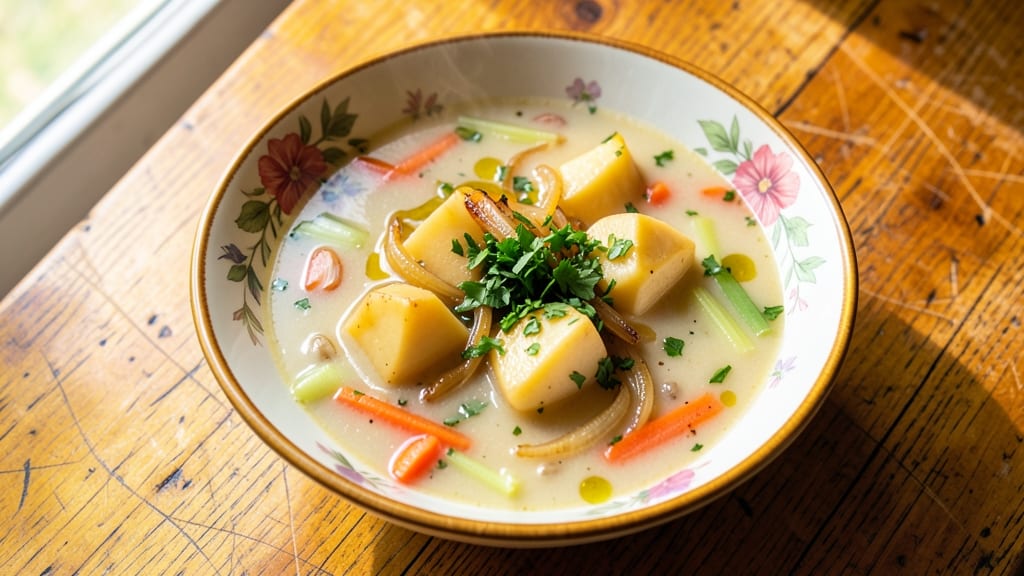
My grandmother's potato soup recipe carries the warmth of Sunday afternoons and the comforting aroma of simmered vegetables—this is the version that's been passed down for generations.
The secret lies in slow-cooked potatoes and a velvety broth that feels like a hug in a bowl, perfect for chilly evenings or meal prep ahead. I've tested it countless times to ensure it delivers that signature creamy texture without heavy cream, using only simple pantry staples.
This recipe builds flavor through careful layering: onions caramelized until golden, garlic that infuses the broth with depth, and potatoes that break down into silky perfection. The stovetop method keeps it accessible, while the freezer-friendly formula means you can make a big batch and enjoy it all week.
Every spoonful carries that nostalgic taste of home, but with a modern touch that works for busy families.
What you'll end up with is a rich, velvety soup where the potatoes melt into the broth while maintaining just enough bite, creating that perfect balance between comfort and sophistication.
The optional garnishes—like a dollop of sour cream or fresh herbs—let you customize it to your taste, but the base recipe stands strong on its own. This is the kind of soup that disappears faster than you can say "seconds, please."
Whether you're serving it to guests or reheating leftovers, this potato soup delivers restaurant-quality results with minimal effort. The instructions are straightforward, the ingredients are simple, and the outcome is always comforting. Let's get started on making this family tradition your own.
Ingredients for grandmother's potato soup
Pantry staples and a few fresh veggies—this is the heart of Grandma's legendary potato soup.
| Ingredient | Amount | Notes |
|---|---|---|
| Yellow Onions 🧅 | 2 whole | Yellow or golden, chopped |
| Russet Potatoes 🥔 | 3 lb | Medium, peeled and cubed |
| Carrots 🥕 | 4 whole | Medium, peeled and sliced |
| Celery Stalks 🌿 | 3 whole | Trimmed and chopped |
| Garlic Cloves 🧄 | 4 cloves | Fresh, minced |
| Chicken Broth 💧 | 6 cups | Low-sodium preferred |
| Heavy Cream 🥛 | 1 cup | Full-fat for richness |
| Butter 🧈 | 4 tbsp | Unsalted, for caramelizing |
| All-Purpose Flour 🌾 | 2 tbsp | For thickening |
| Salt 🧂 | 1 ½ tsp | Kosher or sea salt |
| Black Pepper 🌶️ | ½ tsp | Freshly ground |
| Bay Leaves 🍃 | 2 whole | For depth of flavor |
| Fresh Thyme Leaves 🌿 | 1 tbsp | Or 1 tsp dried thyme |
| Sour Cream 🥛 | ½ cup | For garnish, optional |
| Green Onions 🧅 | 3 whole | Sliced, for garnish |
The onions and carrots are your flavor foundation. Yellow onions add sweetness when caramelized—don't skip this step, it's what makes the soup sing. I grab mine from Trader Joe's when they're on sale, but any grocery store has them. For the potatoes, Russets break down perfectly, but Yukon Golds add a touch of creaminess. The celery? Fresh is best, but frozen works in a pinch if you're prepping ahead. Look for stalks that are crisp and bright green—none of that rubbery stuff.
No heavy cream? Half-and-half or full-fat coconut milk works just as well for richness. Short on thyme? Dried thyme at one-third the amount gets you close, but fresh is ideal. The flour is just for thickening—if you're gluten-free, cornstarch works 1:1. Chicken broth can be homemade or store-bought, but low-sodium is key so you can control the salt. The bay leaves add subtle depth, so don't skip them. Want extra flavor? Add a pinch of nutmeg when you stir in the cream.
This soup tastes even better the next day as flavors meld. Keeps 5-6 days in the fridge, freezes beautifully for up to 3 months. I always make a double batch—one for dinner, one for lunches. The sour cream and green onions are just for garnish, so feel free to skip if you're prepping ahead. For freezing, cool completely before portioning into containers. Reheat gently on the stove with a splash of broth to restore creaminess.
Why You'll Love This Recipe
- Foolproof Chopping: Between us, I’ve burned more dinners than I’ll admit—but this soup forgives mistakes. Dice those onions and carrots roughly, toss in the celery and garlic, and let the pot do the work. No fancy knife skills needed, just a big pot and 20 minutes of simmering.
- Garlic-Kissed Magic: That first whiff of garlic and onions caramelizing in the pot? Instant mood booster. The Russets break down into buttery chunks while the carrots stay tender-crisp, and the celery? It’s the secret—just enough earthiness to balance the creaminess. Honestly, it’s the kind of flavor that makes you want to eat it straight from the spoon.
- Leftovers That Beg: This soup tastes even better the next day—like a cozy hug in a bowl. Double the batch on Sunday, and you’ve got lunch and dinner covered. Freeze half for those "I can’t even" nights, and it’ll reheat like it was just made. (Yes, even on a Tuesday night.)
- Pantry Staple Power: No specialty ingredients here—just onions, potatoes, carrots, celery, and garlic. If you’ve got a kitchen, you’ve got this. It’s the kind of recipe that stretches a budget without stretching your patience, and it feeds a crowd without breaking the bank. My college roommate still asks for it.
Step-by-step instructions for grandmother's potato soup
Here's how to make this comforting soup with rich, velvety texture and deep savory flavors.
Sauté the Vegetable Base
Start by melting the 4 tablespoons butter in a large Dutch oven over medium heat. Add the 2 whole chopped yellow onions, 4 sliced carrots, and 3 chopped celery stalks. Cook for 8-10 minutes until the vegetables soften and the onions become translucent.
I like to stir occasionally and check for browning—this adds depth to the soup. If the vegetables start sticking, add a splash of chicken broth to deglaze. Once tender, add the 4 minced garlic cloves and cook for 30 seconds until fragrant. This aromatic base forms the flavor foundation for everything that follows.
Build the Potato and Broth Mixture
Add the 3 pounds cubed russet potatoes to the pot and stir to coat them in the vegetable mixture. Pour in the 6 cups chicken broth, then add the 1.5 teaspoons salt, 0.5 teaspoon black pepper, 2 whole bay leaves, and 1 tablespoon fresh thyme leaves. Bring to a boil over high heat, then immediately reduce to medium-low heat and let it simmer for 20-25 minutes until the potatoes are fork-tender.
Here's where patience pays off—the potatoes should be soft enough to mash slightly with a fork but still hold their shape. You'll know it's ready when you see the edges of the potatoes begin to break down in the broth. Keep an eye on the soup level and add a little water if it gets too thick during cooking.
Thicken and Enrich the Soup
Once the potatoes are tender, remove the bay leaves and discard them. In a small bowl, whisk together the 2 tablespoons all-purpose flour and set aside. Slowly pour the flour mixture into the soup while stirring constantly to prevent lumps from forming. Cook for 3-5 minutes until the soup thickens slightly and becomes smooth.
Next, stir in the 1 cup heavy cream and cook for another 2-3 minutes until the soup reaches your desired consistency. The cream adds that luxurious richness that makes this soup so special. Taste and adjust seasoning if needed—sometimes homemade broth needs a little extra salt or pepper to balance the flavors.
Finish and Serve
Remove the pot from heat and let the soup sit for 5 minutes to allow the flavors to meld. Stir in the 0.5 cup sour cream (optional) and gently fold it in to prevent curdling. The soup should be velvety smooth with a beautiful creamy color.
Ladle the soup into bowls and garnish with 3 sliced green onions for freshness and color. Serve immediately with crusty bread or crackers. For extra comfort, you can even top each serving with a dollop of additional sour cream. This soup tastes even better the next day, so it's perfect for meal prep or freezing for later.
Pro Tips For Making Grandmother'S Potato Soup
- CHOP ONIONS SMALL: I learned this the hard way—big chunks of onion turn to mush and make the soup taste bitter. Dice the yellow onions into ¼-inch pieces so they dissolve smoothly into the broth instead of sitting like little rocks at the bottom.
- PEEL POTATOES AFTER COOKING: Russets are stubborn to peel raw, and you’ll end up with bruised hands. Boil them whole in salted water for 8–10 minutes until tender, then shock in ice water before peeling—the skins slide off like butter. (Yes, even if you’re impatient like me.)
- SAUTÉ VEGETABLES UNTIL SOFT: Skip the crowding—cook the onions, carrots, and celery in batches over medium heat until they’re truly soft, not just wilted. This builds flavor instead of letting them steam into blandness. A splash of water helps if they stick, but don’t rush it.
- FINISH WITH GARLIC RAW: My grandmother swore by this, and she was right: add minced garlic to the soup off the heat at the very end. Cooking it too long turns it bitter—just let it sit for 30 seconds to mellow, then stir. The raw flavor brightens everything.
Regional styles of this dish
New England Creamy Style
In New England, this soup gets an extra touch of richness with 1 cup evaporated milk instead of heavy cream, creating a lighter but still velvety texture. I add ½ cup grated sharp cheddar cheese at the end for a cheesy depth that's signature in Vermont and Maine.
The secret here is using Yukon Gold potatoes—they hold their shape better than Russets while adding natural creaminess. 🥔
Southern Comfort Version
Southern grandmothers often add smoked ham hocks or bacon for a smoky, savory base. I like to cook 4 slices of bacon until crispy, then crumble them into the soup along with 1 cup diced ham.
The heat in the South also calls for extra black pepper—about 1 teaspoon—and a pinch of cayenne for subtle heat. Serve with cornbread instead of regular bread for that true Southern touch.
German Potato Soup Twist
German potato soup, or "Kartoffelsuppe," skips the cream entirely and relies on a roux made with butter and flour for thickness. I add 1 diced apple (like Granny Smith) and 1 sausage like kielbasa for hearty flavor.
The broth is often beef-based, and I like to finish with fresh parsley instead of green onions. This version is lighter but still deeply satisfying—perfect for a cozy German-inspired dinner. 🍏
Midwestern Hearty Adaptation
In the Midwest, this soup often includes corn kernels (about 1 cup) and sometimes even peas for extra veggie goodness. I like to add ½ cup diced bacon and a splash of apple cider vinegar (about 1 tablespoon) to brighten the flavors.
The potatoes are often left slightly chunkier, and the soup is served with a side of crusty rye bread. This version is all about hearty, comforting flavors that warm you up on cold days.
Appalachian Mountain Style
Appalachian grandmothers often add wild onions or ramps for a pungent kick, especially in spring. I like to include ½ cup diced smoked sausage and a handful of fresh spinach stirred in at the end.
The broth is usually beef-based, and the soup is thickened with a cornmeal slurry (mix 2 tablespoons cornmeal with ¼ cup cold water) instead of flour. This version is earthy, smoky, and deeply flavorful—just like the mountains themselves. 🌄
Nutrition facts
Frequently asked questions
Can I make this soup without heavy cream?
For a lighter version, substitute 1 cup half-and-half or full-fat coconut milk—both add richness while keeping the soup creamy. The recipe still delivers that velvety texture, just with a slightly different flavor profile. If you prefer dairy-free, try cashew cream (blend soaked cashews with water) for a neutral taste.
How do I prevent the soup from getting too thick?
If your soup thickens too much during cooking, simply add ½ cup warm broth or water and stir well. The key is to simmer gently after adding the flour—don't let it boil vigorously. For extra insurance, whisk the flour into cold broth first before adding it to the pot to prevent lumps that can thicken unevenly.
Can I use instant potato flakes instead of fresh potatoes?
Yes, but with adjustments! Swap 3 pounds fresh potatoes for 2 cups instant potato flakes—they absorb liquid differently. Add them at the end of cooking with the cream and let them sit for 5 minutes off heat to rehydrate fully. The texture will be slightly different (less chunky), but it works in a pinch for quick meals.
Why does my soup taste bland after reheating?
Reheating often dulls flavors because the broth separates. Fix this by adding 1 tablespoon lemon juice or apple cider vinegar while reheating—it brightens the taste. Also, stir in a splash of fresh broth or a pat of butter to restore richness. For future batches, freeze in portions with a small piece of butter on top to preserve flavor during thawing.
What's the best way to freeze this soup?
Cool the soup completely, then portion into airtight containers leaving 1-inch headspace for expansion. Freeze for up to 3 months. To reheat, thaw overnight in the fridge, then warm on the stove over medium-low heat, stirring occasionally. Add a splash of broth if it thickens too much when reheated.