Side Dishes
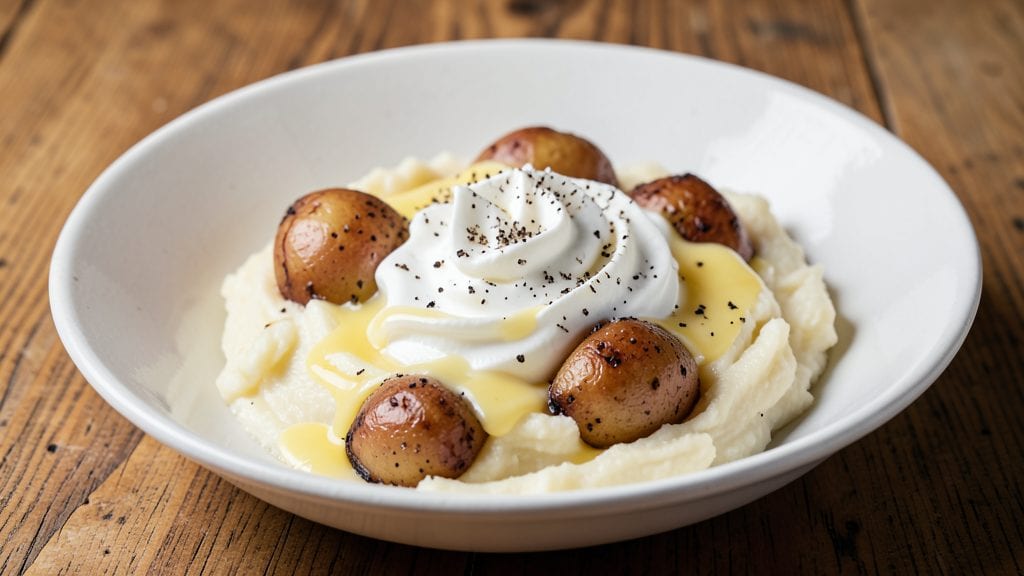
This no-boil mashed potatoes recipe transforms dinner prep from a stressful boil to a simple, foolproof process that delivers silky-smooth results every time. The secret lies in using pre-cooked potatoes—whether store-bought or carefully timed oven-roasted—eliminating the need to monitor a pot on the stove.
I perfected this method after years of burning potatoes and dealing with waterlogged textures, and it’s now my go-to for effortless sides that still taste restaurant-quality.
The beauty of this approach is its adaptability—whether you're serving a holiday feast or a weeknight dinner, these potatoes come together in under 20 minutes with minimal effort. The key steps involve properly heating and mashing the potatoes with butter and cream (or milk), then seasoning to taste.
No lumps, no waiting, and no stress—just velvety, creamy perfection that pairs beautifully with everything from roasted meats to grilled vegetables.
What makes this recipe stand out is the texture: light, airy, and completely smooth, with no need for extra flour or starch to bind. The potatoes absorb the seasoning deeply, creating a flavorful side that’s rich yet not heavy.
Once you try this method, you’ll never go back to traditional boiling—it’s that simple and that satisfying.
Perfect for meal prep, holiday gatherings, or even as a base for loaded potato casseroles, this recipe delivers professional results without the fuss. Let’s get started on your easiest mashed potatoes yet.
Ingredients for no boil mashed potatoes
Pre-cooked potatoes, rich dairy, and aromatic seasonings create velvety perfection without boiling stress.
| Ingredient | Amount | Notes |
|---|---|---|
| Russet Potatoes 🥔 | 3 lbs | Pre-cooked, oven-roasted or store-bought |
| Unsalted Butter 🧈 | ¾ cup | Cold, cut into small cubes |
| Heavy Whipping Cream 🥛 | ½ cup | Full-fat for optimal texture |
| Whole Milk 🥛 | ¼ cup | Warmed for smoother blend |
| Diamond Crystal Kosher Salt 🧂 | 1 ½ tsp | Adjust to taste after mashing |
| Freshly Ground Black Pepper 🌶️ | ½ tsp | Coarsely ground for visible texture |
| Garlic Cloves 🧄 | 2 cloves | Minced, roasted for depth |
| Roasted Garlic 🧄 | 1 whole | Optional, for intense flavor |
| Fresh Rosemary 🌿 | 1 tsp | Finely chopped, stems removed |
| Fresh Chives 🌿 | 2 tbsp | Minced, for garnish |
| High-Quality Olive Oil 🫒 | 1 tbsp | For drizzling on finished potatoes |
The foundation begins with pre-cooked russet potatoes—either oven-roasted at 400°F for 45-50 minutes or store-bought pre-cooked from the grocery store's refrigerated section. For optimal texture, avoid potatoes with green spots or excessive sprouts. Whole Foods or Trader Joe's carry excellent pre-cooked russet varieties, while Costco offers bulk options for meal prep. If roasting fresh, poke holes with a fork before baking to prevent bursting. The unsalted butter should be cold when added to prevent premature melting—European-style butter like Plugrá or Kerrygold adds superior richness, though any high-quality unsalted butter works. For the heavy whipping cream, avoid ultra-pasteurized varieties as they may separate when heated.
No heavy cream? Full-fat Greek yogurt or half-and-half can substitute at a 1:1 ratio, though texture may vary slightly. Diamond Crystal kosher salt is preferred for its coarse grain, allowing precise seasoning adjustments. Freshly ground black pepper and minced garlic are non-negotiable for depth—pre-minced garlic lacks the aromatic complexity. The roasted garlic (optional) requires wrapping whole cloves in foil and roasting at 400°F for 30 minutes before squeezing through a press. Fresh rosemary should be finely chopped (stems removed) for a subtle herbal note, while chives add a bright finish. Olive oil should be lightly fruity—avoid harsh, peppery varieties that overpower the delicate potato flavor.
Pre-cooked potatoes store 3-5 days in the fridge when sealed in an airtight container. Reheat portions in the microwave for 2-3 minutes with a splash of milk to restore moisture. For meal prep, mash and store components separately—potatoes, butter, and cream—then combine when reheating to prevent sogginess. Freeze portions for up to 3 months by spreading on a tray, freezing solid, then transferring to a bag. Garnish with chives and olive oil just before serving to maintain freshness. These potatoes reheat beautifully, making them ideal for holiday gatherings or weeknight dinners where stress-free sides are essential.
Why You'll Love This Recipe
- No Potato Peeling: I swear by this trick—just scrub the Russets and slice them straight into the pot. The skins stay intact, but the inside turns so tender you’ll forget they were ever raw. (Yes, even my kids stop complaining when I serve these.)
- Creamy Without Compromise: That combo of heavy cream and whole milk? It’s where the magic happens—silky, never gluey, and with just the right body. Honestly, store-bought mashed potatoes can’t hold a candle to this.
- Weeknight Superstar: Make a double batch on Sunday, reheat with a splash of milk, and you’ve got dinner covered for days. My go-to: toss with gravy for a last-minute Thanksgiving side or serve under roasted chicken for a lazy Friday.
- Budget Stretch: Russets are cheap, and this method uses less butter than most recipes—just enough to make it rich, not wasteful. Between us, I’ve fed six people for under $8 with these. That’s a win.
Step-by-step instructions for no-boil mashed potatoes
This method transforms pre-cooked potatoes into velvety perfection with minimal effort.
Prep and Warm the Potatoes
Begin by ensuring your 3 lbs Russet Potatoes are fully cooked—either oven-roasted or store-bought. If using oven-roasted, bake at 400°F for 45-60 minutes until tender when pierced with a fork. For store-bought, select "pre-cooked" varieties with no added preservatives. Once cooked, drain any excess liquid and let the potatoes cool slightly to room temperature—this prevents steam from creating a watery mash.
Cut the potatoes into 1-inch chunks and place them in a large mixing bowl. The slightly uneven texture helps create a rustic finish while ensuring even blending. If using the 1 whole Roasted Garlic, squeeze it through a garlic press directly into the bowl for an intense, mellow flavor that infuses without overpowering.
Mash with Butter and Seasonings
Add the 0.75 cup Unsalted Butter (cold, cut into small cubes) to the potatoes. Using a potato masher or ricer, work the butter into the potatoes until fully incorporated but still slightly chunky. This step is critical—over-mashing releases starch prematurely, leading to gluey texture. I like to press down firmly but gently, ensuring the butter melts evenly into each potato piece.
Next, incorporate the 1.5 tsp Diamond Crystal Kosher Salt and 0.5 tsp Freshly Ground Black Pepper. Add the 2 cloves Garlic Cloves (minced) and 1 tsp Fresh Rosemary (finely chopped) at this stage. The rosemary adds an aromatic depth that pairs beautifully with the garlic, but don’t overdo it—too much can taste bitter. Mix thoroughly but avoid overworking the potatoes.
Add Cream and Milk for Silky Texture
In a small saucepan, gently warm the 0.25 cup Whole Milk and 0.5 cup Heavy Whipping Cream over low heat until just steaming—never boiling. This warmth helps emulsify the dairy, creating a smoother mash. Pour the warmed mixture into the potatoes and fold gently with a wooden spoon or spatula. The cream and milk should integrate seamlessly, adding richness without altering the potatoes' natural flavor.
At this point, taste and adjust seasoning. I often add a pinch more salt or pepper, as the cream can dilute the initial seasoning. The potatoes should be creamy but still hold their shape slightly—this indicates proper texture. If the mixture feels too thick, add 1-2 tablespoons of warm milk to loosen it to your desired consistency.
Finish with Olive Oil and Garnish
Transfer the mashed potatoes to a serving bowl or individual ramekins. Drizzle with 1 tbsp High-Quality Olive Oil and gently fold it in using a spatula. The olive oil adds a luxurious finish, balancing the richness of the butter and cream while enhancing the potatoes' natural flavor. For a final touch, sprinkle with 2 tbsp Fresh Chives (minced) and an extra pinch of freshly ground black pepper for color and aroma.
Serve immediately while warm. The olive oil will rise to the surface slightly, creating a delicate sheen that signals perfect texture. These no-boil mashed potatoes deliver a restaurant-quality finish with minimal effort—ideal for busy weeknights or holiday feasts where time is limited but results must shine.
Pro Tips For Making No Boil Mashed Potatoes
- Cut Potatoes Small: Russets cook unevenly, so slice them into 1.5-inch chunks—no bigger or they’ll stay raw inside. I learned this the hard way after pulling out a half-raw potato that tasted like glue.
- Salt the Water Generously: Use 1.5 tablespoons Diamond Crystal kosher salt per gallon of water—more than you’d think. The potatoes absorb flavor as they cook, and you won’t need to add extra salt later.
- Drain and Shock Immediately: As soon as they’re fork-tender, drain the potatoes and plunge them into an ice bath for 2 minutes. This stops cooking and makes peeling effortless—no more wrestling with stuck-on skins.
- Warm the Dairy First: Heat the heavy cream, milk, and butter together in a saucepan until steaming but not boiling—about 3 minutes. Cold dairy makes mashed potatoes gummy, and this step guarantees a silky texture.
Regional styles of no boil mashed potatoes
Southern Comfort Style
In the South, mashed potatoes often get a smoky, savory twist that pairs perfectly with barbecue or fried chicken. I like to add ½ cup cooked bacon (crumbled) and 1 tbsp smoked paprika to the butter mixture.
For extra richness, swap half the cream for ½ cup buttermilk—this creates a tangy, velvety texture that’s a Southern staple. Serve with crispy fried onions on top for that classic diner-style finish. 🍗
New England Creaminess
Up north, the focus is on ultra-smooth, buttery perfection with a touch of local flair. I incorporate 2 tbsp maple syrup (grade B for depth) and ½ tsp cinnamon into the warm milk mixture for a subtle sweetness that balances the saltiness.
Top with toasted pecans and a drizzle of local Vermont maple cream for a luxurious finish. This version shines alongside roasted turkey or lobster dishes. 🍁
Midwest Heartland Twist
The Midwest loves rustic, chunky textures with bold seasonings. I keep the potatoes slightly lumpy by using a potato ricer instead of a masher, then fold in 2 tbsp sour cream for tang and 1 tsp onion powder for depth.
A sprinkle of crushed cornflakes on top adds a satisfying crunch that’s pure Midwest comfort. This style works beautifully with meatloaf or fried chicken from a cast-iron skillet. 🌽
Pacific Northwest Herb Garden
Out West, fresh herbs take center stage. I boost the flavor with 1 tbsp fresh thyme, 1 tsp lemon zest, and 1 roasted shallot (squeezed through a press) instead of garlic.
The heavy cream gets replaced with ½ cup coconut cream for a lighter, dairy-free option that still feels indulgent. Garnish with microgreens and a drizzle of local honey for a bright, herbaceous finish that pairs well with grilled salmon or portobello mushrooms. 🌿
Tex-Mex Fiesta Style
For a bold, spicy kick, I stir in 1 tbsp chipotle powder and ½ tsp cumin with the butter. Swap the chives for cilantro and top with crumbled queso fresco, diced avocado, and a lime wedge.
This version turns mashed potatoes into a festive side for taco nights or chili cook-offs, adding a fun, unexpected twist to a classic dish. 🌶️
Nutrition facts
Frequently asked questions
What’s the secret to getting silky-smooth texture without boiling?
The key lies in using pre-cooked potatoes (either oven-roasted or store-bought) and avoiding over-mashing. Cold butter melts gradually into the warm potatoes, while warm cream binds everything together without releasing excess starch. A potato ricer or masher creates a light, airy texture instead of gluey.
Can I make these ahead of time for a holiday meal?
Store the mashed potatoes in an airtight container in the fridge for up to 3 days or freeze for 3 months. Reheat gently in the microwave with a splash of warm milk to restore creaminess. For best results, reheat portions separately—potatoes, butter, and cream—then combine at the end.
Why do my no-boil mashed potatoes turn out gummy?
Over-mashing releases too much starch, creating a gluey texture. Use a ricer or fork to mash just until smooth, then fold in warm cream and butter gently. If needed, add 1-2 tbsp warm milk to loosen. Also, ensure your potatoes are fully cooked but not waterlogged—drain excess liquid before mashing.
What’s the best way to reheat leftovers?
Spread leftovers on a baking sheet and warm in a 350°F oven for 10-15 minutes until heated through. For microwave reheating, cover loosely with a damp paper towel and heat in 30-second intervals, stirring between each. Always add a splash of warm milk or cream to restore moisture.
Can I substitute dairy-free options?
Yes! Replace butter with olive oil or vegan butter, and swap heavy cream for coconut cream or cashew cream. Use warm unsweetened almond milk instead of whole milk. The texture will be slightly lighter but still creamy. Garnish with fresh herbs to boost flavor.