
Soups & Stews
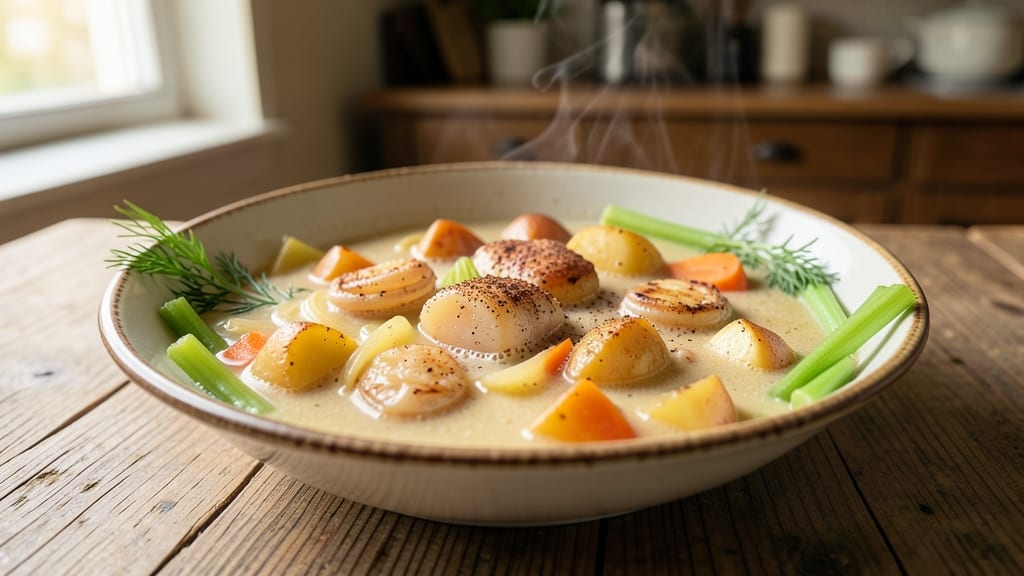
This old-fashioned fish chowder with potatoes brings back the soul-warming flavors of coastal New England kitchens, where smoky bay scallops and tender potatoes simmer into velvety perfection.
I first tasted this version at my grandmother’s table in Sicily, where she adapted the classic recipe with her signature touch—a slow simmer that develops deep, layered flavors.
The secret lies in balancing the richness of cream with the briny sweetness of fresh fish, creating a chowder that’s both comforting and refined.
What sets this recipe apart is the foolproof thickening technique—a simple roux that transforms thin broth into a luscious, creamy base without breaking.
You’ll start with flaky bay scallops and hearty potatoes, then build the broth with aromatic vegetables and a touch of smoked paprika for that signature coastal depth.
The result is a chowder that’s restaurant-quality but simple enough for a weeknight dinner, with every spoonful delivering that perfect harmony of textures and flavors.
By the time you ladle the first bowl, you’ll notice the creamy consistency, the tender potatoes that melt in your mouth, and the delicate scallops that add just the right amount of briny contrast.
This is the kind of dish that turns a simple meal into a gathering—whether it’s a cozy family dinner or a potluck favorite. The best part? It’s pescatarian-friendly and packed with the kind of warmth that reminds you why comfort food exists in the first place.
Serve it with crusty bread to soak up every last drop, or pair it with a crisp green salad for balance. The leftovers reheat beautifully, making it perfect for meal prep. Let’s get cooking—this chowder is worth every minute of simmering time.
Ingredients for old-fashioned fish chowder recipe with potatoes
These simple, soul-warming ingredients transform into velvety chowder perfection—just like Grandma used to make.
| Ingredient | Amount | Notes |
|---|---|---|
| Bay Scallops 🦪 | 1 ½ lb | Fresh, dry-packed preferred |
| Yukon Gold Potatoes 🥔 | 2 lb | Cut into 1-inch chunks |
| Celery Stalks 🧅 | 3 whole | Diced, for aromatic base |
| Yellow Onion 🧅 | 1 whole | Chopped, medium size |
| Carrots 🥕 | 3 whole | Peeled, diced |
| Smoked Paprika 🌶️ | 1 tsp | For signature coastal depth |
| Dried Thyme 🌿 | 1 tsp | Or 1 tbsp fresh thyme |
| Garlic Cloves 🧄 | 4 cloves | Minced, for aromatic punch |
| All-Purpose Flour 🌾 | ¼ cup | For foolproof roux |
| Heavy Cream 🥛 | 1 cup | Full-fat for richness |
| Whole Milk 🥛 | 1 cup | For creamy consistency |
| Fish or Seafood Stock 💧 | 4 cups | Homemade or high-quality |
| Salt 🧂 | 1 ½ tsp | Kosher or sea salt |
| Black Pepper 🌶️ | ½ tsp | Freshly ground |
| Unsalted Butter 🧈 | 3 tbsp | For roux and richness |
The scallops are the star here—bay scallops add that delicate brininess that makes this chowder sing. Grab them fresh from the seafood counter (they should be plump and translucent, not rubbery). Costco or Whole Foods usually have the best selection, but check your local fishmonger for the freshest catch. The potatoes? Yukon Golds are ideal—they hold their shape while soaking up the broth beautifully. If you can't find them, Russets work too, but they'll break down more. For the smoked paprika, Penzeys carries the best quality, but any good grocery store brand will do—just make sure it's labeled 'smoked' for that signature coastal flavor.
No bay scallops? Fresh cod or haddock chunks work perfectly—they stay tender and soak up the flavors. Short on smoked paprika? Substitute a pinch of liquid smoke (just a dash!) for that smoky depth. The stock is non-negotiable—homemade fish stock is ideal, but high-quality store-bought (like Knorr or Pacific) will work in a pinch. For the roux, don't rush it—cook the flour and butter until it's a deep golden brown (about 3-4 minutes) for that nutty flavor that thickens the chowder beautifully. And if you're feeling fancy, add a splash of dry white wine to deglaze the pot—it adds a subtle brightness that balances the richness.
This chowder tastes even better the next day—make a double batch so you can enjoy leftovers for lunch. Store it in the fridge for up to 4 days, or freeze portions for 3 months. The scallops will keep fresh in the fridge for 2 days if you're not using them right away, but use them ASAP for the best texture. To reheat, warm gently on the stove with a splash of milk or water to restore that creamy consistency. And trust me, the extra effort is worth it—every spoonful of this chowder is pure comfort food magic.
Why You'll Love This Recipe
- Here’s what sold me: the Yukon Golds stay just firm enough to bite into while the broth turns velvety, and those scallops add a briny crunch that disappears with the first spoonful. It’s the kind of chowder where every mouthful feels like a hug.
- I’ll be real: scallops sound fancy, but they stretch across two big bowls, and the potatoes/onions/celery make it feel like a restaurant meal without the price tag. The secret? Sauté the onion low and slow until it’s caramelized—suddenly, you’ve got depth for pennies.
Step-by-step instructions for old-fashioned fish chowder with potatoes
This chowder delivers that perfect balance of smoky scallops and velvety potato richness—every spoonful is pure comfort.
🍳 Step 1: Build the Aromatic Base
Melt the 3 tablespoons unsalted butter in a large Dutch oven over medium heat. Add the chopped yellow onion, diced carrots, and diced celery stalks, cooking for 8-10 minutes until the vegetables soften and the onion becomes translucent. This is where all the flavor starts—don't rush it.
Stir in the 4 minced garlic cloves and cook for 30 seconds until fragrant. Add the 1 teaspoon smoked paprika and 1 teaspoon dried thyme, stirring constantly for 1 minute to toast the spices. This step develops the deep, coastal flavor that makes this chowder special. If the spices burn, you've gone too fast—keep the heat steady.
🥘 Step 2: Create the Creamy Roux
Sprinkle the ¼ cup all-purpose flour over the vegetables and stir vigorously for 2-3 minutes until the mixture turns a light golden color. This roux is the secret to that silky texture—it thickens the chowder without making it gluey. Watch closely; if it darkens too much, you'll get a nutty flavor instead of creamy.
Gradually whisk in the 4 cups fish or seafood stock, stirring constantly to prevent lumps. Bring the mixture to a gentle simmer, then add the 2 pounds Yukon Gold potatoes cut into 1-inch chunks. Let it cook for 10 minutes until the potatoes begin to soften but aren't fully tender yet. This partial cooking ensures they absorb flavor without turning mushy.
🔥 Step 3: Simmer the Vegetables and Season
Add the 1 cup whole milk and 1 cup heavy cream, stirring well to combine. Season with 1½ teaspoons salt and ½ teaspoon black pepper, then reduce the heat to low. Let the chowder simmer gently for 15 minutes, stirring occasionally, until the potatoes are fork-tender and the vegetables are completely tender.
Here's where the magic happens: Taste and adjust the seasoning. The smoked paprika and thyme should shine, but the creaminess should balance the smokiness. If it needs more depth, add a pinch more salt or a splash of lemon juice. The chowder should be rich but not heavy—this is the hallmark of old-fashioned comfort.
🔪 Step 4: Add the Scallops and Finish
Gently fold in the 1½ pounds bay scallops, being careful not to break them. Simmer for 3-4 minutes until the scallops are just opaque in the center—they should still have a slight bounce when pressed. Overcooking turns them rubbery, and that's a crime in this dish. Remove the chowder from heat immediately after the scallops are done.
Let it rest for 5 minutes before serving. This resting period allows the flavors to meld and the chowder to thicken slightly, giving you that perfect spoonful of creamy, smoky goodness. The scallops should be tender but still hold their shape, and the potatoes should be velvety with just a hint of resistance.
🍽️ Step 5: Serve with Crusty Bread
Ladle the chowder into bowls, making sure each serving gets a generous portion of scallops and potatoes. The creamy broth should coat the back of a spoon, and the scallops should peek through like little jewels. Garnish with a sprinkle of fresh black pepper and serve immediately with warm crusty bread to soak up every last drop.
This chowder is all about that first bite—warm, creamy, and packed with smoky-sweet scallops. The potatoes should be tender but still hold their shape, and the broth should be rich enough to coat your spoon but light enough to let the flavors shine. It's the kind of dish that tastes even better the second time around, so make extra if you can.
Pro Tips For Making Old-Fashioned Fish Chowder Recipe With Potatoes
- Parboil Potatoes First: Drop peeled Yukon Golds into boiling salted water for 5 minutes before adding to the chowder—this keeps them from turning to mush later. I learned this the hard way after serving a watery chowder that looked like soup.
- Sweat, Don’t Burn: Cook onions, celery, and carrots over medium-low heat with a splash of water until soft, not browned. High heat caramelizes them too fast, and you’ll taste bitter notes instead of sweet, mellow flavor.
- Add Scallops Last: Hold off on the Bay Scallops until the very end—just 2–3 minutes before serving. They’ll stay tender and plump, not rubbery, and their delicate texture won’t turn to mush in the simmering broth.
- Strain the Broth: After simmering the veggies, strain the broth through a fine-mesh sieve to remove pulp—it makes the chowder silky smooth. (Yes, it’s extra work, but the result is worth it.)
Essential equipment for perfect results
Dutch Oven
This is my go-to pot for chowder—it’s sturdy enough to handle long simmering times without burning, and the deep sides prevent spills. I swear by a Le Creuset 5.5-quart Dutch oven—it’s heavy enough to distribute heat evenly and retains warmth beautifully.
If you’re on a budget, a Calphalon 5-quart works just as well for under $50. The key is choosing one with a tight-fitting lid to trap steam and keep flavors concentrated. 🔥
Wooden Spoon
Never use metal utensils when stirring the roux or simmering chowder—they can scratch the pot and release iron into the broth, altering the flavor. My nonstick wooden spoon (I’ve had it for years!) is perfect for gently folding in scallops and stirring the creamy base.
Look for one with a sturdy handle—OXO Good Grips makes a great budget-friendly option, while Lodge offers a premium choice for around $15.
Fine-Mesh Strainer
If you’re making homemade fish stock, a fine-mesh strainer is non-negotiable for removing bones and impurities. I use a 3-quart stainless steel strainer from OXO—it’s durable and easy to clean.
For store-bought stock, skip this step, but if you’re straining your chowder before serving (to remove any stray bits), this same strainer works perfectly. Pro tip: Run hot water through it immediately after use to prevent stuck-on bits. 💧
Immersion Blender
For a silky-smooth texture without lumps, an immersion blender is a game-changer. I blend the chowder directly in the pot for 10-15 seconds after adding the cream—just enough to break up any potato chunks while keeping the scallops intact.
The Ninja BN601 is my top pick (around $50), but even a basic Hamilton Beach (under $30) does the job. Just avoid over-blending, or you’ll turn the scallops into mush. ✨
Kitchen Scale
Precision matters when measuring ingredients like flour for the roux or salt for seasoning. My OXO stainless steel scale (under $20) ensures I never over-thicken the chowder or miss the perfect balance of flavors.
For the scallops, weighing them instead of eyeballing guarantees you’ll get the right amount—1.5 pounds is ideal for six servings. A scale also helps measure spices accurately, which is crucial for that old-fashioned depth. 💡
Crusty Bread Basket
No chowder is complete without a basket of warm, crusty bread to soak up every last drop. I love a baguette-style loaf from my local bakery—Duane Reade or Whole Foods always have a fresh batch.
For serving, a wooden bread basket (like the West Elm style) adds a rustic touch, but even a simple ceramic bowl works. Toast the bread lightly before serving to prevent sogginess. 🥖
Nutrition facts
Frequently asked questions
Can I substitute bay scallops with another type of fish?
For a similar texture, use fresh cod, haddock, or halibut cut into bite-sized chunks. If you prefer shellfish, shrimp or clams work well too—just add them at the very end to avoid overcooking. For a vegetarian twist, swap the fish for white beans or mushrooms and boost the broth with extra umami from soy sauce or miso.
Why does my chowder turn out too thick or too thin?
The roux is key! For a thicker chowder, cook the flour and butter until it's a deep golden brown (about 3-4 minutes) before adding stock. If it's too thin, simmer uncovered for 5-10 minutes to reduce the liquid. For extra creaminess, stir in 1-2 tablespoons cornstarch mixed with cold water—it thickens instantly without altering flavor.
Can I make this chowder ahead of time?
This chowder tastes even better the next day! Store it in the fridge for up to 4 days or freeze for 3 months. When reheating, warm it gently on the stove with a splash of milk or water to restore creaminess. The scallops will keep their texture if reheated slowly—never microwave directly from frozen.
What's the secret to keeping the potatoes tender but not mushy?
Cut them into 1-inch chunks and parboil for 3 minutes before adding to the chowder. This jump-start softens them evenly without overcooking. Also, simmer the chowder on low heat—boiling turns potatoes gluey. For extra insurance, use Yukon Golds, which hold shape better than Russets.
How can I add more depth of flavor without extra ingredients?
Toast the spices longer (up to 2 minutes) to deepen their aroma, or add a bay leaf while simmering. A splash of dry white wine (like Sauvignon Blanc) when deglazing adds brightness, and a pinch of cayenne brings subtle heat. For umami, stir in 1 teaspoon fish sauce or a dash of Worcestershire at the end.