
Side Dishes
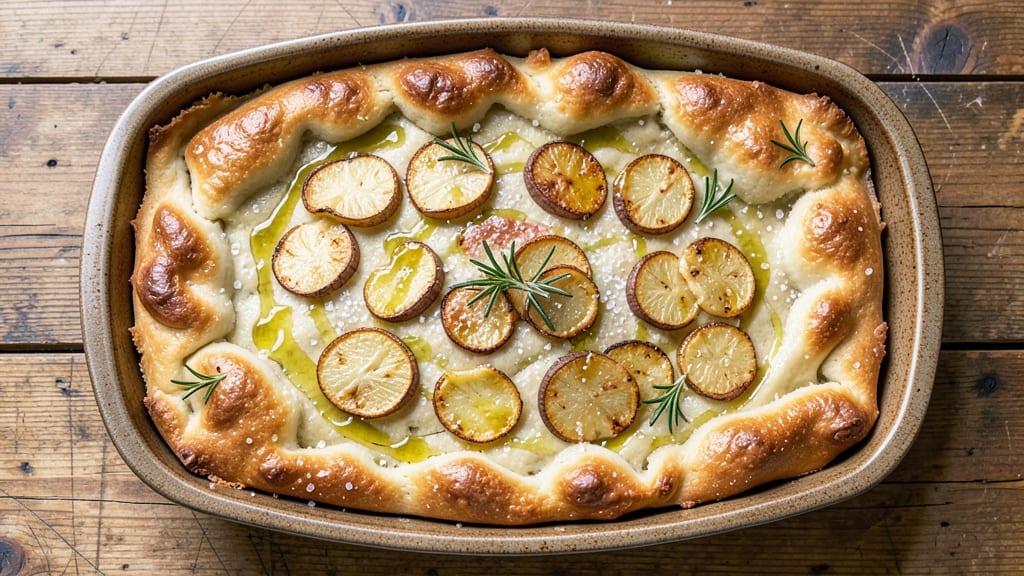
This potato focaccia recipe transforms humble potatoes into a golden-crusted, olive oil-rich masterpiece that steals every meal. The secret lies in poaching the potatoes in olive oil before baking, creating a crispy exterior that shatters with every bite while keeping the center impossibly tender.
I perfected this technique after years of experimenting with focaccia textures, and the difference between this version and traditional recipes is night and day.
The dough itself is simple—just flour, yeast, and water—but the magic happens in the potato preparation. Thinly sliced potatoes soak up the olive oil during baking, forming a caramelized, crispy lattice that contrasts beautifully with the soft, airy interior.
This method eliminates the need for complicated toppings while delivering restaurant-quality results at home. The aroma alone will have everyone gathering around your table.
By the time you pull it from the oven, you’ll have a focaccia with a shatteringly crisp crust, tender hearts, and pockets of melted cheese (if you choose to add it).
The olive oil infuses every bite with a rich, savory depth that pairs perfectly with soups, salads, or even as a standalone appetizer. This is the kind of bread that makes you feel like a professional baker—no fancy equipment required.
Perfect for holiday dinners, picnic baskets, or as a showstopping side dish. The recipe scales easily, so you can make it for a crowd or just enjoy a personal-sized loaf. Let’s get started on creating this foolproof, golden-crusted potato focaccia that will become a staple in your kitchen.
Ingredients for potato focaccia
Golden crust meets fluffy hearts with these 12 simple ingredients that transform humble potatoes into showstopping focaccia.
| Ingredient | Amount | Notes |
|---|---|---|
| Russet Potatoes 🥔 | 2 lb | Thinly sliced, peeled preferred |
| Extra-Virgin Olive Oil 🫒 | ¾ cup | High quality, fruity variety |
| All-Purpose Flour 🌾 | 3 ½ cups | Bread flour preferred for chewier texture |
| Active Dry Yeast 🍞 | ¼ oz | Or 2.25 tsp, fresh yeast preferred |
| Warm Water 💧 | 1 cup | 110°F for ideal yeast activation |
| Diamond Crystal Kosher Salt 🧂 | 1 ½ tsp | Fine grain preferred for even dissolving |
| Granulated Sugar 🍚 | 1 tsp | For yeast activation |
| Shredded Parmesan Cheese 🧀 | ½ cup | Freshly grated from block |
| Fresh Rosemary 🌿 | ¼ cup | Finely chopped, stems removed |
| Garlic Cloves 🧄 | 4 cloves | Minced for dough enhancement |
| Coarse Sea Salt 🧂 | 2 tbsp | For final crust sprinkle |
| Black Peppercorns 🌶️ | ½ tsp | Freshly cracked for aroma |
The potatoes are the star, so Russet is your best bet—thin slices poach perfectly. Costco or Trader Joe's often have the freshest russets in bulk. Peeled or unpeeled works, but peeled gives that restaurant-style look. For the olive oil, California avocado oil or Italian extra-virgin (like Filippo Berio) adds that rich, fruity depth. The yeast? Fresh yeast from the refrigerated section works best—active dry is fine but needs proper activation. I always test mine by dropping a pinch in warm water; if it foams within 5 minutes, it's good to go.
No fresh rosemary? Dried works at half the amount, but trust me, fresh gives that piney aroma. Short on Parmesan? Pecorino Romano or nutritional yeast for a similar tang. The garlic can be roasted for a sweeter flavor—just toss whole cloves in olive oil at 375°F for 15 minutes before mincing. For the flour, King Arthur bread flour gives the best chewy texture, but all-purpose in a pinch. The coarse sea salt? Maldon flaky salt melts beautifully onto the crust, but any coarse salt works. Want extra richness? Add 2 tbsp of crumbled feta to the potato slices before baking.
Store any leftovers wrapped tightly at room temperature for 2 days—the crust stays crisp best when not refrigerated. For longer storage, freeze slices in a sealed bag for up to 3 months. Reheat in a 350°F oven for 5-10 minutes to revive the crisp. Pro tip: I always bake an extra half-loaf and freeze it for lazy weeknights. The potatoes reheat beautifully, especially with a drizzle of olive oil and a sprinkle of flaky salt.
Why You'll Love This Recipe
- No Yeast Nightmare: That’s right—no fussing with proofing timers or waiting around. Just toss in the yeast, let it sit for 10 minutes, and move on. The dough comes together faster than my coffee brews, and honestly? It’s forgiving if you forget it for a bit.
- Crispy-Creamy Magic: The Russets get sliced thin and baked until golden, then folded into the dough—crunchy edges meet soft, pillowy focaccia. Drizzle that extra-virgin olive oil generously, and you’ve got a flavor bomb that tastes like a Mediterranean vacation in every bite.
- Weeknight Workhorse: This isn’t just bread—it’s your dinner sidekick. Serve it warm with roasted veggies for a lazy night, tear it into chunks for picnic lunches, or freeze half for when you’re too tired to bake. My college-aged son still begs for leftovers, and I don’t even have to cook extra.
- Pantry to Plate: Between us, this recipe uses stuff you already own. Potatoes, flour, olive oil—no obscure ingredients or last-minute grocery runs. And because it’s hearty, a single batch stretches across breakfasts (toasted with butter), lunches (stuffed with cheese), and even a quick bread pudding when you’re desperate. Budget-friendly? Absolutely.
Step-by-step instructions for potato focaccia
Here's how to create a golden, olive oil-poached focaccia with tender potato hearts and a crispy crust.
Poach the Potatoes in Olive Oil
Peel the 2 lb russet potatoes and slice them into ¼-inch thick rounds. Heat the 0.75 cup extra-virgin olive oil in a large skillet over medium heat until it shimmers but doesn't smoke. Add the potato slices in a single layer and cook for 8-10 minutes, stirring gently every 2 minutes, until they're fork-tender and golden brown on both sides.
Here's the thing—don't overcrowd the pan. If you need to work in batches, that's fine, but keep the oil hot and the potatoes moving. You want them to develop a delicate crispness while remaining tender inside. Once golden and just tender, remove them from the oil and drain on paper towels. The potatoes should be warm but not soggy when you handle them.
Activate the Yeast and Mix the Dough
In a large mixing bowl, combine the 1 cup warm water with the 0.25 oz active dry yeast and 1 tsp granulated sugar. Let this sit for 5-7 minutes until it becomes frothy and bubbly. This tells you the yeast is alive and ready to work. If it doesn't bubble, your yeast might be dead—start over with fresh yeast.
Add the 3.5 cups all-purpose flour and 1.5 tsp diamond crystal kosher salt to the yeast mixture. Stir with a wooden spoon until a shaggy dough forms. Then, transfer the dough to a lightly floured surface and knead for 5-7 minutes until it's smooth and elastic. You'll know it's ready when it springs back slowly when poked.
Incorporate Potatoes and Shape the Dough
Press the warm potato slices gently into the dough, distributing them evenly throughout. This creates those beautiful pockets of potato throughout the focaccia. Transfer the dough to a lightly greased 9x13-inch baking pan and shape it to fit the pan by pressing and stretching the edges to the corners.
Cover the pan with a clean kitchen towel and let the dough rise in a warm place for 1-1.5 hours, or until it has nearly doubled in size. You'll see the dough puff up and the edges pull away from the pan slightly. This rising time is crucial—it develops the airy texture that makes focaccia so satisfying.
Create the Topping and Second Rise
Preheat your oven to 400°F. In a small bowl, combine the 0.5 cup shredded parmesan cheese, 0.25 cup finely chopped fresh rosemary, 4 minced garlic cloves, and 0.5 tsp freshly cracked black peppercorns. Sprinkle this mixture evenly over the risen dough in the pan.
Now for the olive oil drizzle—this is where the magic happens. Pour the remaining olive oil (about ¼ cup) over the dough, letting it pool in the dimples. Use your fingers to create a dimpled pattern all over the top, pressing down gently to create those classic focaccia pockets. Let it rise for another 30-45 minutes while the oven preheats.
Bake to Golden Perfection
Bake the focaccia for 25-30 minutes until the top is deep golden brown and the crust is crisp. You'll know it's done when it sounds hollow when tapped on the bottom. In the last 5 minutes, sprinkle the 2 tbsp coarse sea salt evenly over the top for that classic focaccia flavor.
Let it cool for 10 minutes before slicing—this allows the flavors to meld and prevents the bottom from falling apart. The interior should be tender and fluffy, with pockets of warm potato and fragrant herbs throughout. Serve warm with a drizzle of high-quality extra-virgin olive oil for that authentic Italian touch.
Pro Tips For Making Potato Focaccia
- Boil Potatoes Cold: Start your Russets in cold water with a pinch of salt—no need to rush. I used to toss them in boiling water and they’d turn gummy; cold water keeps them firm and fluffy for slicing. Let them simmer until a knife slides in easily, then drain and let them steam-dry for 5 minutes (yes, even if you’re impatient like me).
- Oil the Pan Twice: Coat your baking dish with olive oil, then wipe it out—just enough to leave a thin, even layer. After shaping the focaccia, drizzle another tablespoon over the top and press it in with your fingers. This isn’t the prettiest method, but it’s the thing that matters most for that crispy, golden crust.
- Skip the Over-Kneading: This dough is forgiving, but don’t turn it into bread. Once the yeast and flour mix, give it 3-4 gentle folds—just enough to develop the gluten slightly. Overwork it, and you’ll end up with a dense, chewy mess instead of the airy, tender texture you want.
- Preheat with Potatoes: Toss your sliced Russets into the already hot oven (425°F) for 10 minutes before adding the focaccia. The potatoes crisp up faster, and the residual heat helps the focaccia rise better. I was skeptical until I tried it—now I never skip this step.
Creative variations of this recipe
Herb-Infused Twist
Swap the rosemary for thyme and oregano—finely chop 0.25 cup each and mix with the garlic and peppercorns. The earthy notes complement the potatoes beautifully, especially when paired with lemon zest sprinkled over the dough before baking.
For an extra burst, add ½ tsp red pepper flakes to the olive oil drizzle for subtle heat. 🌿
Cheesy Potato Loaded
Double the cheese to 1 cup shredded mozzarella and fold it into the dough before shaping. Top with ½ cup crumbled gorgonzola and ¼ cup chopped walnuts for a sweet-savory contrast. Bake until the cheese is bubbly and golden—this version is perfect for hearty appetizers or sandwiches. 🧀
Spicy Smoked Paprika
Add 1 tbsp smoked paprika to the flour mixture for a deep, smoky flavor. Top with ¼ cup caramelized onions and 2 tbsp chopped cilantro after the second rise. A drizzle of chipotle-infused olive oil after baking adds smoky heat that pairs perfectly with the crispy potatoes. 🌶️
Sweet Potato Swap
Replace russet potatoes with 2 lb sweet potatoes, peeled and sliced. Toss them in 1 tsp cinnamon and 1 tbsp brown sugar before poaching. Top with ¼ cup chopped pecans and a sprinkle of powdered sugar after baking for a dessert-style focaccia that’s surprisingly savory. 🍠
Garlic-Herb Butter
Mix ¼ cup softened butter with 2 minced garlic cloves, 1 tbsp chopped parsley, and ½ tsp lemon zest. Spread this over the dough after the second rise and bake as directed.
The butter adds richness that makes every bite irresistible—ideal for serving with soups or as a side for grilled meats. 🧈
Mediterranean Sun-Dried
Top the focaccia with ¼ cup chopped sun-dried tomatoes, ¼ cup Kalamata olives, and 2 tbsp capers after the second rise. Drizzle with 1 tbsp balsamic glaze after baking for a tangy, briny contrast that’s perfect with grilled seafood or salads. 🍅
Nutrition facts
Frequently asked questions
Can I use sweet potatoes instead of russets in this potato focaccia?
Sweet potatoes work beautifully—just peel and slice them ¼-inch thick. Toss the slices in 1 tsp cinnamon and 1 tbsp brown sugar before poaching for a subtle sweetness that pairs perfectly with savory toppings. The texture will be slightly denser but still tender.
Why did my focaccia turn out dense instead of airy?
Dense focaccia usually means the yeast didn't activate properly or the dough didn't rise enough. Double-check your water temperature—it should be 110°F to activate yeast. Also, ensure the dough rises in a warm spot (like a turned-off oven with a bowl of hot water) for 1-1.5 hours until puffy. Over-kneading can also make it tough.
How do I store leftovers to keep the crust crispy?
Wrap cooled focaccia tightly in plastic wrap or foil and store at room temperature for 2 days. For longer storage, freeze slices in a sealed bag for up to 3 months. To revive crispiness, reheat at 350°F for 5-10 minutes or toast slices in a skillet with a little olive oil.
Can I make this focaccia without a 9x13-inch pan?
Yes! Use a 9-inch round pan or even a cast-iron skillet. Adjust the dough quantity by reducing flour to 3 cups and water to ¾ cup for a single-serving loaf. The olive oil poaching method works the same—just scale the potatoes to 1 lb. The texture will be slightly thicker but still delicious.
What’s the best way to reheat focaccia?
For maximum crispiness, wrap cooled slices in foil and reheat at 350°F for 5-7 minutes. For extra crunch, place slices in a cold skillet and warm over medium-low heat for 2 minutes per side. A quick broil for 1-2 minutes works too—just watch closely to avoid burning.