
Side Dishes
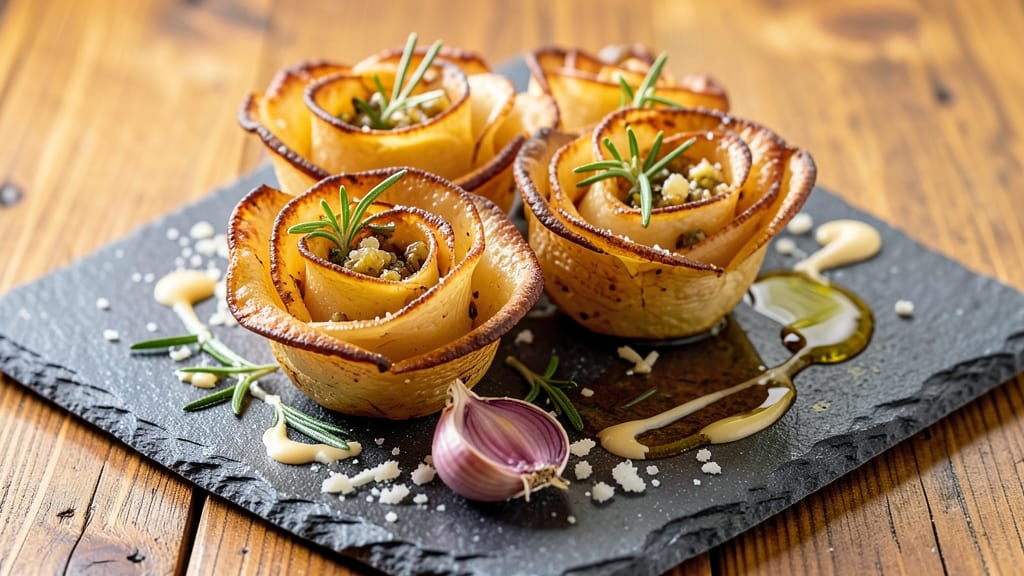
Creating potato roses recipe with their delicate golden edges and caramelized centers transforms simple potatoes into an elegant centerpiece. The secret lies in thin, even slices that crisp perfectly while maintaining tender centers—this technique turns an everyday side into a restaurant-worthy dish.
I developed this method after years of perfecting the balance between crispy exterior and creamy interior, ensuring every rose holds its shape when plated.
This recipe delivers foolproof results whether you fry or bake, with a method that works for both beginners and experienced cooks. The key is precise slicing using a mandoline or sharp knife, followed by careful cooking to achieve that signature floral presentation.
Stuffed variations with cheese, herbs, or fillings add extra dimension while keeping the preparation straightforward.
By the time you plate these potato roses, you'll have a dish that looks as impressive as it tastes—golden, crispy petals surrounding tender, caramelized centers. The aroma alone will have everyone asking for seconds, making this perfect for holiday dinners, special occasions, or simply elevating weeknight meals.
Let's get started on creating these edible flowers.
These potato roses pair beautifully with grilled meats, roasted vegetables, or even as a standalone appetizer. The technique scales easily for parties, and leftovers reheat perfectly for later. Here's everything you need to bring this elegant dish to your table.
Ingredients for potato roses
Transforming humble potatoes into elegant edible flowers requires precision and quality ingredients.
| Ingredient | Amount | Notes |
|---|---|---|
| Russet Potatoes 🥔 | 2 lbs | Unpeeled, uniform size for even cooking |
| Extra-Virgin Olive Oil 🫒 | ½ cup | High smoke point for frying |
| Unsalted Butter 🧈 | 4 tbsp | Cold, cubed for stuffing |
| Fresh Rosemary 🌿 | ¼ cup | Finely chopped, aromatic |
| Garlic Cloves 🧄 | 4 cloves | Minced, pungent flavor |
| Parmesan Cheese 🧀 | ½ cup | Freshly grated, nutty depth |
| Diamond Crystal Kosher Salt 🧂 | 1 ½ tsp | Fine grain for even seasoning |
| Ground Black Pepper 🌶️ | ½ tsp | Freshly cracked, medium grind |
| All-Purpose Flour 🌾 | 2 tbsp | For dredging delicate slices |
| Fresh Thyme Leaves 🌿 | ⅛ cup | Optional, for herbaceous notes |
| Heavy Cream 🥛 | ¼ cup | For optional filling variation |
| Cornstarch 🌾 | 1 tbsp | For crispier exterior texture |
The foundation begins with Russet potatoes—their high starch content yields that signature crispy texture. Opt for organic potatoes from Whole Foods or Trader Joe's for consistent results, avoiding blemished tubers that may affect slicing. A mandoline slicer (like the OXO Good Grips) ensures uniform ⅛-inch slices, critical for even cooking. For the filling, unsalted butter should be cold and cubed—European-style butter like Plugrá melts more cleanly. Fresh herbs like rosemary and thyme elevate the dish; purchase from local farmers' markets for peak potency. Parmesan cheese should be freshly grated—pre-shredded contains anti-caking agents that alter texture.
No mandoline? A sharp chef's knife and steady hand work—just take your time. Substitute olive oil with avocado oil for higher heat tolerance, though olive oil's flavor complements the dish beautifully. For a vegetarian variation, replace butter with herb-infused olive oil. The cornstarch can be omitted if you prefer a lighter texture, though it enhances crispiness. Diamond Crystal kosher salt is preferred for its fine grain, but Morton works in a pinch. When mincing garlic, roast the cloves first (400°F for 10 minutes) to mellow their sharpness—this subtle step prevents overpowering the delicate potato flavor. For stuffed versions, heavy cream can be thinned with a splash of milk for easier piping.
Store uncooked potato slices in a single layer on a paper towel-lined tray, covered with plastic wrap, for up to 24 hours in the refrigerator. Once fried or baked, plate immediately to maintain crispness—these roses lose their structure if left to sit. For make-ahead prep, assemble stuffed roses, refrigerate, then cook directly from cold. Reheat in a 350°F oven for 5-7 minutes until warmed through. The dish freezes poorly due to texture loss, but you can par-cook and freeze the unassembled roses, then finish cooking after thawing. For special occasions, arrange roses on a parchment-lined platter with edible gold leaf for a luxurious touch.
Why You'll Love This Recipe
- One-Pan Magic: I swear by this recipe when I’m too tired to scrub pots—just slice, roast, and let the potatoes puff into golden roses while you sip wine. The olive oil and butter pool at the bottom, so you get crispy edges and buttery goodness without extra effort.
- Garlic-Rosemary Bomb: That first bite of rosemary-infused butter melting into the fluffy centers? It’s like a hug for your taste buds. The garlic cloves roast until sweet and jammy, turning these into something way fancier than plain potatoes.
- Crowd-Pleaser Flex: Between us, this is my go-to for game day, book club, or when my mom texts asking what’s for dinner. Everyone grabs seconds—even the picky eaters—and it reheats like a dream (yes, even on a Tuesday night).
- Budget Brilliance: Russets are cheap, and a single bag stretches across three meals: roses for dinner, mashed potatoes for lunch, and even a crispy hash the next day. I’ve fed six people for under $10 using this trick—no waste, all flavor.
Step-by-step instructions for potato roses recipe
Transform simple russet potatoes into elegant, golden potato roses with crispy edges and tender centers.
Prepare the Potato Dough
Begin by boiling the 2 lbs russet potatoes in salted water for 15-20 minutes until fork-tender. Drain immediately and let them cool slightly before peeling. This step ensures the potatoes are fully cooked yet still hold their shape when transformed.
Once peeled, place the potatoes in a food processor and pulse until you achieve a smooth, dough-like consistency. Add the 0.5 cup extra-virgin olive oil and 4 tbsp unsalted butter while pulsing to create a cohesive, pliable dough. If the mixture feels too dry, add 1-2 tablespoons of water to help bind it together. The dough should be firm enough to shape but soft enough to roll out easily.
Shape and Season the Potato Roses
Divide the potato dough into 4 equal portions (about ½ lb each) and roll each portion into a ¼-inch thick sheet on a lightly floured surface. Use 2 tbsp all-purpose flour to prevent sticking as you work. The thinner and more even the sheets, the more delicate and elegant your potato roses will be.
Using a 3-inch round cutter, cut out circles from each sheet. Sprinkle the circles evenly with 1.5 tsp diamond crystal kosher salt and 0.5 tsp ground black pepper, then fold each circle in half to form a semicircle. Gently roll each folded edge inward, starting from the center, to create a rose shape. Press lightly to secure the petals, ensuring they hold their form during cooking.
Create the Herb and Garlic Filling
In a small saucepan, melt 2 tbsp unsalted butter over medium-low heat. Add the 4 minced garlic cloves and sauté for 1 minute until fragrant but not browned. Stir in the 0.25 cup finely chopped fresh rosemary and 0.125 cup fresh thyme leaves, cooking for another 30 seconds to release their aromatic oils. Remove from heat and let the mixture cool slightly.
Transfer the herb and garlic mixture to a small bowl and stir in the 0.5 cup freshly grated parmesan cheese. This filling will add depth of flavor to each potato rose, balancing the crispy exterior with a rich, savory center. Keep the mixture at room temperature for easier piping.
Assemble and Bake the Potato Roses
Preheat your oven to 400°F. Using a piping bag or a small spoon, carefully pipe or place a generous teaspoon of the herb and garlic filling into the center of each potato rose. Gently press the edges of the petals to seal the filling inside, ensuring it doesn’t leak out during baking.
Place the assembled potato roses on a parchment-lined baking sheet, spacing them about 1 inch apart to allow for even browning. Bake for 20-25 minutes until the edges are deep golden brown and the centers are heated through. For extra crispiness, brush the tops with a mixture of 0.25 cup heavy cream and 1 tbsp cornstarch before the final 5 minutes of baking.
Serve Warm and Enjoy
Remove the potato roses from the oven and let them rest for 5 minutes before serving. This resting period allows the filling to set slightly, preventing any potential leakage. Serve immediately while still warm, as the crispy edges soften quickly once removed from the oven.
These potato roses are elegant enough for a special dinner yet simple enough for a weeknight meal. Pair them with a light salad or a drizzle of the remaining herb-infused butter for an extra touch of sophistication. The contrast of crispy, caramelized edges and tender, flavorful centers makes every bite a delight.
Pro Tips For Making Potato Roses
- PARBOIL FIRST: Russets are starchy and dry out fast—give them a 5-minute boil in salted water before shaping. This firms them up so they hold their rose shape instead of collapsing into sad, mushy blobs. (Yes, even if you’re impatient like me.)
- CHILL THE DOUGH: After mixing the potato, butter, and rosemary into a dough, pop it in the fridge for 20 minutes. Cold dough is easier to roll thin and won’t stick to your hands or the counter. I learned this the hard way—warm dough is a nightmare to shape.
- SALT THE OIL: Generously salt the olive oil before frying—about 1 teaspoon per cup. The salt dissolves into the oil and seasons the potatoes from the start, cutting down on aftertaste. (Your future self will notice the difference.)
- LOW AND SLOW: Fry the roses at 325°F (not high heat) for even cooking—high heat burns the outside before the inside cooks through. Use a thermometer to stay precise; I was skeptical until I tried it.
Flavor customization for this dish
Herb-Filled Variations
Swap the rosemary and thyme for fresh sage and lemon zest to create a bright, citrusy filling that pairs beautifully with roasted chicken. I like using 2 tbsp finely chopped sage and 1 tsp lemon zest for a refreshing twist.
For a Mediterranean touch, mix dried oregano with sun-dried tomato paste—just 1 tbsp each—and a pinch of red pepper flakes for subtle heat. 🌿
Cheesy Stuffed Roses
For a decadent option, pipe a gooey cheese filling into the centers by mixing ½ cup melted Gruyère with 2 tbsp cream cheese and 1 tbsp Dijon mustard. The Gruyère adds nutty depth while the mustard ties everything together.
Roll the edges tightly to prevent leaks during baking. This version shines when served with a balsamic glaze drizzle.
Spicy Kick Options
Add ½ tsp smoked paprika and ¼ tsp cayenne pepper to the herb filling for a smoky, spicy contrast. For extra heat, pipe a chipotle cream center by blending ¼ cup sour cream with 1 tsp adobo sauce and ½ tsp chipotle powder.
This works especially well with grilled steak or spicy tacos on the side.
Sweet and Savory Twist
Transform these into a dessert appetizer by filling the centers with a caramelized onion and goat cheese mix. Sauté 1 cup thinly sliced onions in 2 tbsp butter until golden, then stir in ½ cup crumbled goat cheese and 1 tbsp honey.
The sweetness balances the savory potato perfectly, making these roses a unique starter for holiday feasts. 🍯
Crispy-Fried Roses
For a restaurant-style finish, fry the assembled roses in hot oil (375°F) for 3-4 minutes until golden and crispy.
Drain on a wire rack and immediately pipe a garlic aioli into the centers—mix ½ cup mayonnaise with 1 tbsp minced garlic, 1 tsp lemon juice, and ½ tsp salt. This technique works best with the herb or cheese fillings for maximum flavor impact.
Seasonal Adaptations
In fall, stuff the roses with sautéed apples and cinnamon—just ½ cup diced apples cooked with 1 tsp brown sugar and ½ tsp cinnamon—for a cozy, autumnal dish.
For spring, use asparagus and lemon by blending ½ cup cooked asparagus with 1 tbsp lemon juice and 2 tbsp cream cheese. These seasonal swaps keep the dish exciting year-round. 🍎
Nutrition facts
Frequently asked questions
Why do my potato slices turn mushy instead of crispy?
Mushy potato roses usually happen from overcooking or uneven slices. Use a mandoline for ⅛-inch thick slices, and cook at 400°F for 20-25 minutes max. For extra crispiness, brush with a cornstarch-heavy cream mixture before the final 5 minutes of baking.
Can I make these potato roses ahead of time?
Yes! Assemble the stuffed roses and refrigerate them uncovered for 1-2 hours to firm up. Cook directly from cold—no need to thaw. For make-ahead prep, store unassembled dough in the fridge for 24 hours, then shape and cook as directed. Just serve immediately after baking to maintain crispness.
What's the best way to reheat leftover potato roses?
Reheat in a 350°F oven for 5-7 minutes on a wire rack to restore crispiness. Avoid microwaving—they'll turn soggy. For extra crunch, broil for 1-2 minutes at the end.
How do I prevent the filling from leaking?
Press the petals firmly around the filling while shaping, and use a thicker dough (about ¼-inch) for better structure. For gooey fillings like cheese, chill the assembled roses for 30 minutes before baking to help them hold their shape.
What are the best pairings for potato roses?
These elegant bites shine with grilled meats, roasted vegetables, or light salads. For a complete meal, serve with a balsamic reduction drizzle or extra herb butter. The crispy texture contrasts beautifully with creamy sauces or tangy dressings.