
Side Dishes
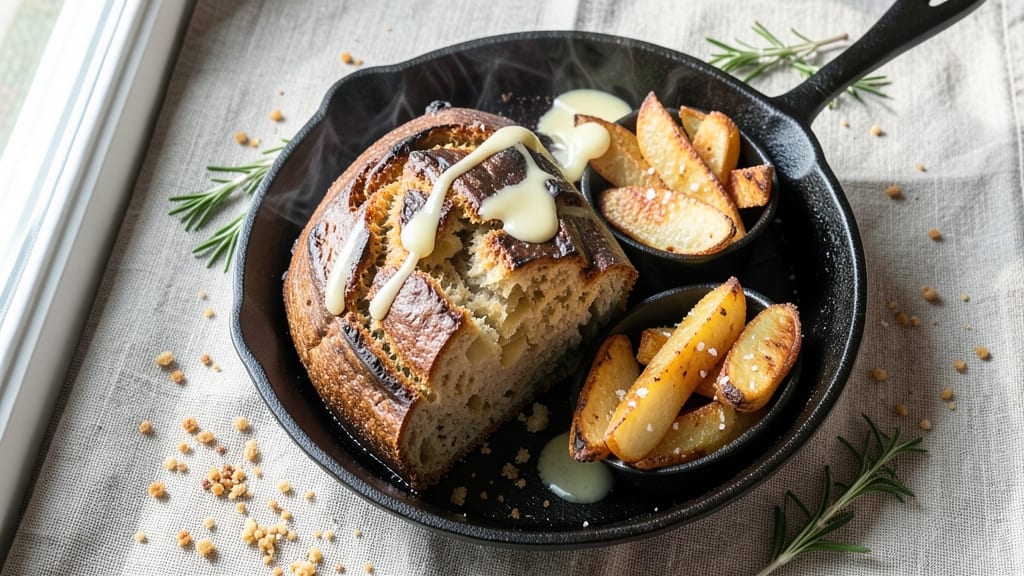
This potato sourdough recipe transforms humble ingredients into a crispy masterpiece that blends rustic sourdough tang with velvety potato richness. The secret lies in fermenting a cornmeal crust while incorporating tender roasted potatoes, creating a bread with golden-brown edges and a tender, fluffy interior.
I developed this recipe after years of experimenting with savory sourdough, and it never fails to impress—whether served as a hearty side or a satisfying main dish.
The magic begins with a 24-hour fermentation that develops deep flavor, while the cornmeal crust adds a satisfying crunch. Roasted potatoes infuse the dough with natural sweetness and moisture, ensuring each bite is both crispy and tender.
This isn’t your typical potato bread—it’s a professional-quality hybrid that balances artisanal technique with simple ingredients you likely already have on hand.
By the time it emerges from the oven, you’ll have a crispy cornmeal crown with a tangy vinegar crunch that cuts through the richness of the potato filling. The aroma alone will have everyone gathering around the table, and the texture—crunchy outside, soft inside—makes every bite worth the effort.
Perfect for pairing with soups, stews, or even a charcuterie board, this recipe redefines what potato bread can be.
Ready to elevate your side dishes? The process is straightforward once you master the fermentation and baking techniques. Let’s get started—your next favorite bread awaits.
Ingredients for potato sourdough
Six ingredients transform humble pantry staples into a crispy, tangy sourdough masterpiece with golden cornmeal crowns.
| Ingredient | Amount | Notes |
|---|---|---|
| Active Sourdough Starter 🍞 | ½ cup | Unfed, bubbly starter |
| All-Purpose Flour 🌾 | 4 cups | Plus 1 cup for dusting |
| Medium-Grind Cornmeal 🌽 | 1 ½ cups | For crispy crust texture |
| Russet Potatoes 🥔 | 2 ½ lb | Yukon Gold works too |
| Unsalted Butter 🧈 | ½ cup | Cold, cubed for richness |
| White Vinegar 🍶 | ¼ cup | For tangy crunch |
| Granulated Sugar 🍚 | 1 tbsp | Feeds the yeast |
| Diamond Crystal Kosher Salt 🧂 | 1 ½ tsp | Adjust to taste |
| Active Dry Yeast 🍞 | ¼ oz | 1 packet (2.25g) |
| Extra-Virgin Olive Oil 🫒 | ¼ cup | For dough handling |
| Fresh Rosemary 🌿 | ¼ cup | Chopped, optional garnish |
| Garlic Cloves 🧄 | 2 cloves | Minced for potato mix |
| Fresh Thyme 🌿 | ⅛ cup | Chopped for potato mix |
The sourdough starter is non-negotiable here—it's what gives this bread its signature tang. King Arthur or Bob's Red Mill starters work beautifully, but if you're feeding your own, make sure it's active and bubbly. For the cornmeal, Bob's Red Mill medium-grind is my go-to—it toasts up perfectly for that crispy crown. The potatoes? Russets or Yukon Golds from the store's organic section (if available) give the best texture. If you're feeling fancy, Trader Joe's organic potatoes are a game-changer—they're waxy enough to hold their shape but sweet enough to caramelize beautifully. The butter should be cold—Plugrá or Land O'Lakes work great, but avoid anything with additives. For the vinegar, white vinegar from the grocery store's baking aisle is perfect—no need for fancy balsamic here.
No sourdough starter? Instant yeast plus 1 tbsp apple cider vinegar mimics the tang, though it won't be quite the same. Cornmeal too expensive? Polenta or fine semolina work in a pinch for the crust. Potatoes too watery? Pat them dry thoroughly before roasting. The rosemary and thyme are optional but add a lovely herbal note—Trader Joe's frozen herbs are a budget-friendly backup. For the garlic, fresh is best, but if you're in a hurry, garlic powder at half the amount gets you close. The olive oil? Any good-quality brand will do—just avoid the super-cheap stuff that tastes like soap. And if you're out of white vinegar, lemon juice works in a bind, though the flavor will be slightly different.
This dough needs time—24 hours at room temperature for maximum flavor development. Store it in a glass bowl covered with a damp towel in a warm spot (like your oven with the light on). The roasted potatoes can be prepped a day ahead and stored in the fridge. For the final bake, preheat your oven to 425°F with a Dutch oven inside for 30 minutes—this ensures a crispy crust. Leftovers? 3-4 days in an airtight container, but honestly, this tastes even better reheated the next day. Freeze portions for up to 3 months—just thaw overnight in the fridge before reheating.
Why You'll Love This Recipe
- No-Fuss Dough: I mix the sourdough starter with flour and butter in my stand mixer—literally five minutes of hands-off time. The cornmeal crust handles like a dream, so no fussing with rolling or shaping.
- Crispy-Creamy Magic: That buttery cornmeal crust crackles while the inside stays pillowy, and the russets add a hearty, fluffy bite. Honestly, it’s the kind of combo that makes you want to eat it straight from the pan.
- Leftover Goldmine: Slice the cooled loaf, toast it up, and you’ve got breakfast, lunch, or a snack—no extra effort. I keep a batch in the fridge all week, and it never gets boring.
- Budget Baked Good: Russets are cheap, flour’s a pantry staple, and a small starter goes a long way. This recipe feeds four for under $5, and it tastes like you spent all day baking. (Yes, even on a Tuesday night.)
Step-by-step instructions for crispy cornmeal crowns
Here's how to craft golden, vinegar-kissed potato sourdough crowns with a shatteringly crisp cornmeal crust.
Prepare the Potato Filling
Peel and dice the 2.5 lb russet potatoes into ½-inch cubes. Boil them in salted water for 12-15 minutes until fork-tender but not mushy. Drain thoroughly and return to the pot.
While still warm, mash the potatoes until smooth. Stir in the 2 cloves minced garlic, 0.125 cup chopped fresh thyme, 1 tbsp granulated sugar, and 1.5 tsp diamond crystal kosher salt. Let cool completely before using - this prevents steam from developing in your dough later.
Activate the Sourdough Starter
In a small bowl, combine the 0.5 cup active sourdough starter with 1 cup warm water (about 105°F). Let sit for 10 minutes until it becomes bubbly and slightly foamy. This activation ensures your dough will rise properly.
In a large bowl, whisk together 1 cup of the all-purpose flour, the activated starter mixture, 0.25 cup extra-virgin olive oil, and 0.25 cup white vinegar. The vinegar adds that signature tangy crunch while tenderizing the gluten structure.
Mix the Dough
Gradually add the remaining 3 cups all-purpose flour and 1.5 cups medium-grind cornmeal to the wet ingredients. Mix until a shaggy dough forms, then add the 0.5 cup cold cubed unsalted butter. Work it in until fully incorporated.
Knead the dough on a lightly floured surface for 8-10 minutes until smooth and elastic. The cornmeal should coat the outside, giving you that signature crispy crust. If it's too sticky, add 1-2 tbsp more flour - but don't overdo it or you'll lose that crispy texture.
Shape and Proof
Divide the dough into 6 equal portions (about 12 oz each). Roll each piece into a 12-inch circle, then place the potato filling in the center. Gently fold the edges up and over to create a crown shape, sealing the edges tightly.
Place the shaped crowns on a baking sheet dusted with 1 cup all-purpose flour (for dusting). Cover with a clean kitchen towel and let proof at room temperature for 1-2 hours until nearly doubled in size. The dough should spring back slowly when gently pressed.
Bake to Golden Perfection
Preheat your oven to 375°F. Brush the tops of the crowns with a little extra-virgin olive oil and sprinkle with 0.25 cup chopped fresh rosemary for color and aroma. Bake for 35-40 minutes until deep golden brown and the internal temperature reaches 190°F.
For extra crispiness, transfer to a wire rack and let cool for 10 minutes before serving. The cornmeal crust should shatter slightly when touched, revealing the tender potato filling underneath. Serve warm with your favorite dipping sauce or extra vinegar for that tangy crunch.
Pro Tips For Making Potato Sourdough
- Use Cold Butter for Layers: Fold in that unsalted butter at the very end—cold, straight from the fridge—and work fast. The chunks will melt into flaky pockets while baking, not turn the dough greasy. I used to warm it up for easier mixing, but the texture suffers. Trust me, the effort pays off in every bite.
- Parboil Potatoes First: Cut those Russets, then boil them 5 minutes before roasting—skin on, no salt. This jumpstarts the cooking and keeps them from turning mushy later. I learned this after one batch collapsed into a sad, watery mess. A quick drain and pat dry sets you up for crispy perfection.
- Skip the Overmixing: The second you add your sourdough starter, stop folding. Overworking the dough kills the air bubbles and makes the final texture dense. Just handle it until the flour is mostly incorporated—lumpy is fine. I’ve ruined batches by turning this into a workout.
- Cornmeal Goes Under Too: Don’t just sprinkle that medium-grind cornmeal on top of the dough—press half into the pan first. It creates a sturdy base that prevents sticking and adds crunch to the bottom. I used to skip this, and the bread would tear when flipping. Now it’s foolproof.
Creative variations of this recipe
Cheesy Potato Twist
Add 1 cup shredded Gruyère or sharp cheddar to the potato filling for a rich, melty center. I recommend Trader Joe's organic Gruyère for its nutty depth. Sprinkle an extra ¼ cup cheese on top before baking for a golden, bubbly crust.
This variation works especially well when served with white wine gravy or smoked gouda dip. 🧀
Herb-Infused Variations
Swap the thyme for 1 tbsp fresh sage or 1 tsp dried marjoram to create an Italian-inspired version. For a Mediterranean twist, add 2 tbsp chopped sun-dried tomatoes and 1 tsp dried oregano to the potato filling.
These herbs pair beautifully with a drizzle of extra-virgin olive oil and flaky sea salt after baking. 🌿
Spicy Kick Option
For heat lovers, mix 1 tbsp smoked paprika and ½ tsp cayenne pepper into the potato filling. Add 2 slices of crispy bacon crumbled on top before baking for a smoky-sweet contrast.
Serve with cooling yogurt dip or spicy mayo to balance the heat. This version is perfect for game day or hearty dinners. 🌶️
Sweet Potato Swap
Replace russet potatoes with 2.5 lb sweet potatoes for a naturally sweet, vibrant version. Roast them with 1 tsp cinnamon and ½ tsp nutmeg before mashing. The filling will have a caramelized depth that pairs wonderfully with maple-glazed bacon or pecan streusel on top.
This variation is a crowd-pleaser for breakfast or dessert-style sides. 🍠
Gluten-Free Adaptation
Use a 1:1 gluten-free flour blend (like King Arthur Measure for Measure) and replace cornmeal with ½ cup almond flour for a crispy crust. Add 1 tbsp psyllium husk powder to improve texture.
The potato filling remains the same, but reduce the proofing time to 1 hour since gluten-free dough rises faster. This version is perfect for those with gluten sensitivities but still delivers that tangy crunch. 🌾
Savory Toppings Bar
Set up a toppings station with crumbled feta, caramelized onions, pickled jalapeños, and toasted pumpkin seeds. Let guests customize their crowns before baking. This interactive approach works great for parties or family gatherings. Serve with a side of garlic aioli or sour cream for dipping. 🍽️
Nutrition facts
Frequently asked questions
Can I make this potato sourdough recipe without a sourdough starter?
Yes! Mix 1 packet (2.25g) active dry yeast with 1 tbsp apple cider vinegar and 1 cup warm water (105°F) to mimic the tang. Let sit for 5 minutes before using in place of the starter. The flavor won't be identical, but it'll still deliver that crispy cornmeal crust and tender potato filling.
How do I prevent my potato sourdough crowns from getting soggy?
Ensure your potato filling is completely cooled before mixing into the dough to prevent steam buildup. For extra crispiness, brush the baked crowns with melted butter after removing from the oven. Storing leftovers in an airtight container with a paper towel underneath also helps maintain texture.
Can I make this recipe ahead of time?
Shape the crowns and refrigerate them overnight (up to 24 hours) before baking. This actually enhances the flavor. For the potato filling, roast the potatoes 1 day ahead and store them in the fridge. The dough can be mixed 8 hours ahead and refrigerated, then brought to room temperature before shaping.
What's the best way to reheat leftover potato sourdough?
Wrap individual crowns in aluminum foil and reheat at 350°F for 10-15 minutes until crispy again. For a quick option, use a toaster oven or air fryer at 375°F for 5-7 minutes. Avoid microwaving—it'll turn the crust soggy. The cornmeal coating will crisp up beautifully with these methods.
How can I add more flavor to the potato filling?
Try mixing in 2 tbsp cream cheese or ¼ cup sour cream for richness, or add 1 tsp smoked paprika for depth. For umami, stir in 1 tbsp nutritional yeast or 1 tbsp miso paste. Fresh herbs like chives or parsley work beautifully as a garnish after baking.