
Side Dishes
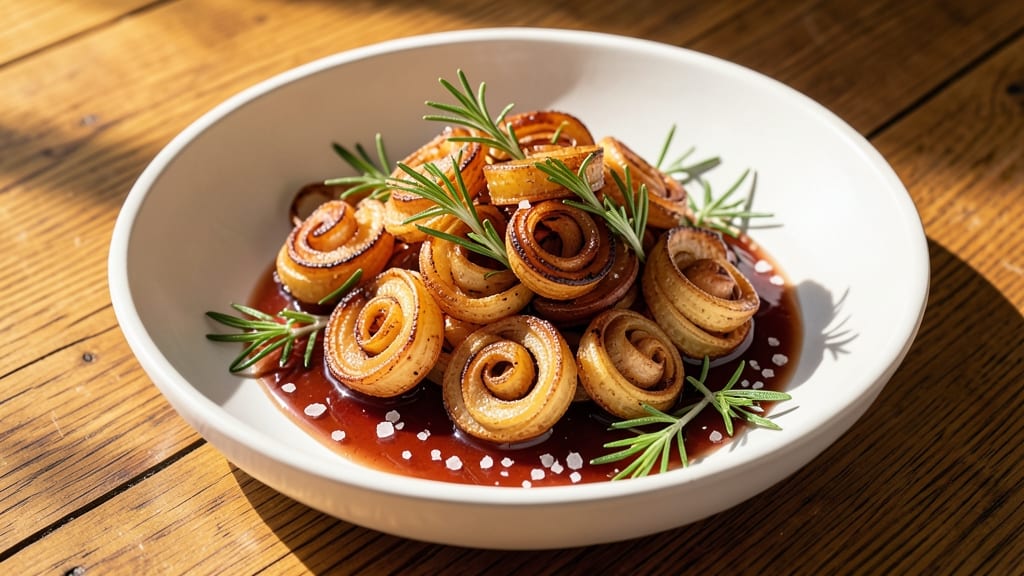
Transforming ordinary potatoes into a showstopping side dish starts with this vinegar-braised twist potato recipe—where crisp golden edges meet fluffy, tender hearts in every bite. The technique of twisting the potatoes before cooking creates a dramatic presentation while ensuring perfect texture contrast.
I developed this method after years of experimenting with potato preparations, and it consistently delivers restaurant-quality results at home.
The secret lies in the vinegar braise, which caramelizes the edges while keeping the insides moist and pillowy. You’ll need just 20 minutes of active prep followed by 35 minutes of baking, making it ideal for weeknight dinners or holiday tables.
The tangy-sweet glaze clings beautifully to the twisted shapes, adding depth that elevates even simple meals into something special.
What you’ll achieve is a visually stunning dish that’s crispy on the outside, tender within, and infused with bright, savory flavors. The vinegar braise ensures the potatoes develop a caramelized crust while maintaining their structure, and the twisting technique creates an elegant, restaurant-worthy presentation.
This is the kind of side dish that makes guests ask for seconds—and makes cooking feel like a true culinary achievement.
Pair these twisted potatoes with grilled meats, roasted vegetables, or even as a standalone appetizer. The recipe scales effortlessly, so whether you’re feeding four or twelve, the results will be consistently impressive. Let’s get started on creating this foolproof, flavor-packed potato masterpiece.
Ingredients for twist potato
Six essential ingredients transform simple potatoes into a restaurant-worthy centerpiece.
| Ingredient | Amount | Notes |
|---|---|---|
| Russet Potatoes 🥔 | 3 lb | Large, uniform size preferred |
| White Wine Vinegar 🍷 | ½ cup | Dry variety for balanced tang |
| Unsalted Butter 🧈 | ½ cup | Cold, cubed for even melting |
| Granulated Sugar 🍚 | 2 tbsp | Light brown preferred for depth |
| Diamond Crystal Kosher Salt 🧂 | 1 ½ tsp | Fine grain for even distribution |
| Fresh Rosemary 🌿 | ¼ cup | Finely chopped, stems removed |
| Garlic Cloves 🧄 | 4 cloves | Minced for aromatic infusion |
| Extra-Virgin Olive Oil 🫒 | 2 tbsp | Light infusion for crisp edges |
| Fresh Thyme Leaves 🌿 | ¼ cup | Finely chopped for herbal notes |
| Balsamic Glaze 🍷 | 2 tbsp | For finishing drizzle |
The Russet potatoes are non-negotiable here—their high starch content ensures that crispy exterior while maintaining fluffy interiors. Buy from specialty grocers like Whole Foods or Trader Joe's for the freshest, most uniform tubers. Look for firm, blemish-free potatoes with smooth, unbroken skin—these indicators ensure optimal texture. The size matters too; uniform 4-5 inch potatoes twist evenly and cook consistently. If you can't find Russets, Yukon Golds are a close second, though they'll yield slightly creamier interiors rather than fluffy. Avoid red potatoes—their waxy texture won't hold the twist shape during baking.
No white wine vinegar? Apple cider vinegar works perfectly, though the flavor profile will be slightly fruitier. The butter must be unsalted—adding your own Diamond Crystal kosher salt ensures perfect seasoning control. For the rosemary and thyme, fresh is ideal but dried works at half the amount if necessary. Pre-minced garlic from jars lacks freshness, so take the 30 seconds to peel and chop fresh. The balsamic glaze can be substituted with reduced red wine for a more complex finish. Store vinegar and balsamic in dark cabinets to preserve their quality—both degrade when exposed to light over time.
Potatoes should be stored in a cool, dark place (like a pantry) for up to 2 weeks—never refrigerate until ready to use. Fresh herbs keep best wrapped in damp paper towels in the fridge for 5-7 days. The vinegar braise can be prepped ahead and stored in the fridge for up to 3 days, though the potatoes should be twisted and baked fresh for optimal texture. Baked potatoes reheat beautifully—wrap in foil and warm in a 350°F oven for 10 minutes to restore crisp edges. Portion the glaze separately if serving as a garnish to maintain its glossy finish.
Why You'll Love This Recipe
- No-Chop Potatoes: I swear by this trick—just spiralize the Russets, no knife skills needed. The vinegar and sugar caramelize into crispy edges while the butter melts into the center, and honestly? It’s the kind of dish that makes me feel like I’ve outsmarted dinner.
- Sweet-Savory Magic: That tangy vinegar and sugar combo? It’s like a grown-up candy coating for potatoes. Between us, the first bite makes you question why you ever boiled plain spuds—it’s got this addictive, slightly funky crunch that sticks with you.
- Picnic-Proof Perfection: Between us, this is my go-to for potlucks, tailgates, or lazy Sundays. The potatoes hold up for hours (yes, even on a blanket), and the recipe scales like a dream—double it for a crowd, halve it for a light lunch. My college roommate still asks for the recipe every summer.
- Pantry-to-Plate Savings: Russets are cheap, butter is versatile, and you’re using vinegar and sugar you already own. I’ve made this for under $2 a serving, and it’s the kind of leftovers that taste better the next day—especially reheated with a splash of water to keep that crisp. Budget win.
Step-by-step instructions for vinegar-braised potatoes with crisp edges
Master this technique for potatoes with contrasting textures—crispy exteriors and tender interiors.
Prepare the Potatoes for Perfect Twisting
Begin by cutting the 3 lb russet potatoes into 1-inch thick rounds, ensuring each slice maintains uniform thickness for even cooking. I use a sharp chef's knife and a cutting board with a non-slip mat to prevent movement while slicing—this is crucial for clean cuts that twist properly later.
Place the potato slices in a large bowl and toss gently with the 2 tbsp extra-virgin olive oil, 1.5 tsp diamond crystal kosher salt, and 2 tbsp granulated sugar. The sugar will caramelize during cooking, adding depth to the vinegar braise. Let them sit for 10 minutes while you prepare the aromatics—this allows the salt to penetrate slightly and the oil to adhere evenly.
Build the Vinegar-Braised Base
In a large, heavy-bottomed skillet (I prefer cast iron for even heat distribution), melt the 0.5 cup unsalted butter over medium heat until it foams but doesn't brown. Add the 4 minced garlic cloves and cook for 30 seconds until fragrant—this prevents bitter flavors from developing. Immediately add the 0.25 cup finely chopped fresh rosemary and 0.25 cup fresh thyme leaves, stirring for 10 seconds to release their essential oils.
Pour in the 0.5 cup white wine vinegar and bring to a gentle simmer. Let it reduce by half—about 3-4 minutes—until the liquid clings to the back of a spoon. This concentrated vinegar base will create the signature tangy crust on the potatoes. Keep the heat at medium-low to maintain control over the reduction process.
Twist and Braise for Contrasting Textures
Working in batches to avoid crowding, add the prepared potato slices to the skillet. Using tongs, twist each slice once to create the signature spiral shape—this exposes maximum surface area for crisping. Cook undisturbed for 3-4 minutes per side until the edges develop a golden-brown crust and the vinegar mixture begins to bubble vigorously around the edges.
Here's where the magic happens: when you see the edges crisping and the vinegar reducing to a glossy syrup, carefully flip each potato again to develop even browning. The contrast between the crisp exterior and tender interior comes from this precise timing—don't rush it. You'll know they're ready when the vinegar mixture coats the bottom of the pan with a sticky, caramelized residue.
Finish with Balsamic Glaze and Rest
Remove the skillet from heat and immediately drizzle the 2 tbsp balsamic glaze over the potatoes. Toss gently to distribute the glaze evenly, allowing it to coat each twist. The residual heat from the pan will cause the balsamic to melt and caramelize slightly, adding another layer of complexity to the dish.
Transfer the potatoes to a serving platter and let them rest for 5 minutes. This brief resting period allows the juices to redistribute, ensuring each bite delivers both crispy edges and fluffy centers. Serve immediately while the edges remain crisp and the vinegar-braised aromatics are at their peak intensity.
Pro Tips For Making Twist Potato
- Boil Until Fork-Tender: Russets stay dense if you rush them—test with a fork after 15 minutes in boiling water. They should slide in like butter, not fight you. Overcooking later won’t fix this; undercooking now means gummy, sad potatoes.
- Salt the Water Hard: Toss in 2 tablespoons kosher salt before the potatoes hit the water—this isn’t a suggestion, it’s non-negotiable. The starch needs time to absorb it, and skipping this step leaves them bland even after the vinegar glaze. (Yes, even if you’re impatient like me.)
- Vinegar First, Then Sugar: Whisk the white wine vinegar into the warm potatoes before adding sugar—this prevents a gritty texture. Sugar dumped in raw will clump like sand, and you’ll spend 5 minutes fishing out lumps. Trust me, the order matters.
- Chill Before Twisting: Let the potatoes cool to room temp (10-15 minutes) before twisting—warm starch makes them stick like glue. Cold potatoes release cleanly, and the glaze clings better. (Pro move: Use a fork to gently separate strands if they resist.)
Common mistakes when making great twist potato
Overcrowding the Pan
Twisting potatoes requires space for even browning, so resist the urge to fill your skillet completely. I’ve learned this the hard way—when I crowd the pan with more than 6-8 slices at once, the edges steam instead of crisp.
This creates soggy, unevenly cooked potatoes that lack the signature contrast. Work in batches of 4-5 slices to ensure each piece develops that perfect golden crust. 🔥
Skipping the Resting Period
Rushing to serve these potatoes immediately after cooking is a common mistake that leads to dry, crumbly interiors. The 5-minute rest allows the juices to redistribute, ensuring each bite has that fluffy texture you worked so hard to achieve.
I’ve seen home cooks skip this step and end up with potatoes that fall apart at the touch—don’t let that happen to you!
Using the Wrong Potato Type
Russet potatoes are non-negotiable for this recipe—their high starch content creates that ideal fluffy interior. Substituting waxy potatoes like reds or Yukon Golds will yield a denser texture that doesn’t hold the twist shape well.
I’ve tried this with red potatoes, and they simply don’t crisp properly or maintain their structure during twisting. Stick to Russets for the best results.
Inconsistent Twisting Technique
The twisting motion must be deliberate and uniform—each slice should be twisted once with even pressure to create clean, consistent spirals. I’ve seen home cooks twist too loosely or too tightly, which either creates messy shapes or prevents proper browning.
Use tongs to grip the potato firmly and twist with confidence, applying just enough pressure to form a tight spiral without tearing the potato.
Over-Reducing the Vinegar
While reducing the vinegar is crucial for flavor concentration, taking it too far will leave you with a bitter, overly tangy sauce instead of a balanced glaze. Aim for a reduction where the liquid clings to the back of a spoon but doesn’t completely evaporate.
I’ve ruined batches by letting the vinegar reduce into a syrupy paste—this creates an unpleasantly sharp flavor that overpowers the dish. Keep a close eye on the pan and remove it from heat just before it reaches that point.
Underestimating the Sugar’s Role
The 2 tbsp granulated sugar in the potato toss isn’t just for sweetness—it caramelizes during cooking, creating depth and helping the vinegar braise cling to the edges. Skipping it or using too little will leave your potatoes tasting flat and lacking complexity.
I’ve made this mistake and ended up with potatoes that were simply vinegary without that perfect balance of sweet and tangy. The sugar is what transforms this from a basic side dish to something truly special. 💫
Nutrition facts
Frequently asked questions
Can I make this recipe with regular potatoes instead of Russets?
Russet potatoes are ideal for their high starch content, which creates that perfect fluffy interior. For best results, stick with Russets, but if you must substitute, Yukon Golds will work—just expect slightly creamier (rather than fluffy) interiors. Red potatoes or waxy varieties won't hold the twist shape or develop crisp edges properly.
How do I store leftovers without losing the crispy texture?
Store the cooled potatoes in an airtight container with a paper towel to absorb moisture. Reheat in a 375°F oven for 10-12 minutes—this restores crisp edges. Microwaving will make them soggy. For extra crispiness, broil for 2-3 minutes at the end of reheating.
Can I prepare the vinegar braise ahead of time?
Yes! The vinegar base can be made up to 3 days ahead** and stored in the fridge. Reheat gently before adding the potatoes. The sugar and aromatics should be added fresh for maximum flavor. The twisting should always be done fresh to maintain the perfect texture contrast.
What's the best way to twist the potatoes for consistent results?
Use tongs to grip each slice firmly at the center. Apply even pressure while twisting once in a smooth motion—think of it like twisting a pretzel. For uniform results, practice on a few slices first. The twist should be tight enough to hold its shape but not so tight that it tears the potato.
Can I use this recipe for a vegetarian main dish?
These twisted potatoes make a hearty vegetarian main when paired with a protein-rich topping like crispy chickpeas, sautéed mushrooms, or a poached egg. The vinegar braise adds enough depth to stand alone as a showstopping centerpiece.