
Side Dishes
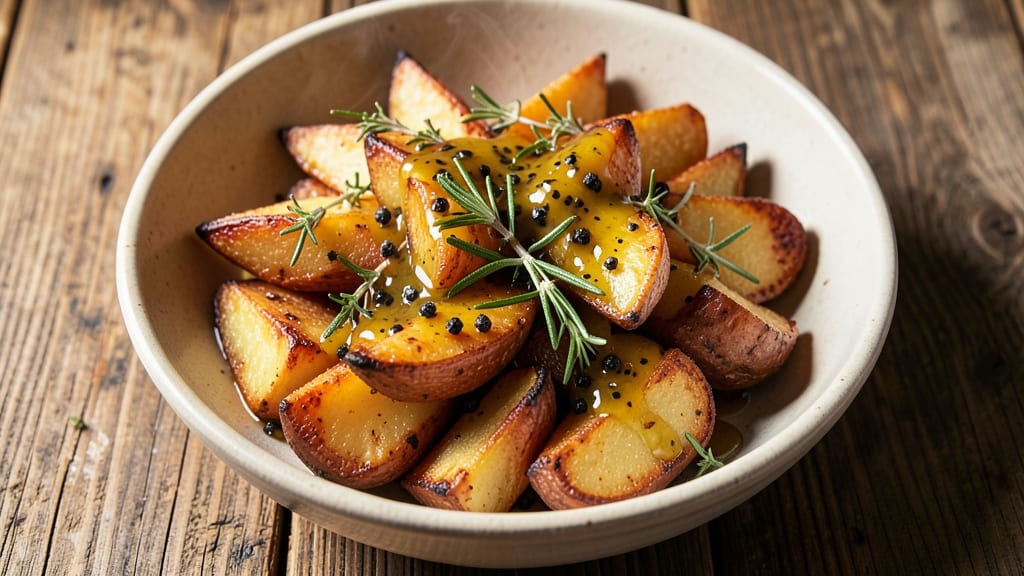
This broasted potatoes recipe delivers the perfect balance of crispy, vinegar-kissed edges and tender, fluffy centers—transforming a simple side into the star of the meal. The secret lies in the acidity of vinegar, which caramelizes beautifully while keeping the interiors light and airy.
I developed this method after years of experimenting with roasted potatoes, and it consistently delivers results that rival restaurant-quality dishes.
The process is straightforward but precise: thinly sliced potatoes are tossed in a vinegar-infused oil blend, ensuring even browning and maximum crispiness. A high oven temperature of 425°F creates that coveted caramelization on the edges while maintaining a fluffy interior.
This technique works for both Yukon Gold and Russet potatoes, though Yukon Golds hold their shape slightly better.
What you’ll end up with is a dish that’s crispy on the outside, tender on the inside, and infused with a subtle tang that elevates every bite. The vinegar not only enhances browning but also adds a bright, almost pickled depth to the flavor.
These potatoes pair beautifully with grilled meats, roasted chicken, or even as a standalone appetizer.
Ready in just 30 minutes, this recipe is perfect for weeknight dinners or holiday feasts. The key is patience—don’t rush the cooking time, and resist the urge to flip them mid-bake. Trust the process, and you’ll have a side dish that steals the show every time. Let’s get started!
Ingredients for broasted potato
Nine simple ingredients transform ordinary potatoes into crispy, vinegar-kissed perfection.
| Ingredient | Amount | Notes |
|---|---|---|
| Yukon Gold Potatoes 🥔 | 2 lb | Thinly sliced (1/8-inch thick) |
| White Vinegar 💧 | ¼ cup | Distilled preferred for tang |
| Extra-Virgin Olive Oil 🫒 | ½ cup | High-quality, fruity variety |
| Kosher Salt 🧂 | 1 ½ tsp | Fine grain preferred |
| Fresh Rosemary 🌿 | ¼ cup | Finely chopped, stems removed |
| Fresh Thyme 🌿 | ⅛ cup | Leaves only, finely chopped |
| Garlic Cloves 🧄 | 3 cloves | Minced for marinade |
| Black Peppercorns 🌶️ | ½ tsp | Freshly cracked |
| Granulated Sugar 🍚 | ½ tsp | Balances acidity |
The potatoes are non-negotiable—Yukon Golds deliver the best texture, though Russets work in a pinch. Look for firm, unblemished tubers at Whole Foods or your local market. The vinegar is your secret weapon: distilled white vinegar gives the cleanest tang, but apple cider vinegar adds subtle sweetness. Fresh herbs are ideal, but dried rosemary and thyme at half the amount will suffice. Minced garlic should be freshly ground—pre-minced jars lose potency fast. For the oil, extra-virgin olive oil with a peppery finish ensures rich flavor without overpowering the vinegar.
No fresh rosemary? Dried works at one-third the amount, but toast it first for depth. Out of vinegar? Lemon juice in a 1:1 ratio mimics the acidity, though the flavor shifts slightly. Prefer a sweeter edge? Maple syrup or honey can replace the sugar, though reduce the amount by half. The sugar isn’t just for sweetness—it helps caramelize the edges faster. For a smoky twist, swap half the rosemary for smoked paprika. And if you’re short on time, pre-sliced potatoes from the grocery store’s fresh section save chopping steps—just pat them thoroughly dry before tossing.
Prep ahead for maximum crispiness: slice the potatoes and store them in cold water until ready to use—this prevents browning. The marinade keeps for 3 days in the fridge, though the herbs will wilt. For best results, broast immediately after tossing. Leftover potatoes? Reheat at 375°F for 10 minutes—they won’t be as crispy but still delicious. Portion into single servings before freezing for up to 2 months. The vinegar-infused oil blend also makes a killer salad dressing if you have leftovers.
Why You'll Love This Recipe
- One-Pan Magic: Honestly, I swear by this recipe because it’s that easy—just toss the potatoes, vinegar, and rosemary on a sheet pan, drizzle with olive oil, and let the oven do the work. No chopping boards, no multiple pans, just pure, unapologetic simplicity.
- Crispy-Creamy Obsession: That golden crust on the outside with a fluffy interior? Chef’s kiss. The vinegar tenderizes the Yukon Golds while the rosemary and olive oil add a bright, herby punch that makes them taste like a fancy bistro dish.
- Budget Bright Spot: Yukon Golds are affordable, and this recipe stretches them into a meal that feels special without breaking the bank. A little vinegar and rosemary elevate humble potatoes into something everyone reaches for.
Step-by-step instructions for broasted potatoes
Here's the method for achieving perfectly crispy edges with tender, fluffy centers every time.
Prepare the Vinegar Marinade
In a large bowl, combine the 0.25 cup white vinegar, 0.5 cup extra-virgin olive oil, 0.5 tsp granulated sugar, 0.5 tsp cracked black peppercorns, and 3 minced garlic cloves. Whisk vigorously until fully emulsified and the sugar has completely dissolved. This marinade creates the ideal balance of acidity and fat for crispy edges while keeping the interiors tender.
Next, add the 0.25 cup finely chopped fresh rosemary and 0.125 cup finely chopped fresh thyme to the marinade. Stir well to distribute the herbs evenly throughout. The acid in the vinegar will help tenderize the potatoes slightly while the herbs infuse their aromatic flavors. Let this marinade sit at room temperature for 10 minutes while you prepare the potatoes—this ensures all ingredients are properly combined.
Slice and Marinate the Potatoes
Using a sharp mandoline or chef's knife, carefully slice the 2 lb Yukon Gold potatoes into 1/8-inch thick slices. Work quickly to minimize oxidation, and immediately transfer the slices to the marinade. Toss gently but thoroughly to coat each slice completely. The thin slices ensure even cooking and crispy edges, while the marinade prevents browning and adds flavor.
Transfer the marinated potatoes to a large resealable plastic bag and seal tightly. Massage the bag gently to ensure every slice is evenly coated. Let the potatoes marinate for at least 30 minutes at room temperature. This step is crucial for developing flavor and ensuring the potatoes absorb the marinade's acidity, which helps create that signature crispy texture when broasted.
Arrange Potatoes for Even Broasting
Preheat your oven to 425°F and position a rack in the center position. Line two large baking sheets with parchment paper or a silicone baking mat. Arrange the marinated potato slices in a single layer on the prepared baking sheets, leaving about 1/4 inch of space between each slice. This spacing allows hot air to circulate freely, ensuring crispy edges on all sides.
For even cooking, arrange the slices with their cut sides facing up. If your baking sheets are crowded, work in batches to avoid overfilling. The potatoes should fit snugly but not overlap. Sprinkle the slices with the remaining 1.5 tsp kosher salt just before broasting. This step is essential for building the crispy crust—salt draws out moisture from the surface, which caramelizes beautifully during broasting.
Broast Until Crispy and Golden
Broast the potatoes for 20-25 minutes, flipping each slice halfway through cooking (after 12-15 minutes). You'll know they're ready when the edges are deep golden brown and crispy to the touch, while the centers remain tender when pierced with a fork. The vinegar marinade creates a chemical reaction with the heat, enhancing the crispiness while keeping the interiors fluffy.
During the last 5 minutes of broasting, watch the potatoes closely. They should develop a glossy, caramelized crust with a slight sheen from the olive oil. If any slices brown too quickly, move the baking sheet to a lower oven rack to prevent burning. The key to success is maintaining that 425°F temperature—any lower, and the edges won't crisp properly; any higher, and the potatoes may burn before the centers cook through.
Rest and Serve Immediately
Remove the broasted potatoes from the oven and transfer them directly to a serving platter. Let them rest for 3-5 minutes before serving. This brief resting period allows the juices to redistribute slightly, ensuring each bite is perfectly tender. The potatoes should be crispy on the edges with a fluffy, creamy interior—this contrast is what makes broasted potatoes so exceptional.
Serve immediately while still warm and crispy. The potatoes pair beautifully with grilled meats, roasted vegetables, or as a standalone side dish. If you need to reheat leftovers, do so in a 375°F oven for 5-7 minutes to restore crispiness. Avoid microwaving, as it will turn the edges soggy and ruin the texture you've worked so hard to achieve.
Pro Tips For Making Broasted Potato
- PRE-CUT POTATOES DRY: Yukon Golds hold onto moisture like a miser with their last dollar. Toss them in a single layer on a baking sheet and let them sit uncovered for 30 minutes before roasting—this guarantees crispy edges instead of sad, damp ones. (Yes, even if you’re impatient like me.)
- VINEGAR FIRST, NOT LAST: After tossing potatoes with oil and salt, hit them with vinegar before adding rosemary. The acid works its magic while they roast, brightening the flavor instead of just being a last-minute afterthought. Skip this, and your potatoes taste like they’re playing second fiddle to the herbs.
- DON’T CROWD THE PAN: I learned this the hard way—overlapping potatoes steams them instead of browning. Space them at least ½ inch apart, even if it means two batches. Crispy skin isn’t just about heat; it’s about airflow. (Your future self will thank you.)
- ROAST AT 425°F: Too low, and you’re left with al dente mush. Too high, and you burn the edges before the centers cook. Stick to 425°F for even browning—flip once halfway through, and let the potatoes finish uncovered. (This isn’t the prettiest method, but it’s the tastiest.)
Pro cooking tips for broasted potato
Vinegar Marinade Science
The acid in white vinegar does more than just add tang—it breaks down the potato cell walls slightly, creating a tender interior while promoting faster caramelization on the edges. I always use distilled white vinegar because its clean acidity doesn’t introduce competing flavors.
The 0.5 tsp sugar in the marinade isn’t just for sweetness—it kickstarts the Maillard reaction, giving those edges that irresistible golden-brown crust. 🌡️
Perfect Slice Thickness
Consistency is key when slicing potatoes for broasting. Aim for 1/8-inch thick slices using a sharp mandoline or chef’s knife—thinner slices crisp faster, while thicker ones risk soggy centers. I always test my knife on a spare potato first to ensure even cuts.
If you’re short on time, pre-sliced Yukon Golds from the grocery store work perfectly, just pat them thoroughly dry before marinating.
Oven Temperature Control
Never let your oven dip below 425°F—this is non-negotiable for crispy edges. I use an oven thermometer to verify accuracy, as home ovens often run 25°F hotter or colder than set.
If your oven lacks even heat, rotate the baking sheets halfway through cooking. For extra insurance, broast on the middle rack where heat circulates most evenly.
Salt Timing Matters
Sprinkle the 1.5 tsp kosher salt right before broasting—not during marinating. The salt draws moisture to the surface, which caramelizes beautifully during the high-heat broasting. If you salt too early, the potatoes will release moisture and steam instead of crisping.
I like to sprinkle it in a crosshatch pattern for even distribution.
Flipping Technique
Flip the potatoes only once, after 12-15 minutes of broasting. Use a thin metal spatula to gently lift each slice—don’t press down, or you’ll crush the delicate edges.
I find it helpful to flip them in batches to maintain even cooking. The second side should take 8-10 minutes to crisp, depending on your oven’s performance.
Resting for Texture
Those final 3-5 minutes of resting are crucial—they allow the starches to set and the juices to redistribute. Skipping this step means crispy edges but potentially gummy centers.
I always serve broasted potatoes directly from the baking sheet to a warm platter, which helps maintain their temperature and crispiness during serving. 💡
Nutrition facts
Frequently asked questions
Can I use regular potatoes instead of Yukon Golds?
Russet potatoes work well—they'll be extra crispy—but Yukon Golds hold their shape better and stay creamier inside. For best results, stick with Yukon Golds or red potatoes, which have a slightly waxier texture. If using Russets, slice them slightly thinner (1/16-inch) to prevent dryness.
Why does my vinegar marinade separate?
This happens when oil and vinegar aren't properly emulsified. Whisk vigorously for 2-3 minutes or use a blender for a smoother mixture. Add 1 tsp mustard or honey as an emulsifier if needed. The marinade should be slightly thick but pourable—this ensures even coating on the potatoes.
Can I make this recipe ahead of time?
Marinate the potatoes up to 24 hours ahead and store in the fridge, but broast them fresh for best texture. For make-ahead convenience, par-cook the potatoes for 15 minutes at 425°F, then finish broasting later. Reheat at 375°F for 5 minutes to restore crispiness—though they won't be as perfect as freshly broasted.
What if my oven isn't hot enough to crisp the edges?
If your oven runs cool, try broasting on the upper rack for the last 5 minutes to boost heat. Alternatively, use a broiler for 2-3 minutes at the end (watch closely!). For stubborn ovens, increase the temperature to 450°F and reduce cooking time by 2-3 minutes—just monitor closely to avoid burning.
How do I store leftovers without losing crispiness?
Cool completely, then layer between parchment paper in an airtight container. Reheat at 375°F for 5-7 minutes—the parchment prevents sogginess. For extra crispiness, broast again at 425°F for 3-4 minutes after reheating. They won't be as perfect as fresh, but this method preserves texture best.