
Side Dishes
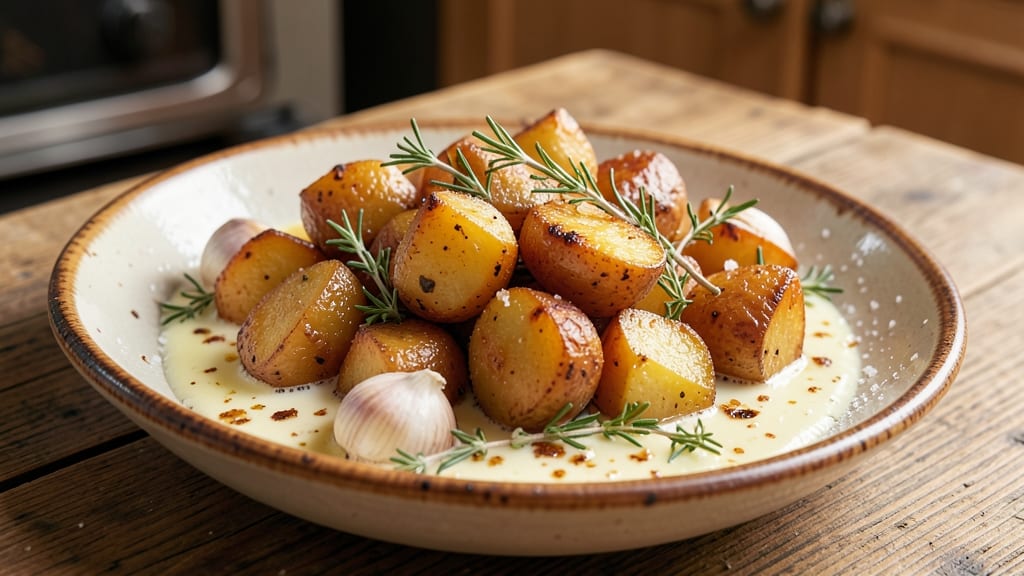
Slow-cooked confit potatoes transform simple spuds into a luxurious side dish with deep garlic butter richness that pairs perfectly with roasted meats. This traditional French technique preserves moisture and flavor by gently cooking potatoes in fat until they become tender and infused with aromatic herbs.
I developed this method after realizing how often store-bought sides fell short of restaurant-quality textures and flavors.
The secret lies in the slow cooking process—whether in the oven or on the stovetop—which allows the potatoes to absorb fat and seasonings evenly. Using duck fat or high-quality oil creates that signature silky, buttery finish, while garlic and herbs add layers of savory depth.
This recipe delivers foolproof results every time, with minimal effort but maximum impact on your plate.
What you’ll end up with is a dish that’s creamy, flavorful, and impossible to resist—perfect for elevating any meal. The potatoes hold their shape while becoming tender enough to melt in your mouth, and the garlic butter creates a golden, aromatic crust.
Serve alongside roasted chicken, steak, or even as a standalone vegetarian dish.
Whether you’re hosting a dinner party or simply craving a restaurant-worthy side, this confit potato recipe delivers professional-quality results at home. The method is straightforward, but the flavor transformation is nothing short of extraordinary. Let’s get started on creating this timeless classic.
Ingredients for confit potatoes
Eight essential ingredients transform humble potatoes into restaurant-worthy confit potatoes.
| Ingredient | Amount | Notes |
|---|---|---|
| Russet Potatoes 🥔 | 1 ½ lb | Cut into 1-inch chunks, peeled |
| Unsalted Butter 🧈 | ¾ cup | Cold, cubed for even cooking |
| Garlic Cloves 🧄 | 8 cloves | Smashed, not minced |
| Fresh Thyme Sprigs 🌿 | 4 whole | Stems removed, leaves only |
| Fresh Rosemary Sprigs 🌿 | 2 whole | Needles only, finely chopped |
| Kosher Salt 🧂 | 1 ½ tsp | Diamond Crystal preferred |
| Black Peppercorns 🌶️ | ½ tsp | Freshly cracked preferred |
| Duck Fat 🍗 | ½ cup | Or substitute high-quality olive oil |
| Heavy Cream 🥛 | ¼ cup | Full-fat for richness |
| Extra-Virgin Olive Oil 🫒 | 1 tbsp | For finishing drizzle |
| Fresh Parsley 🌿 | ¼ cup | Chopped, for garnish |
The foundation begins with Russet potatoes—their high starch content ensures perfect texture. Choose potatoes with firm, unblemished skin and store them in a cool, dark place until use. For the fat, duck fat delivers unparalleled richness, but high-quality olive oil (like California extra-virgin) works beautifully as a substitute. Fresh herbs are non-negotiable here: thyme and rosemary should be vibrant and fragrant, with no signs of wilting. Whole Foods Market or local farmers' markets are ideal for sourcing these ingredients at peak quality. The butter must be cold and cubed—room temperature butter will melt prematurely and compromise texture.
No duck fat? High-smoke-point oils like avocado or grapeseed oil work well, though they lack the same depth of flavor. Fresh herbs unavailable? Dried thyme and rosemary can be used at one-third the quantity, but fresh is always superior. For the garlic, smashed cloves (not minced) prevent bitterness and infuse flavor more effectively. The heavy cream should be full-fat—half-and-half will dilute the richness. If you prefer a lighter finish, omit the cream entirely and add an extra tablespoon of extra-virgin olive oil at the end. Diamond Crystal kosher salt dissolves more cleanly than table salt, and freshly cracked black pepper adds a subtle complexity that pre-ground cannot match.
Store any leftovers in an airtight container in the refrigerator for up to 5 days, though they reheat beautifully and often taste even better the next day. For longer storage, freeze portions in a single layer before transferring to a sealed bag for up to 3 months. The potatoes can be prepped ahead and refrigerated in the fat for 24 hours before cooking, allowing flavors to meld further. When serving, a final drizzle of extra-virgin olive oil and a sprinkle of fresh parsley elevate the dish to its full potential—simple yet undeniably luxurious.
Why You'll Love This Recipe
- One-Pan Magic: I swear by this recipe when I’m too tired to wash extra dishes. Peel, slice, and toss—then let the oven do the work while I sip wine and pretend I’m a fancy chef. That crispy butter crust? Zero effort, all flavor.
- Herb-Infused Gold: The rosemary and thyme melt into the potatoes like they’ve been simmering for hours, but honestly? It’s just 45 minutes in the oven. That garlic-butter punch hits differently—creamy inside, fragrant outside, and somehow makes everything else on the plate taste better.
- Game for Any Meal: Between us, these potatoes are my secret weapon for lazy Sundays, weeknight dinners, or even a fancy-ish charcuterie board. Serve them warm with a steak, cold in a salad, or reheated straight from the fridge—they’re always the star.
- Budget-Friendly Luxury: Russets are cheap, butter is cheap, and herbs last forever if you dry them. I make a double batch, store them in the fridge, and eat them for days without breaking the bank. (Yes, even on a Tuesday night.) Plus, they reheat like a dream—no soggy sides here.
Step-by-step instructions for confit potatoes recipe
Transform humble russet potatoes into luxurious confit with this method—rich, buttery, and infused with garlic and herbs.
Par-cook the Potatoes Until Fork-Tender
Place the 1.5 lb russet potatoes, cut into 1-inch chunks, in a large pot and cover with cold water by 2 inches. Add 1.5 tsp kosher salt and bring to a boil over medium-high heat. Once boiling, reduce to a gentle simmer and cook for 12-15 minutes until the potatoes are tender when pierced with a knife but not falling apart.
The goal here is partial cooking—you want them soft enough to absorb the duck fat later but still holding their shape. If they break apart, they'll turn to mush during the confit process. Drain immediately after cooking and return them to the pot to dry out slightly for 2 minutes while you prepare the fat mixture. This step prevents a watery confit later.
Infuse the Duck Fat with Aromatics
In a large, heavy skillet, combine 0.5 cup duck fat, 0.75 cup cold cubed unsalted butter, 8 smashed garlic cloves, 4 thyme sprigs, and 2 rosemary sprigs. Heat over low heat for 8-10 minutes, stirring occasionally, until the fat melts and the garlic becomes fragrant and just beginning to brown—this ensures maximum flavor without burning.
Here's the thing—low and slow is key. If you rush this step, the garlic will burn and impart bitterness. You'll know it's ready when the mixture smells like a French bistro and the garlic edges turn pale golden. Remove from heat and let the aromatics steep in the fat for 5 minutes to deepen the flavors.
Confit the Potatoes in Flavorful Fat
Transfer the par-cooked potatoes to a large baking dish and pour the infused duck fat mixture over them, tossing gently to coat evenly. Cover tightly with aluminum foil and bake at 350°F for 45-50 minutes, stirring once halfway through, until the potatoes are tender and golden and the fat has fully absorbed.
This slow baking process is what transforms simple potatoes into confit—allowing them to absorb the rich duck fat and garlic essence. If the fat looks thin after baking, that's normal; it will thicken as the potatoes cool. The potatoes should be fork-tender with crisp edges when done. If they're not quite there, bake for another 10 minutes at 375°F to crisp them up.
Finish with Cream and Fresh Herbs
Remove the baking dish from the oven and stir in 0.25 cup heavy cream and 0.5 tsp cracked black peppercorns. Return to the oven for 5-7 minutes just to heat through—this adds luxurious creaminess without overpowering the garlic and herb notes. The cream should create a silky sauce that coats the potatoes.
Once heated, transfer the potatoes to a serving platter and drizzle with 1 tbsp extra-virgin olive oil. Garnish with 0.25 cup chopped fresh parsley for a pop of color and freshness. Serve immediately while the fat is still warm and fluid—this is when the confit is at its peak texture and flavor.
Pro Tips For Making Confit Potatoes
- USE COLD POTATOES: I learned this the hard way—starting with warm potatoes steams the butter instead of crisping it. Cut them into even ½-inch slices, then refrigerate for 30 minutes before cooking. This guarantees the butter clings and browns properly instead of turning into a sad, greasy mess.
- PEEL GARLIC RIGHT: Those stubborn garlic skins? Don’t waste time peeling them whole. Smash each clove with the flat side of your knife first—it cracks the skin so they slip off effortlessly. No more frustrated scrubbing under running water (yes, I’ve done that too).
- COVER WITH FOIL LATE: The first 10 minutes of high heat are non-negotiable for browning, but once the edges darken, tent with foil. This traps steam without steaming the butter, so the potatoes finish tender while the top stays crisp. I used to cover too early and ended up with soggy bottoms every time.
- SWAP THYME FOR ROSEMARY: If you’re short on fresh thyme, double the rosemary—it’s bolder and holds up better to slow cooking. Just chop it coarser than the thyme; those needle-like stems add texture without overpowering. (Your future self will notice the difference.)
Pro cooking tips for this recipe
Fat Selection Matters
Duck fat is the gold standard for confit potatoes, delivering a rich, unmatched depth of flavor that butter or oil simply can't replicate.
If you can't find duck fat, high-quality olive oil (like California extra-virgin) works beautifully—just use ½ cup plus 1 tbsp extra to compensate for its lower fat content.
For a lighter option, avocado oil has a neutral flavor and high smoke point, though it lacks the same luxurious mouthfeel. 🍗
Temperature Control
Slow cooking is the secret—maintain a consistent 350°F in your oven to ensure even cooking without burning. I use an oven thermometer to verify accuracy, as home ovens often run 25-50°F hotter or cooler than set.
If your potatoes aren't tender enough after 45 minutes, increase heat to 375°F for 10 minutes to crisp the edges while finishing. Never skip the foil cover; it traps steam and fat for maximum flavor infusion.
Garlic Timing Trick
Smashed garlic cloves (not minced) release flavor more gradually, preventing bitterness. Heat them in the fat over low heat for 8-10 minutes until just golden—this is critical. Overcooking turns garlic bitter, while undercooking leaves it raw.
After removing from heat, let the garlic steep in the fat for 5 minutes to deepen its aroma. This step is what transforms good confit into extraordinary confit. 🧄
Potato Texture Secrets
Russet potatoes are ideal for confit because their high starch content creates a creamy texture while holding shape. Cut them into 1-inch chunks (no smaller) to ensure even cooking. After par-cooking, let them dry slightly in the pot for 2 minutes—this prevents a watery confit later.
For extra crisp edges, broil for 2-3 minutes at the end, watching closely to avoid burning. The goal is tender centers with crisp, golden-brown outsides.
Cream Finishing Hack
Stirring in heavy cream in the final 5-7 minutes adds luxurious silkiness without overpowering the garlic. For a lighter version, substitute ¼ cup whole milk or omit entirely and add 1 tbsp extra olive oil instead.
The cream should coat the potatoes like a thin sauce—this is the signature confit finish. If the fat looks thin after baking, don't worry; it will thicken as the potatoes cool and absorb it. 🥛
Equipment Essentials
You'll need a large, heavy skillet (like All-Clad) for infusing the fat and a baking dish that fits your oven rack snugly. A meat thermometer ensures perfect doneness (aim for 205°F internal temp).
For stovetop confit, use a deep, lidded pot and maintain low heat—I prefer this method for smaller batches. The key is even heat distribution—never overcrowd the pan or potatoes will steam instead of crisp. ⚡
Nutrition facts
Frequently asked questions about slow-cooked potatoes
Can I make confit potatoes on the stovetop instead of the oven?
For stovetop confit, use a deep, lidded pot with low heat and cover tightly. After par-cooking, add the infused fat mixture and simmer for 30-40 minutes, stirring occasionally. The key is patience—keep the heat gentle to prevent burning. This method works best for smaller batches (2 cups potatoes).
What's the best way to store leftover confit potatoes?
Store leftovers in an airtight container with any remaining fat to keep them moist. They'll stay fresh in the fridge for 5 days or frozen for 3 months. Reheat gently in the oven at 350°F for 15 minutes—this restores their creamy texture. The fat may solidify, but it'll melt back into a silky sauce when reheated.
Why did my potatoes turn out mushy instead of creamy?
Mushy texture usually means overcooking or not drying the potatoes properly after par-boiling. Always drain well and let them sit for 2 minutes to remove excess moisture. Also, check your oven temperature—too high heat breaks down the starches too quickly. For extra insurance, use 1-inch chunks (not smaller) and avoid overcrowding the baking dish.
Can I substitute butter for duck fat in this recipe?
You can, but duck fat gives that signature luxurious richness. If using butter, increase to 1 cup total (instead of ½ cup duck fat + ¾ cup butter) and add 1 tbsp extra olive oil for moisture. For best results, use European-style butter (82% fat content) and melt it slowly to avoid burning. The flavor will be delicious but less decadent than true confit.
What are the best pairings for confit potatoes?
These potatoes shine with grilled meats like duck, chicken, or steak. They also work beautifully as a vegetarian main with a fried egg on top or alongside roasted vegetables. For a complete meal, serve with a simple arugula salad dressed with lemon vinaigrette. The garlic butter flavor balances rich proteins perfectly while complementing earthy vegetables.