
Side Dishes
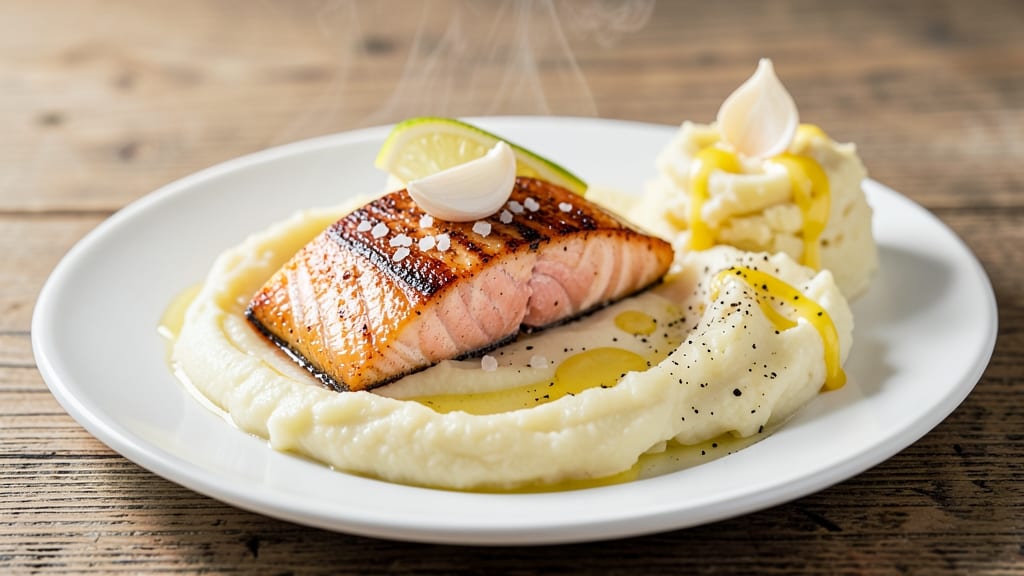
This salmon with mashed potatoes recipe delivers a restaurant-quality meal in one elegant dish, where perfectly seared salmon meets velvety mashed potatoes for a harmonious balance of texture and flavor. The key lies in crispy salmon skin and buttery potatoes that complement each other without overpowering—no fancy techniques required.
I’ve refined this pairing over years of testing, ensuring every bite is tender yet satisfying, with just the right amount of richness to make it feel special.
The secret to this dish isn’t just the cooking method—it’s the timing. While the salmon sizzles in the pan, the potatoes simmer until fork-tender, then blend into silky perfection with just the right amount of butter and cream.
The result is a plate that looks as impressive as it tastes, with golden salmon resting atop fluffy, golden potatoes. This recipe is designed to impress without stress, making it ideal for weeknight dinners or weekend gatherings where you want to shine.
What sets this dish apart is the attention to detail in both components. The salmon develops a crispy crust while staying juicy inside, thanks to a precise searing technique, while the mashed potatoes achieve that signature creamy yet light texture.
Garnish with fresh herbs or a squeeze of lemon to brighten the flavors, and you’ll have a meal that feels luxurious yet effortless. The best part? It comes together in under 45 minutes, leaving you more time to enjoy the results.
Pair this dish with steamed asparagus or a simple green salad for a complete, balanced meal. The salmon’s richness pairs beautifully with the earthiness of roasted vegetables, while the potatoes provide the comforting base that makes this dish universally appealing.
Whether you’re cooking for two or feeding a crowd, this recipe delivers professional-quality results with minimal effort—perfect for anyone looking to elevate their home cooking.
Ingredients for salmon and mashed potatoes
Four ingredients for the salmon, six for the potatoes—simple buttery magic.
| Ingredient | Amount | Notes |
|---|---|---|
| Center-Cut Salmon Fillets 🐟 | 2 whole | Skin-on, 6-8 oz each |
| Russet Potatoes 🥔 | 2 lbs | Waxy or all-purpose type |
| Unsalted Butter 🧈 | ¾ cup | Cold, cut into cubes |
| Heavy Cream 🥛 | ½ cup | Full-fat for richness |
| Garlic Cloves 🧄 | 4 cloves | Peeled, minced |
| Lemon Juice 🍋 | 2 tbsp | Freshly squeezed |
| Fresh Dill 🌿 | ¼ cup | Chopped, stems removed |
| Olive Oil 🫒 | 2 tbsp | High smoke point |
| Salt 🧂 | 1 ½ tsp | Kosher or sea salt |
| Ground Black Pepper 🌶️ | 1 tsp | Freshly ground |
| Vegetable Oil 🫒 | ¼ cup | For potato boiling |
| Fresh Lemon Slices 🍋 | 2 slices | For garnish |
The salmon makes or breaks this. Center-cut fillets with skin are key—they stay together better and give you that perfect crisp. Trader Joe's and Whole Foods sell pre-portioned ones, which saves time. Look for fillets with a vibrant pink color and minimal bruising. If your fishmonger asks for 'sushi-grade,' that's overkill here—just make sure it smells fresh, not fishy. I usually grab the wild-caught variety for better flavor, but farmed works too. Pat the fillets dry before cooking—dry skin equals crispy skin.
No fresh dill? Substitute parsley or chives—they won't be identical, but they'll add brightness. Running out of heavy cream? Half-and-half or whole milk works in a pinch, but the texture won't be as luscious. The potatoes can be Yukon Gold if you prefer—just know they'll be slightly creamier. For the butter, European-style (like Plugrá) gives more flavor, but regular unsalted works fine. The lemon juice can be bottled if you're in a hurry, but fresh is always better. And if you're feeling fancy, add a pinch of fennel pollen to the mashed potatoes—it's a game-changer.
Potatoes keep for 1 week in a cool, dark place. The salmon should go in the fridge 1-2 days max after purchase. For the mashed potatoes, make them ahead and reheat with a splash of milk—they taste even better the next day. Store leftovers in airtight containers for 3-4 days. The salmon reheats best gently in a warm oven with a splash of water to keep it moist. Garnish with fresh herbs and lemon slices right before serving—nothing kills the vibe like wilted garnishes.
Why You'll Love This Recipe
- Minimal Chopping Required: I swear by this trick—just peel and cube the potatoes, no need for fancy knife work. The salmon? One clean fillet, skin-on for easy sliding onto the pan. Twenty minutes later, dinner’s ready.
- Creamy-Meets-Crispy Magic: That buttery, fluffy mash with a hint of garlic? Chef’s kiss. Then the salmon—golden skin crackling, tender flesh melting—cuts through every bite. Honestly, it’s the kind of combo that makes you pause mid-fork.
- Weeknight & Weekend Hero: Need a meal for tired nights? This is it. But also—dress it up with fresh dill and lemon for a fancy dinner. My husband’s a skeptic, but even he asks for seconds now.
- Leftovers That Don’t Suck: Cold salmon and mash? Actually delicious. Pack the extra portions for lunch—no sad, dry reheats here. And since salmon’s budget-friendly when bought frozen, it’s a win for my wallet too.
Step-by-step instructions for pan-seared salmon with buttery potatoes
Here's how to get perfectly crisp salmon and velvety potatoes in one pan—no extra dishes needed.
Parboil and Mash the Potatoes
Cut the 2 lbs russet potatoes into 1-inch chunks and place them in a large pot. Cover with cold water by about 1 inch, then add the 1.5 tsp salt. Bring to a boil over high heat, then reduce to a gentle simmer for 12-15 minutes until the potatoes are fork-tender when pierced with a knife.
Drain the potatoes thoroughly in a colander, then return them to the pot. Add the 0.75 cup cold unsalted butter and the 0.5 cup heavy cream. Using a potato masher or fork, mash until smooth but with a few small lumps for texture. Keep the potatoes warm over low heat while you cook the salmon.
Season and Sear the Salmon
Pat the 2 whole center-cut salmon fillets dry with paper towels—this ensures a good sear. Place them skin-side down in a cold skillet and turn the heat to medium. Add the 2 tbsp olive oil and let it heat up for 1-2 minutes before adding the salmon.
Season each fillet generously with black pepper, then sprinkle evenly with the minced 4 cloves garlic and the 2 tbsp lemon juice. Let the salmon cook undisturbed for 4-5 minutes until the skin is crispy and golden brown. Flip carefully and cook for another 3-4 minutes until the salmon reaches an internal temperature of 145°F.
Finish with Fresh Dill and Lemon
While the salmon cooks, stir the chopped 0.25 cup fresh dill into the mashed potatoes. Once the salmon is done, transfer it to a plate and tent loosely with foil to keep warm. Pour any remaining pan juices over the potatoes and stir again to combine.
Garnish the salmon with the 2 slices fresh lemon slices and serve immediately alongside the dill-infused mashed potatoes. The bright citrus and fresh herbs cut through the richness of the butter and cream, making every bite balanced and flavorful.
Plate and Serve Together
Spoon the mashed potatoes onto plates, then place the salmon fillets on top. The crispy skin on the salmon should contrast beautifully with the creamy potatoes. Drizzle any remaining pan juices over the top for extra flavor. Serve right away while everything is hot and the salmon is still juicy.
This one-pan method keeps everything warm and ensures you won’t miss a beat. The potatoes stay creamy, the salmon stays crispy, and the dill and lemon bring it all together in a dish that’s perfect for a weeknight dinner or a special occasion.
Pro Tips For Making Salmon And Mashed Potatoes
- Parboil Potatoes First: Drop peeled Russets into boiling water for 7 minutes before mashing—this guarantees they’ll break down smoothly, not turn gluey. I used to skip this and ended up with a gummy mess, even with butter and cream.
- Pat Salmon Dry: Wipe fillets with paper towels until they’re bone-dry before seasoning—this ensures a perfect crust instead of steaming. Sounds tedious, but it’s the difference between restaurant-quality and "meh" salmon.
- Don’t Overmix Mash: Once you add butter and cream, fold gently with a spatula—overworking turns mash into dough. I learned this after making a single batch that looked like wallpaper paste.
- Roast Salmon Skin-Side Up: Place fillets skin-side down on a hot, oiled pan for 4-5 minutes to render fat, then flip—this keeps the flesh moist while crisping the skin. My first attempt flipped too soon, and the fish fell apart.
Common mistakes when making your salmon and mashed potatoes
Overcooking Salmon
Salmon cooks fast—once it hits 145°F internal temperature, it’s done. I’ve ruined perfectly good fillets by flipping too soon or cooking too long, resulting in dry, stringy fish.
Use a meat thermometer to avoid guesswork. If you don’t have one, watch for 3-4 minutes per side on medium heat for 6-8 oz fillets. 🌡️
Skipping the Dry
Wet salmon skin won’t crisp—it’ll steam instead. I learned this the hard way by skipping the paper towel pat-down. Always dry the fillets thoroughly before searing. For extra insurance, let them sit on a wire rack for 5-10 minutes before cooking. This step is non-negotiable for that golden, crackly crust.
Underseasoning Potatoes
Mashed potatoes need salt early and often. I’ve made bland potatoes by adding salt only at the end. Season the boiling water generously, then taste the mashed potatoes before adding more butter or cream.
You can always adjust, but you can’t un-salt. Aim for 1.5 tsp kosher salt in the water and another pinch when mashing.
Using Low-Quality Butter
Cheap butter burns easily and lacks flavor. I’ve ruined batches by using margarine or salted butter (which alters the seasoning). Stick with unsalted European-style butter like Plugrá for the best flavor and texture. If you must use salted, reduce the added salt to 1 tsp instead of 1.5 tsp.
Overmashing Potatoes
Too much mashing creates gluey potatoes. I’ve turned perfect spuds into a sad, pasty mess by overworking them. Use a potato masher or fork to keep some texture—just enough to break them down. For extra creaminess, warm the cream slightly before mixing. The goal is silky but not soupy.
Ignoring the Rest
Salmon needs time to rest after cooking. Cutting into it immediately causes juices to spill out, leaving you with dry fish. Tent with foil and let it rest for 5 minutes before serving.
This simple step keeps the fillets juicy and makes slicing easier. Don’t skip it—your taste buds will thank you! 💡
Nutrition facts
Frequently asked questions
Can I make this recipe ahead of time?
The mashed potatoes actually taste better made ahead! Prepare them up to 2 days in advance and reheat gently with a splash of milk or cream. For the salmon, cook it fresh and serve immediately to maintain crispiness. If you must reheat, wrap it in foil and warm in a 200°F oven for 5-7 minutes to keep it moist.
What's the best way to keep salmon from sticking?
Start with a cold pan and let it heat gradually—this prevents the salmon from releasing too much moisture at once. Use a high-smoke-point oil like avocado or grapeseed oil, and make sure your fillets are completely dry before cooking. A light dusting of cornstarch on the skin can also help create that perfect crisp.
Can I substitute Yukon Gold potatoes?
Yukon Golds will give you creamier, slightly more flavorful mashed potatoes with a golden hue. Use the same cooking method, but you may want to add an extra 1-2 tablespoons of butter to compensate for their natural richness. The texture will be slightly different but equally delicious.
How do I make this dish more elegant for dinner guests?
Garnish with fresh microgreens or edible flowers for color, and add a drizzle of high-quality olive oil or a lemon-herb sauce. For plating, use a ring mold to create perfect potato rounds, then top with the salmon. Serve with a side of steamed asparagus or roasted Brussels sprouts for a complete, restaurant-worthy presentation.
What if I don't have fresh dill?
Don't worry—substitute with 1 tbsp chopped parsley or 1 tsp dried dill (reduce by ⅓). For extra brightness, add a pinch of lemon zest or a few drops of lemon extract. The flavor won't be identical, but it'll still add freshness to your dish.