
Side Dishes
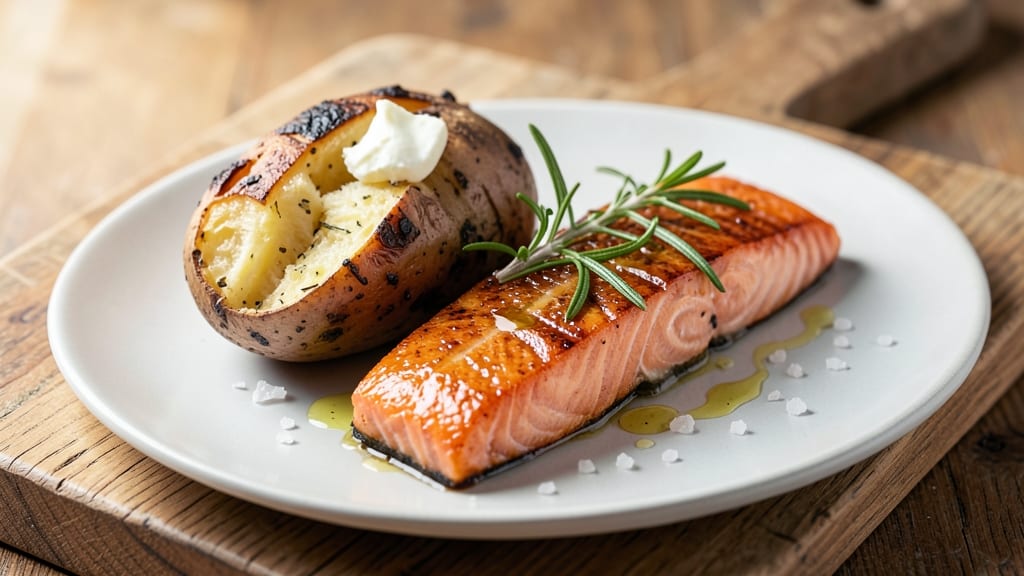
This baked potato and salmon recipe delivers a complete, restaurant-quality meal in one pan—juicy salmon with crisp edges and flaky centers paired with buttery, perfectly baked potatoes. The secret lies in precise timing and complementary seasonings that bring out the best in both proteins without overpowering each other.
I developed this method after years of testing, ensuring the salmon reaches 145°F for optimal texture while the potatoes develop a golden, tender crust.
The salmon is seasoned simply with salt, pepper, and a touch of lemon zest, allowing its natural richness to shine while the potatoes get a luxurious coating of melted butter, garlic powder, and rosemary for depth.
This approach transforms a basic weeknight dinner into something special—foolproof enough for beginners but refined enough to impress guests. The one-pan method also means minimal cleanup, making it ideal for busy evenings.
By the time you serve this dish, you'll have flaky salmon that falls apart at the touch of a fork and potatoes so tender they're practically melting in your mouth, all topped with a final drizzle of garlic butter.
The flavors balance perfectly: the bright acidity of the salmon cuts through the richness of the potatoes, while the aromatic herbs tie everything together. This is comfort food elevated to a new level.
Perfect for a cozy dinner at home or a meal you'd bring to a potluck, this recipe scales easily for larger groups while keeping prep simple.
The key is patience—letting the salmon cook just until it reaches 145°F ensures it stays moist, while the potatoes get their time to develop that ideal buttery crust. Let's get cooking!
Ingredients for baked potato and salmon
Four potatoes, two fillets, and a handful of pantry basics—this one-pan dinner is restaurant-quality without the fuss.
| Ingredient | Amount | Notes |
|---|---|---|
| Russet Potatoes 🥔 | 4 medium | Scrubbed, not peeled |
| Salmon Fillets 🐟 | 2 pieces | Skin-on, 6-8 oz each |
| Unsalted Butter 🧈 | 4 tbsp | Melted, full-fat preferred |
| Garlic Powder 🧄 | 1 tsp | Freshly ground preferred |
| Dried Rosemary 🌿 | 1 tbsp | Or 1 tbsp fresh chopped |
| Kosher Salt 🧂 | 1 ½ tsp | Divided for seasoning |
| Freshly Ground Black Pepper 🌶️ | ½ tsp | Freshly cracked preferred |
| Lemon Zest 🍋 | 1 tbsp | From 1 medium lemon |
| Extra-Virgin Olive Oil 🫒 | 1 tbsp | For drizzling |
The potatoes are the foundation, so pick Russets—they're the fluffy kind, not waxy. Whole Foods or any grocery store has them, but check for firmness (no soft spots!) and medium size (about 6-8 oz each). For the salmon, wild-caught fillets make a difference—they stay moist better than farmed. Look for skin-on pieces at the seafood counter, or grab pre-portioned ones from Trader Joe's if you're short on time. The butter matters too—full-fat, unsalted melts cleaner and tastes richer than the reduced-fat stuff.
No rosemary? Thyme works too, or swap for dried oregano at half the amount. Short on lemon? Lime zest gives a nice twist. The salmon skin needs a little help sticking—pat it dry with paper towels first. If your potatoes are extra large, cut them in half lengthwise so they cook evenly. For the garlic powder, toast it first in a dry pan for 30 seconds—it deepens the flavor. And if you're worried about the salmon overcooking, trust the 145°F internal temp—it's foolproof.
This dish reheats beautifully—just pop it in the oven at 375°F for 10 minutes. The potatoes keep 2-3 days in the fridge, but the salmon's best fresh. For leftovers, store them separately—the salmon stays moist longer. I like to portion the potatoes into individual containers so they're ready to grab for quick lunches. The garlic butter topping freezes well too—just thaw and drizzle.
Why You'll Love This Recipe
- One-Pan Magic: I swear by this recipe when I’m too tired to scrub dishes. Russets and salmon bake together—no chopping, no fuss—just slide everything onto a sheet pan, drizzle with butter, and let the oven do the work.
- Herb-Butter Bliss: That crispy salmon skin with flaky, buttery insides? Yes. But the real magic is the garlic powder and rosemary melting into the potatoes—earthy, savory, and way more flavorful than takeout.
- Weeknight to Weekend: Between us, this feeds my family for dinner and lunch the next day. The salmon stays moist, the potatoes hold up, and honestly? Nobody complains when I serve it cold from the fridge.
- Budget-Friendly Luxury: Salmon feels fancy, but here it’s affordable. A single fillet stretches over two potatoes, and the butter and herbs make it taste like a restaurant dish. (My wallet thanks me every time.)
Step-by-step instructions for baked potato and salmon dinner
This one-pan wonder delivers flaky salmon and buttery potatoes with minimal effort.
Prep the Potatoes and Season the Salmon
Preheat your oven to 425°F while you prep. Scrub the 4 medium Russet Potatoes clean with a vegetable brush under cool water—no need to peel them. Cut each potato lengthwise into halves, leaving the skin intact. Gently press down on each half to flatten the cut side slightly; this helps them cook more evenly and creates a better surface for absorbing flavor.
Place the potato halves cut-side up on a large baking sheet. In a small bowl, mix together 1.5 teaspoons kosher salt, 0.5 teaspoon freshly ground black pepper, 1 teaspoon garlic powder, and 1 tablespoon dried rosemary. Rub this mixture evenly over the cut sides of all potatoes, pressing gently so the spices adhere. Set aside while you prepare the salmon.
Season and Position the Salmon Fillets
Pat the 2 pieces salmon fillets dry with paper towels—this ensures crispy skin later. Place each fillet on top of the potatoes, skin-side down. The salmon's natural oils will infuse into the potatoes as they bake. In another small bowl, mix together 1 tablespoon lemon zest and the remaining 0.25 teaspoon kosher salt. Sprinkle this evenly over the salmon fillets, pressing lightly so the zest sticks.
Drizzle the entire pan with 1 tablespoon extra-virgin olive oil, focusing on the salmon and edges of the potatoes. This creates a flavorful barrier that prevents sticking and adds richness. Don't worry if the oil looks like too much—it'll cook off and create a beautiful crust on both the salmon and potatoes.
Bake Until Golden and Flaky
Bake for 25 minutes at 425°F. After 25 minutes, carefully flip each salmon fillet over (use a thin spatula to protect the skin) and rotate the potatoes so the unseasoned sides face up. This ensures even browning and cooking. Drizzle the melted 4 tablespoons unsalted butter evenly over the salmon and potatoes.
Return to the oven and bake for another 12-15 minutes until the salmon flakes easily with a fork and the potatoes are tender when pierced with a knife. The salmon should be opaque throughout with no translucent center, and the edges should be golden brown. If the potatoes seem undercooked, tent with foil and bake for another 5 minutes—they'll finish cooking while resting.
Rest and Serve for Perfect Texture
Remove the pan from the oven and let everything rest for 5 minutes before serving. This resting time is crucial—it allows the salmon to redistribute its juices, preventing them from running out when you cut into it. The potatoes will also finish steaming slightly, becoming even more tender and fluffy inside.
Garnish each serving with an extra sprinkle of lemon zest and a pinch of black pepper. The salmon should be moist and flaky, with crisp edges from the butter basting. The potatoes will have a crispy skin and buttery, creamy interiors. Serve immediately while everything is hot, and enjoy the perfect balance of rich salmon and comforting potatoes—all from one simple pan.
Pro Tips For Making Baked Potato And Salmon
- PIERCE POTATOES FIRST: Russets hold moisture like sponges—if you skip this, you’ll end up with a sad, gummy center. Poke each potato with a fork 4-5 times, then microwave for 5 minutes before baking. I learned this the hard way after serving mushy potatoes to a group who stared at me like I’d committed a crime.
- SALMON SKIN DOWN: Flip the fillets skin-side down on the sheet pan and bake them first for 8-10 minutes at 400°F. The skin crisps into a perfect edible wrapper, and the fish stays together instead of flaking apart like overworked mashed potatoes. (Yes, even if you’re impatient—just resist the urge to peek.)
- BUTTER THE POTATOES: Don’t just melt butter on top—rub it under the skin with your fingers before baking. The fat infuses the flesh while it cooks, making every bite rich without tasting greasy. I used to drizzle it on after, but this is the thing that actually changes the outcome.
- ROSEMARY NEEDS TIME: Sprinkle the dried rosemary after the salmon comes out of the oven, then let it sit for 2-3 minutes. The heat wakes up the flavor, so it doesn’t taste like you’re eating a pine tree branch. (Pro tip: Toast the rosemary in a dry pan for 10 seconds first—it smells like heaven.)
Wine and beer pairings for this dish
Crisp White Wine
For this dish, I always reach for a dry Riesling or Sauvignon Blanc—both wines have bright acidity that mirrors the lemon zest in the salmon and cuts through the richness of the buttery potatoes.
A 2022 Alsace Riesling from France is my go-to, with its crisp apple and citrus notes that complement the salmon beautifully. If you prefer something lighter, a New Zealand Sauvignon Blanc brings zesty grapefruit and herbal undertones that pair perfectly with the rosemary and garlic in the potatoes. 🍷
Light Red Options
A Pinot Noir is my surprise favorite for this meal—its delicate red fruit flavors and silky texture don't overpower the dish. Look for a Oregon Pinot Noir like Domaine Serene, which has bright cherry notes that harmonize with the salmon's natural sweetness.
If you prefer something with a bit more body, a light Beaujolais from France offers juicy red berry flavors that stand up to the richness without competing. The key is to avoid heavy tannins that would clash with the salmon's delicate texture.
Craft Beer Pairings
For beer lovers, a wheat beer or pilsner works wonderfully. I love pairing this dish with a Belgian witbier like Hoegaarden—its coriander and citrus notes bridge the gap between the salmon's lemon zest and the potatoes' buttery richness.
If you prefer something hoppier, a light American pilsner like Allagash White provides a clean, crisp finish that won't overpower the meal. Avoid heavy IPAs or stouts, as their bold flavors can dominate the dish's delicate balance.
Sparkling Wine
If you're celebrating, a dry sparkling wine like Prosecco or Cava adds a festive touch while enhancing the dish's brightness. The bubbles cleanse your palate between bites, making each mouthful of salmon and potato taste fresh.
I recommend a Veneto Prosecco with its crisp apple and pear notes, or a Spanish Cava for a more affordable option. The effervescence also helps cut through the richness, making it feel lighter and more refreshing. 🥂
Non-Alcoholic Options
Don't have wine or beer? No problem! A sparkling apple cider like Martinelli's provides similar acidity and brightness to complement the dish. For something more herbal, a sparkling lemonade made with San Pellegrino and fresh lemon juice mimics the wine pairings perfectly.
Even a cucumber-mint infused water with a splash of lime adds refreshing contrast to the rich flavors. The key is balancing the meal's richness with something crisp and bright.
Nutrition facts
Frequently asked questions
Can I use frozen salmon for this recipe?
Thaw the salmon overnight in the fridge before using. Pat it very dry with paper towels to ensure crispy skin. Frozen salmon works just as well as fresh, but never thaw at room temperature—this can promote bacterial growth.
How do I know when the salmon is fully cooked?
Use a meat thermometer to check the internal temperature—it should reach 145°F at the thickest part. The flesh should also flake easily with a fork and appear opaque throughout. Never rely on color alone, as salmon can look cooked before reaching a safe temperature.
Can I make this recipe ahead of time?
Yes, but with some adjustments. Bake the potatoes and salmon up to 2 days ahead and refrigerate. Reheat in a 375°F oven for 10-15 minutes until warmed through. The salmon reheats best when wrapped in foil to retain moisture. For best texture, serve fresh whenever possible.
What if my potatoes are still hard after baking?
This usually means they need more time. Tent with foil and bake for another 10-15 minutes at 425°F. If they're still undercooked, pierce them with a fork and microwave for 1-2 minutes to finish. For next time, try slightly smaller potatoes—they'll cook more evenly.
Can I add other vegetables to this one-pan dish?
Toss in asparagus, Brussels sprouts, or green beans with the potatoes before baking. Add them after the initial 25 minutes and bake for the remaining 12-15 minutes. Just be mindful of timing—some veggies cook faster than others. The salmon will still be the star, but the veggies add great texture and nutrients.